Most organizations operate under the dangerous assumption that data, once stored, remains immutable. They treat databases and storage arrays as vaults, forgetting that digital entropy is a constant. When a single bit flips due to cosmic rays, hardware degradation, or latent firmware bugs, the system does not always crash. Instead, it continues to function with corrupted values. This silent failure is the silent killer of operational excellence.
\n
Data integrity checksums are not merely a technical safeguard; they are a fundamental requirement for high-performance decision-making. If your leadership team bases its quarterly strategy on a dashboard fed by corrupted data, you are not executing a strategy—you are gambling on noise.
\n\n
Defining the Checksum Mechanism
\n
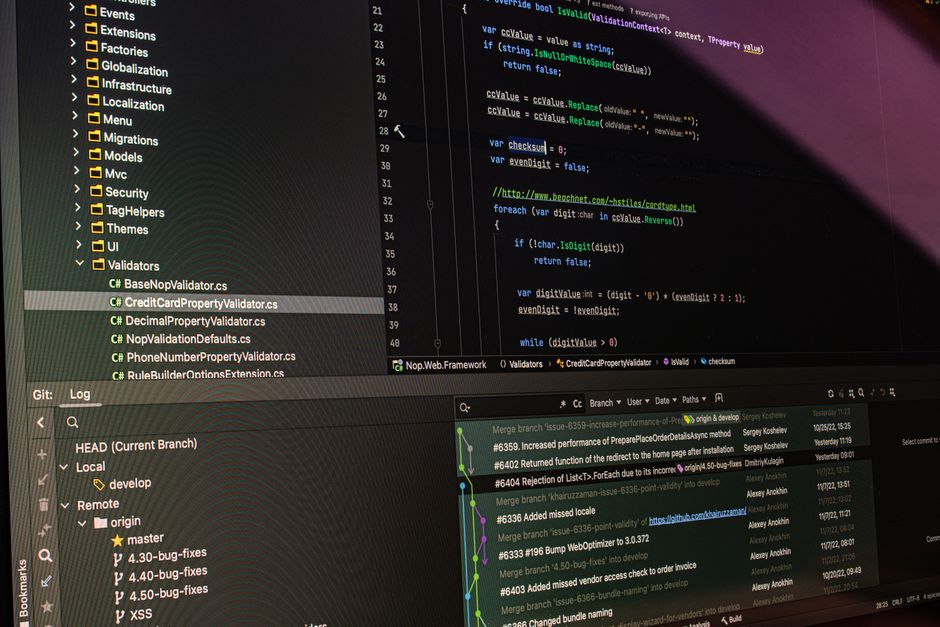
A checksum is a small-sized block of data derived from another block of digital data for the purpose of detecting errors that may have been introduced during its transmission or storage. By applying an algorithm—such as CRC32, SHA-256, or BLAKE3—to a dataset, the system generates a unique digital fingerprint. If the data changes by even one bit, the recalculated checksum will fail to match the original.
\n
In high-stakes environments, this is the first line of defense against the erosion of truth. Without these cryptographic proofs, your decision-making processes lack a foundation of veracity. You cannot achieve execution precision if you cannot verify the state of your inputs.
\n\n
The Strategic Failure of Bit Rot
\n
Bit rot—or silent data corruption—is a phenomenon where data gradually decays over time on storage media. In a massive distributed database, the probability of bit rot is not zero; it is a mathematical certainty. When an organization ignores checksumming at the file system or application layer, it exposes itself to cascading failure.
\n
Consider the impact on strategy: A financial model relying on historical data sets that have suffered minor corruption will produce skewed projections. These skewed projections lead to misallocated capital, poor hiring decisions, and compromised market positioning. The error propagates through the organization, amplified by each layer of management that assumes the underlying data is pristine.
\n\n
Operationalizing Integrity
\n
To move from reactive data management to proactive high-performance thinking, organizations must implement a multi-layered integrity architecture:
\n
\n
End-to-End Validation: Checksums must be generated at the source and verified at the destination. If the data passes through an intermediary service, that service must be obligated to re-verify the integrity before passing it forward.
\n
Active Scrubbing: Relying on passive detection is insufficient. High-performance systems perform background \”scrubbing,\” where the system continuously reads stored data, calculates its checksum, and compares it against the known good value.
\n
Immutable Audit Logs: When a checksum mismatch is detected, the event must be logged as a critical operational failure. This is not just an IT task; it is a risk management imperative that requires executive visibility.
\n
\n\n
The AI Intersection
\n
With the rise of AI in business operations, the importance of data integrity has reached a tipping point. Machine learning models are notorious for \”garbage in, garbage out\” outcomes. If your training data or RAG (Retrieval-Augmented Generation) source files are silently corrupted, the model will hallucinate with high confidence. The checksum is the only mechanism that ensures the model is learning from the reality you intend, rather than a corrupted version of it.
\n\n
Building a Resilient Infrastructure
\n
Resilience is the byproduct of verifying every assumption. By enforcing strict checksum protocols, you remove the element of chance from your digital infrastructure. This allows leadership to focus on the interpretation of data rather than questioning its authenticity. In an era where information is the primary asset, the inability to verify the integrity of that information is an existential risk. Protect your data, and you protect your ability to act with authority.