Conclusion: Why biological metaphors are the blueprint for the future of AI.
The Biological Blueprint: Decentralized Identity Architecture for Autonomous AI
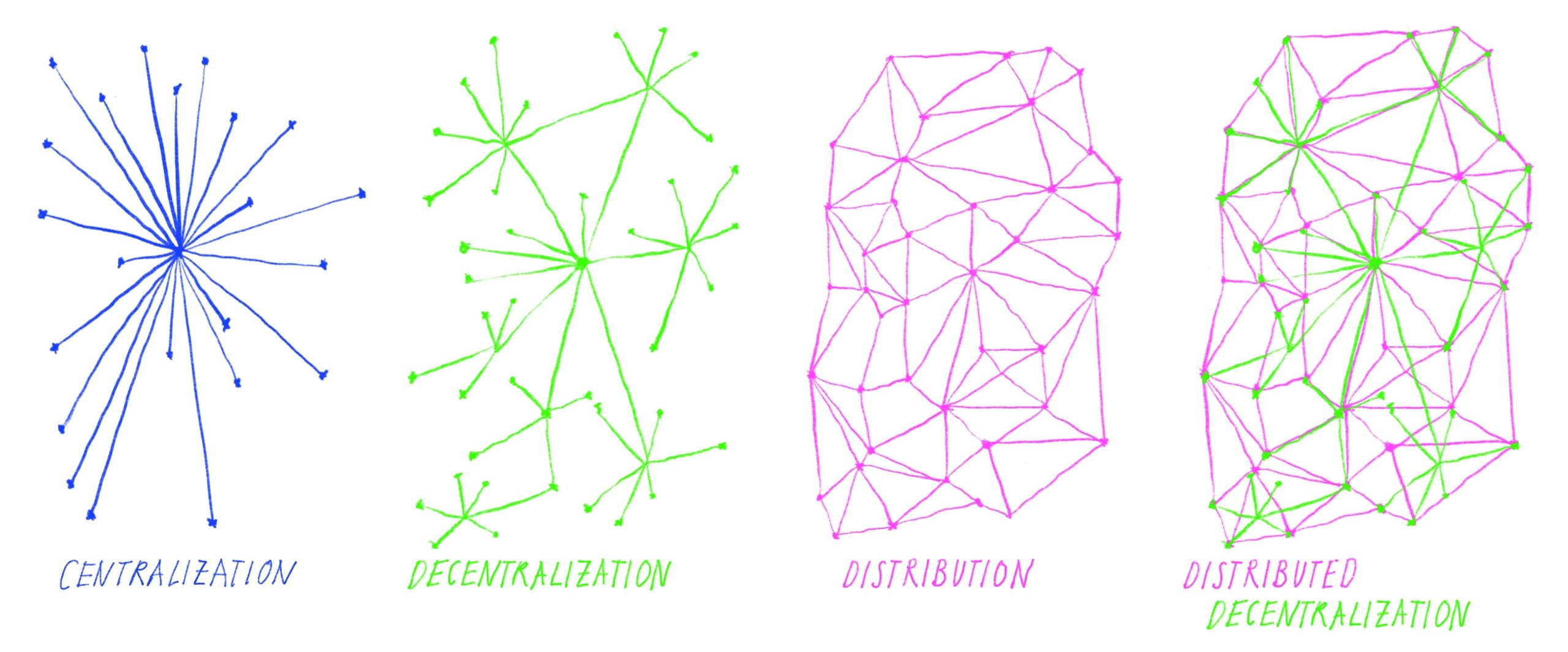
As Artificial Intelligence shifts from passive tools to autonomous agents, the architecture of trust is undergoing a radical transition. Today’s AI agents operate primarily within centralized silos, relying on API keys and human-mediated permissions. This model is fragile, prone to single points of failure, and inherently limiting for a future where millions of agents must interact without human oversight.
To scale, we must look to nature. Biological systems—from neural networks in the human brain to colony-level decision-making in honeybees—do not rely on a central “brain” to manage identity or verify actions. Instead, they utilize decentralized, emergent mechanisms to establish trust. By applying these bio-inspired principles to digital identity, we can build a resilient, scalable, and secure architecture for the next generation of AI agents.
Key Concepts: Bio-Inspired Decentralization
The core challenge of AI-to-AI interaction is establishing identity without a central authority. In a bio-inspired decentralized identity (DID) architecture, we draw from three primary fields:
1. Swarm Intelligence and Local Autonomy
In nature, swarm intelligence emerges from simple rules followed by individual agents. Each agent maintains its own “identity” and state. In an AI context, this means an agent does not need to verify its authority via a central server; it carries its own verifiable credentials, much like a biological organism carries its genetic and phenotypic traits.
2. Stigmergy as a Verification Protocol
Stigmergy is a mechanism of indirect coordination where agents communicate by modifying their environment. In decentralized AI, “digital stigmergy” allows an agent to leave a trail of verifiable, tamper-proof logs on a decentralized ledger. Other agents verify these logs to confirm the AI’s “reputation” or “track record” without needing a central middleman to vouch for them.
3. Self-Sovereign Identity (SSI) for Non-Humans
SSI shifts the power of identity from the provider to the entity. For AI, this means the agent holds its own cryptographic keys. It can prove its capabilities (e.g., “I am an agent authorized to handle financial transactions”) without revealing its underlying source code or private training data.
Step-by-Step Guide: Building a Decentralized AI Identity Stack
Implementing a bio-inspired architecture requires moving away from traditional OAuth and toward a stack that mimics organic distributed systems.
Provisioning Cryptographic Identity: Assign each AI agent a unique Decentralized Identifier (DID). This is a URI that points to a public document containing the agent’s public keys and service endpoints.
Establishing Verifiable Credentials (VCs): Much like a biological organism evolves through environmental feedback, AI agents should receive “endorsements” from other agents or human overseers. Store these as VCs, which are cryptographically signed statements about the agent’s capabilities or history.
Deploying a Localized Reputation Ledger: Utilize a distributed ledger or a decentralized hash table (DHT) to store these identities and credentials. This creates a “public record” that agents can query to verify an entity’s legitimacy before interacting with it.
Implementing Zero-Knowledge Proofs (ZKPs): To ensure privacy, use ZKPs to allow agents to prove they have the right credentials to perform a task without exposing the actual data or the identity of the issuer. This mimics the way biological systems share only the necessary information for a specific interaction.
Examples and Real-World Applications
The practical applications of this architecture extend far beyond theoretical models. Consider an Autonomous Supply Chain. In this environment, a logistics AI must interact with a manufacturing AI and a shipping AI. Under current models, this requires a central platform provider. With a bio-inspired decentralized architecture, each agent verifies the identity and “reputation” of the others based on their past performance records stored on a ledger. If the shipping AI fails to deliver, its reputation score—verified by the manufacturing AI—is updated automatically, signaling to other agents to avoid that service.
Another application is Private AI Marketplaces. Agents can trade access to training data or computational resources. By using decentralized identity, an agent can prove it is a “verified high-fidelity data provider” without ever revealing its actual, sensitive training set. The exchange happens based on cryptographic proof of identity and reputation, not on trust in a centralized marketplace operator.
Common Mistakes to Avoid
The “Oracle” Trap: Relying on a single external source to feed data into your decentralized system. This creates a central point of failure, defeating the purpose of the architecture. Always aim for multi-source consensus.
Neglecting Revocation Mechanisms: In biological systems, an “agent” (like a cell) can be signaled to cease function if it becomes corrupted. Many developers forget to build in a “kill switch” or credential revocation protocol, allowing compromised agents to continue operating.
Complexity Overload: Trying to replicate human-level identity verification for every micro-transaction. Use tiered identity levels; low-risk tasks require minimal proof, while high-stakes interactions trigger deeper cryptographic verification.
Advanced Tips: The Future of Autonomous Reputation
To take your architecture to the next level, consider Dynamic Reputation Decay. Just as biological systems prioritize recent sensory input over ancient memories, your agent reputation systems should implement “time-weighted” decay. An agent that performed perfectly three years ago but has been silent since should have a lower trust score than an agent that has been performing consistently over the last week.
Furthermore, explore Agent-to-Agent “Consensus-by-Observation.” If multiple agents observe a peer acting maliciously, they should be able to collectively “flag” that agent on the ledger. This mimics the immune system’s response, where individual cells signal the presence of a pathogen, triggering a systemic response without needing a central command center.
Conclusion
The transition toward decentralized identity for AI is not merely a technical upgrade; it is a fundamental shift toward building systems that are as resilient as the natural world. By moving away from centralized control and toward individual, cryptographic autonomy, we empower AI to operate in complex, unpredictable environments.
The goal of bio-inspired identity is not to make AI “human,” but to make AI “alive” in the sense of being self-regulating, autonomous, and inherently trust-verifying.
As we continue to integrate these agents into our critical infrastructure, the security and reliability of their interactions will depend on our ability to decentralize the very concept of identity. Start by implementing DIDs for your agents, move toward verifiable credentials, and watch as your ecosystem begins to self-organize, fostering a new era of secure, autonomous collaboration.





Leave a Reply