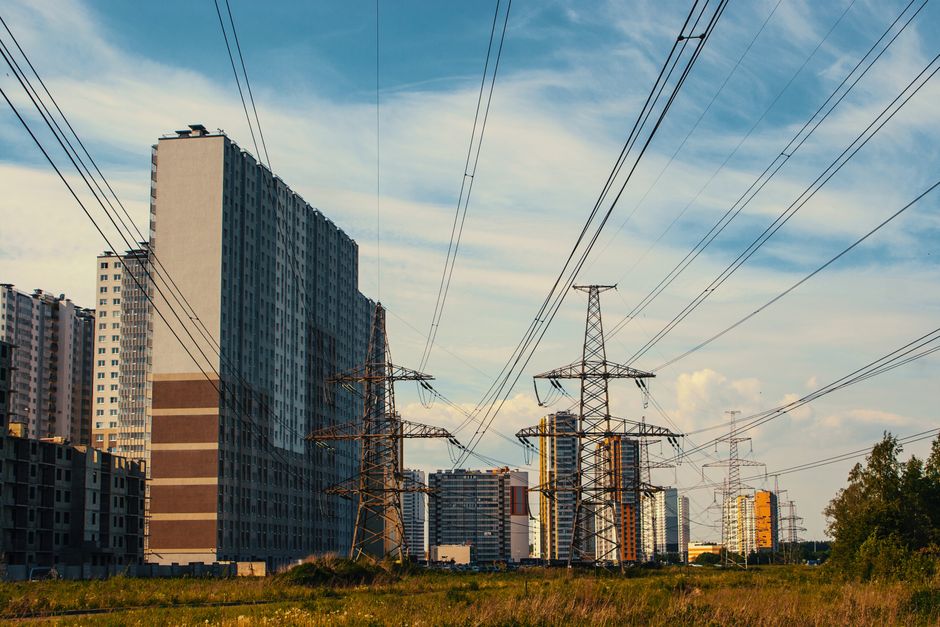
The modern industrial state operates on a dangerous paradox: we demand absolute reliability from our infrastructure while tying that infrastructure to single points of failure. For decades, the centralized grid—a top-down, hub-and-spoke model—served the needs of stable, predictable growth. However, as energy demand surges and climate volatility increases, the architectural limitations of this model have become a strategic liability for every major organization, government, and leadership team.
Centralization assumes that the core can always protect the periphery. In reality, the grid is increasingly brittle. A single failure at a primary substation or a disruption in a major transmission artery can cascade into regional shutdowns. For the high-performer, this represents an unacceptable risk to business continuity and operational excellence. The shift toward decentralized energy grids is not merely a technical transition; it is an evolution in how we conceptualize resilience and distributed systems.
The Shift Toward Distributed Resilience
Decentralization moves the energy source closer to the point of consumption. By integrating microgrids, onsite solar, battery storage, and localized generation, organizations can decouple their operations from the vulnerabilities of the macro-grid. This is the application of modularity to physical infrastructure. Just as strategy requires redundant systems to prevent single-point failure, decentralized grids allow facilities to “island” themselves during outages.
This autonomy provides a distinct advantage in decision-making during crisis scenarios. When an organization owns its power, it moves from being a passive recipient of public utility services to an active owner of its own operational environment. This shift changes the risk profile entirely, transforming energy from a fixed cost into a strategic asset.
Operational Implications of Energy Autonomy
Adopting decentralized energy requires a fundamental change in how operators view their capital expenditure. Historically, energy was a utility expense—a line item to be optimized but rarely controlled. Today, the ability to generate and store power is a competitive differentiator.
Risk Mitigation: Distributed systems eliminate the reliance on aging infrastructure that lacks the capacity for modern digital demands.
Economic Efficiency: Through peak shaving and load management, organizations can capitalize on energy markets, turning their storage capacity into a revenue-generating tool.
Sustainability as Performance: Decarbonization is no longer a corporate social responsibility checkbox; it is a way to reduce dependency on volatile fossil fuel supply chains.
Leaders must evaluate their energy posture with the same rigor they apply to execution frameworks. Can your facility maintain core processes during a 72-hour grid failure? If the answer is no, your operation is fundamentally exposed. The cost of inaction is not just potential downtime; it is the loss of control over your own productive capacity.
Architecting for the Future
The move to decentralization demands sophisticated AI-driven management. Managing a fleet of local energy assets—balancing supply, demand, and storage in real-time—is a complex data problem. Algorithms must predict consumption patterns, weather shifts, and market pricing to ensure the system remains balanced without human intervention.
This is where high-performance thinking meets the physical world. The goal is not just to build a grid, but to build an intelligent, self-correcting ecosystem. By implementing decentralized energy, organizations create a buffer against systemic volatility. They gain the ability to operate independently when the rest of the market is in chaos. In a world defined by uncertainty, the ability to maintain independent, reliable power is perhaps the ultimate form of strategic high-performance thinking.