Create a specialized team tasked with monitoring emergent risks in generative models.
Contents 1. Introduction: The shift from static software to dynamic, non-deterministic generative models and the necessity of proactive risk oversight.…
1. Introduction: The shift from static software to dynamic, non-deterministic generative models and the necessity of proactive risk oversight.
2. Key Concepts: Defining “emergent risks” (hallucinations, bias drift, prompt injection, and model collapse).
3. Step-by-Step Guide: Establishing a cross-functional “Red Team” or AI Oversight Unit.
4. Real-World Applications: How financial services and healthcare organizations are currently deploying monitoring frameworks.
5. Common Mistakes: Over-reliance on automation, silos, and “set it and forget it” mentalities.
6. Advanced Tips: Implementing adversarial evaluation cycles and human-in-the-loop (HITL) calibration.
7. Conclusion: Emphasizing the cultural shift from compliance to active safety culture.
***
Building an AI Resilience Squad: How to Monitor Emergent Risks in Generative Models
Introduction
The transition from traditional software development to generative artificial intelligence represents a shift from predictable, deterministic systems to probabilistic, emergent ones. Unlike standard code, generative models do not follow fixed logical paths; they navigate vast latent spaces to produce outputs. This fundamental change renders traditional QA testing insufficient.
Organizations today are deploying Large Language Models (LLMs) and multimodal generators that can “hallucinate” facts, leak sensitive data, or reinforce hidden biases. When a model’s behavior evolves based on its context or user interaction, the risks are no longer static—they are emergent. To mitigate these threats, businesses must move beyond passive monitoring and establish a specialized team dedicated to the rigorous oversight of generative systems.
Key Concepts: What Are Emergent Risks?
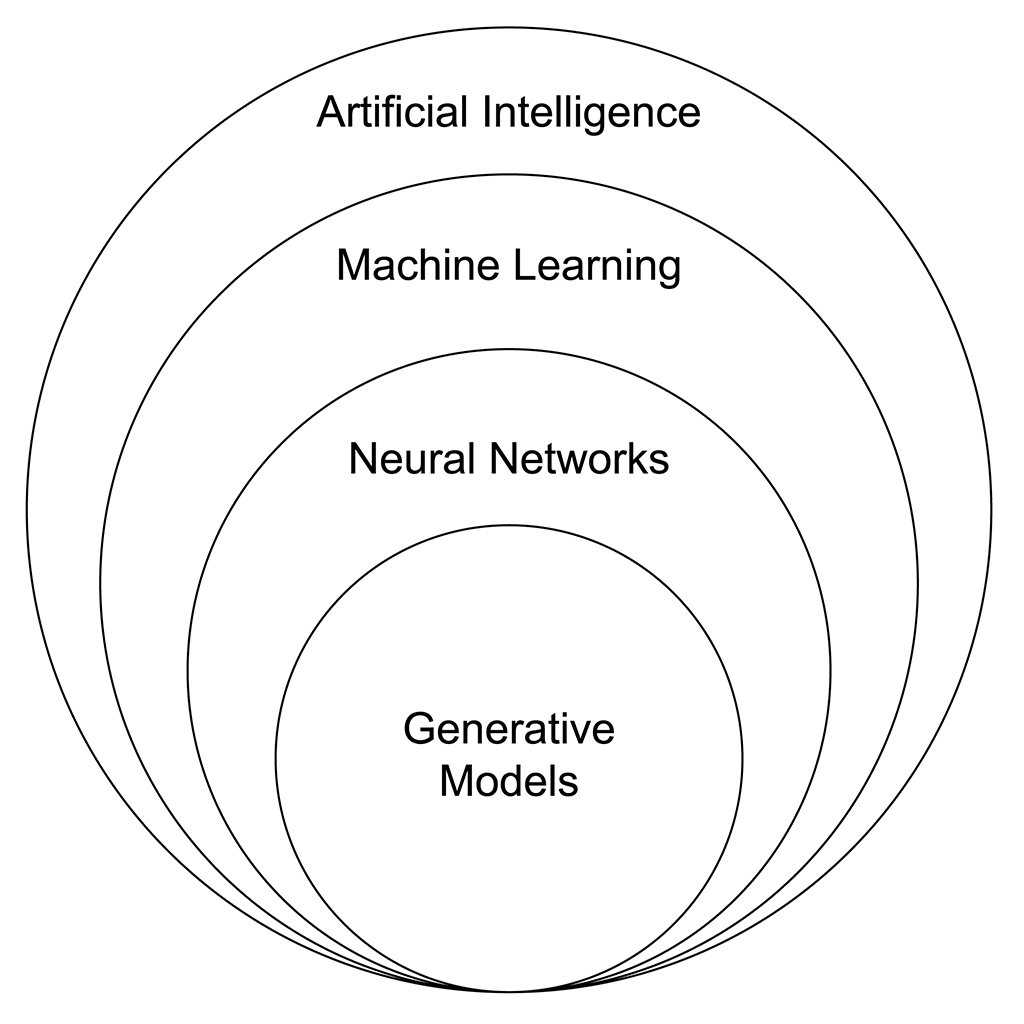
Emergent risks in generative AI are failures that appear only after a system has been deployed or exposed to complex, real-world data. These are not necessarily coding bugs; they are inherent characteristics of neural networks.
Hallucinations and Factuality Drift: The tendency of models to confidently state falsehoods. As models are fine-tuned or updated with new data, their propensity for factual error can change unpredictably.
Prompt Injection and Jailbreaking: Security vulnerabilities where malicious actors manipulate the model’s instructions to bypass safety filters. This is a cat-and-mouse game that evolves as quickly as the models themselves.
Bias Amplification: Even if a model is “neutral” at launch, it can pick up latent associations in user feedback loops, leading to gradual shifts in fairness and representative accuracy.
Model Collapse: A phenomenon where models trained on AI-generated content (rather than human-created content) lose their intelligence and nuance over time, leading to a degradation in performance.
Step-by-Step Guide to Establishing an AI Oversight Team
Creating a specialized monitoring team requires a fusion of machine learning engineering, ethics, and security expertise. Follow these steps to build your unit.
Assemble a Cross-Functional Task Force: Do not silo this team under “Engineering.” Include a Data Scientist (for technical auditing), a Security Engineer (for adversarial testing), and a Domain Expert (such as a legal counsel or product stakeholder) who understands the specific risks of your industry.
Define the Risk Appetite: Create a clear policy on acceptable performance. For a medical AI, the threshold for hallucination is zero. For a marketing content tool, the threshold might be higher, focusing more on brand tone than factual precision.
Implement “Red Teaming” Cycles: Schedule recurring sessions where your team actively tries to break the model. Use frameworks like Giskard or PyRIT to automate stress testing against known jailbreak patterns.
Deploy Continuous Monitoring Infrastructure: Integrate observability tools that track not just system uptime, but “output drift.” Use semantic analysis to flag responses that deviate from your brand guidelines or safety benchmarks.
Formalize the Feedback Loop: Ensure that when a risk is identified, there is a direct path to remediation—whether that is updating the System Prompt, implementing a Vector Database for grounding (RAG), or retraining the model.
Examples and Real-World Applications
Consider the case of a major financial services firm deploying a customer-facing chatbot. The firm initially struggled with the model offering unauthorized financial advice. By creating an oversight team, they implemented a “guardrail” layer. This layer acts as a middleware that filters both the user’s prompt and the model’s response against a set of compliance rules before the message is finalized.
In the healthcare sector, specialized teams are using “Retrieval-Augmented Generation” (RAG) to mitigate hallucination. The oversight team mandates that the model only answers questions based on a curated, immutable knowledge base of clinical guidelines. They monitor the “source citation” accuracy of the model, regularly auditing cases where the model fails to map an answer to a verified document.
The most successful companies treat AI safety as an extension of their brand trust, not a technical hurdle to be cleared once and forgotten.
Common Mistakes to Avoid
Relying Solely on Automated Tools: Automated scanners are excellent for catching known vulnerabilities, but they cannot identify subtle, context-dependent biases or creative jailbreaks. Always pair automation with human qualitative review.
The “Set and Forget” Mentality: Because LLMs are non-deterministic, a model that performs safely on Tuesday might fail on Wednesday if the input distribution shifts. Monitoring must be continuous and event-driven.
Ignoring User Feedback: Users are the primary discovery engine for emergent risks. If you do not have a robust mechanism to report and analyze “thumbs down” interactions, you are missing your most valuable data source.
Lack of Transparency: If the oversight team operates in a vacuum, the rest of the product organization will view them as a “blocker” rather than an enabler. Communicate clear metrics on why certain risks are being prioritized.
Advanced Tips for Long-Term Resilience
Adversarial Synthetic Data Generation: Go beyond manually writing test prompts. Use smaller, specialized models to generate thousands of adversarial variations of a single prompt to test your system’s robustness at scale.
Differential Privacy and PII Scrubbing: Ensure your monitoring team has access to logs, but implement strict privacy controls. Automate the redaction of Personally Identifiable Information (PII) from all interaction logs before they reach the analysts.
Shadow Deployment: Before releasing a model update, run it in a “shadow mode.” Let the new model process real requests but do not show the output to users. Compare the shadow model’s performance to the current production model. This allows you to quantify “risk delta” before a public release.
Conclusion
Monitoring emergent risks in generative AI is not a static checkbox on a compliance document; it is a dynamic, high-stakes operational necessity. By building a specialized team that blends technical rigor with domain-specific intuition, organizations can navigate the volatility of generative models effectively.
The goal is not to eliminate risk entirely—that would stifle innovation—but to move from a state of reactive crisis management to one of proactive, informed resilience. Start small, integrate your oversight into the development lifecycle, and treat every failure as a data point for a safer system. The future of AI adoption belongs to those who know not just how to build, but how to oversee.
Learn how to organize, digitize, and preserve your family correspondence. Turn a box of old letters into a living archive that honors your lineage and history.
Introduction For decades, medicine has primarily relied on systemic chemical interventions—pills, injections, and infusions that flood the entire body to…
Discover how blockchain, IoT, and decentralized ledgers are enabling radical transparency, allowing citizens to audit supply chains and verify product integrity.
Discover how decentralized soft robotics revolutionizes HCI. Learn to implement distributed control, soft actuation, and local logic for adaptive interfaces.