Introduction: The shift from static to adaptive robotics in space exploration.
Key Concepts: Defining Continual-Learning Cellular Robotics (CLCR) and its modular nature.
Step-by-Step Guide: Implementing an autonomous learning loop for modular space robots.
Real-World Applications: In-situ resource utilization and structural self-repair.
Common Mistakes: Over-learning, catastrophic forgetting, and hardware latency.
Advanced Tips: Distributed neural architectures and edge-computing optimization.
Conclusion: The future of persistent robotic presence in deep space.
Continual-Learning Cellular Robotics: The Future of Adaptive Space Systems
Introduction
Space is a frontier defined by unpredictability. Traditional satellite and robotic systems are built for specific, predetermined missions; once they encounter an environment outside their programmed parameters, they often become obsolete or fail. As we look toward long-term lunar bases, Martian colonization, and asteroid mining, the rigid architecture of current space hardware is no longer sufficient. The solution lies in Continual-Learning Cellular Robotics (CLCR)—a paradigm shift where robotic systems are not just tools, but adaptive, learning organisms capable of evolving in real-time.
Continual learning refers to the ability of an AI system to acquire new knowledge over time without forgetting previously learned tasks. When applied to cellular robotics—modular, swarm-capable units that can aggregate into larger structures—the result is a platform that can self-repair, reconfigure for new environments, and optimize its own energy usage. This article explores how we can bridge the gap between theoretical AI and rugged, space-hardened modular hardware.
Key Concepts
To understand the CLCR platform, we must break down the two pillars of its architecture: Modularity and Plasticity.
Modular Cellular Structure
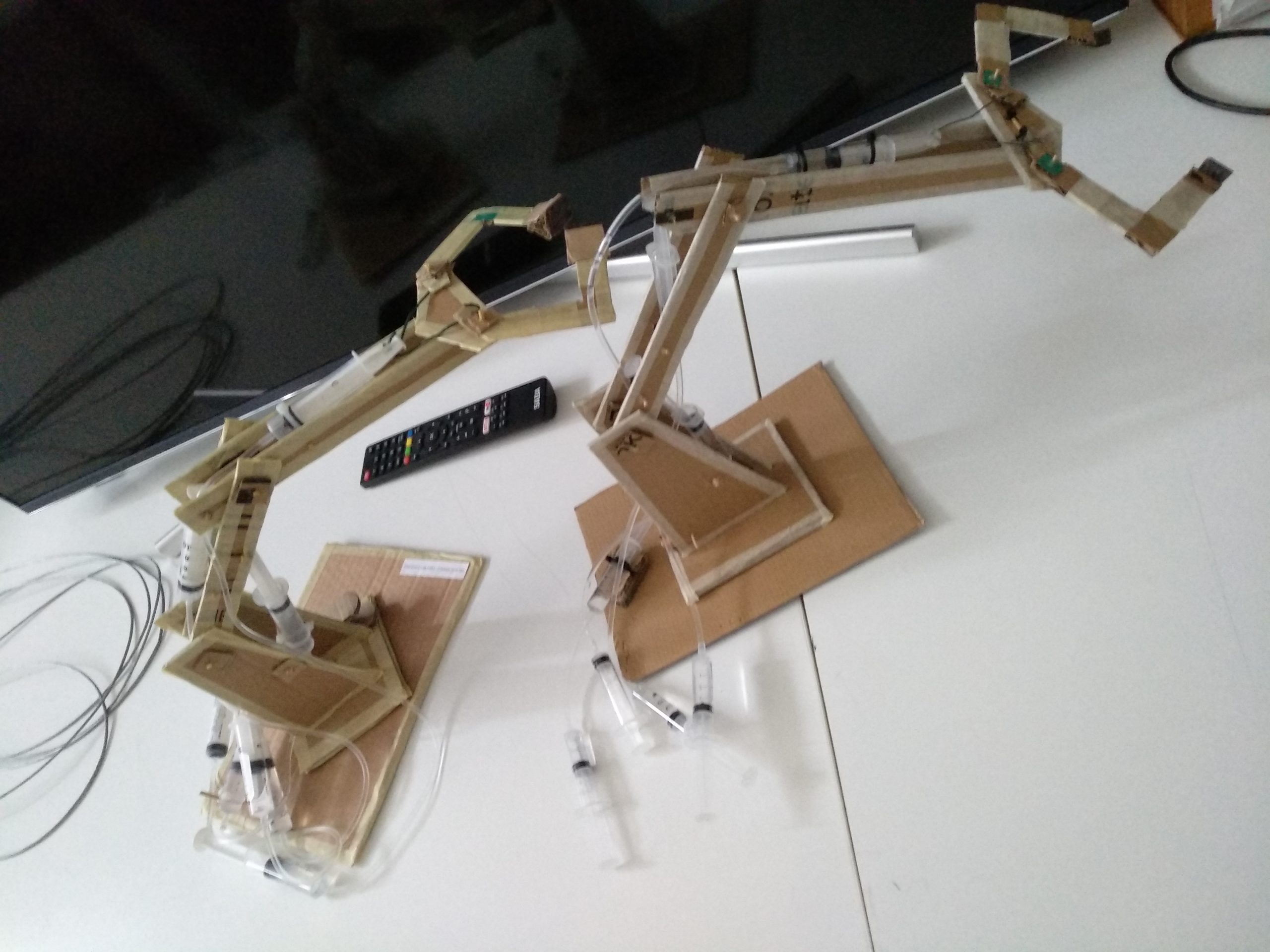
In a cellular robotics system, the “robot” is not a single entity, but a collection of identical or semi-specialized nodes. Each node contains basic locomotion, power, sensing, and communication capabilities. By rearranging these nodes, the system can change its physical form—shifting from a multi-legged walker for uneven terrain to a high-surface-area solar array for energy collection.
Continual Learning Algorithms
Unlike traditional machine learning, which typically requires massive, static datasets, continual learning focuses on online learning. The system processes streams of sensory data from the space environment and updates its internal models incrementally. It must solve the “stability-plasticity dilemma”: being plastic enough to learn new environmental conditions (e.g., changes in lunar dust composition) while stable enough to retain core survival and navigation behaviors.
Step-by-Step Guide: Implementing a CLCR Loop
Developing a platform for space requires a rigorous, iterative approach to hardware-software integration. Follow these steps to implement a baseline CLCR architecture:
Define the Local Policy: Program each individual cell with a base-level survival policy. This includes power-saving modes, basic obstacle avoidance, and communication handshakes with adjacent cells.
Deploy an On-Device Neural Network: Utilize lightweight, hardware-accelerated neural networks (like spiking neural networks) that can update weight parameters locally without needing to connect to Earth-based servers.
Implement Reconfiguration Logic: Create a “fitness function” for the swarm. If a specific structural shape (e.g., a tripod) is failing to traverse a slope, the system should trigger a reconfiguration event to a more stable shape (e.g., a wider, low-profile crawler).
Establish a Shared Experience Buffer: Enable the swarm to share “lessons learned.” If one cell detects a corrosive chemical on a rock surface, it transmits this data to its neighbors so they can adjust their material interaction protocols before physical contact.
Continuous Validation: Use a self-diagnostic loop where the system periodically tests its own hardware functionality to identify and isolate failed cells, ensuring the swarm maintains optimal health.
Examples and Case Studies
Consider the challenge of In-Situ Resource Utilization (ISRU). A lunar base requires constant maintenance. A CLCR platform deployed to a crater site would initially behave as a transport swarm, moving regolith for base construction. As the mission shifts, the system reconfigures its cells into a structural frame for a habitat, and eventually into a drilling rig.
In this scenario, the robotics platform doesn’t need to be shipped with “drilling software” pre-installed. Instead, it learns the mechanical requirements of drilling by observing the resistance of the regolith and adjusting its motor torques and structural alignment—a process of physical learning that would be impossible for a fixed-design rover.
Common Mistakes
Even the most advanced robotics platforms fall victim to common pitfalls when moving from a simulation environment to the vacuum of space.
Catastrophic Forgetting: This occurs when a robot learns a new task (e.g., navigating a steep incline) and overwrites the neural pathways required for a previous task (e.g., docking with a charging port). Mitigation requires “Elastic Weight Consolidation,” where the system protects the weights critical to core survival functions.
Hardware Latency: Relying on high-level compute for real-time movement is a recipe for failure. All decision-making regarding local movement must happen at the “edge” (the cell itself) to avoid the delays inherent in swarm-wide consensus-building.
Ignoring Environmental Noise: Space is filled with radiation, thermal expansion, and sensor degradation. A common mistake is assuming sensor data is “clean.” Your machine learning models must be trained on “noisy” data to ensure robustness against sensor drift.
Advanced Tips
To push your CLCR platform to the next level, focus on these engineering strategies:
Distributed Edge Computing
Don’t treat your swarm as a central brain with peripheral limbs. Treat it as a distributed intelligence. By distributing the computational load across all active cells, you create a system that is fault-tolerant. If 30% of your swarm is destroyed by a meteoroid impact, the remaining 70% can redistribute the computational weight and continue the mission.
Energy-Aware Reinforcement Learning
In space, energy is the ultimate constraint. Integrate your AI’s learning rate with your power availability. When the solar flux is high, the system can engage in complex, computationally expensive “exploration” of the environment. When the system is in shadow or low-power mode, it should switch to “exploitation” mode, using only low-energy, pre-learned behaviors.
The true potential of cellular robotics is not in the individual module, but in the collective intelligence that emerges when a thousand simple parts begin to solve complex problems without human intervention.
Conclusion
Continual-learning cellular robotics represents the transition of space exploration from expeditionary to evolutionary. By moving away from static designs and toward systems that learn, adapt, and reconfigure, we can build a persistent infrastructure in space that is limited not by our initial design specifications, but by the potential of the environment itself.
The key takeaways for developers and engineers are clear: start with modular hardware, prioritize local, edge-based learning, and ensure your system is resilient against its own learning processes. As we move deeper into the solar system, the robots that survive will be the ones that never stop learning how to exist in the harsh, unpredictable void.
Discover how Meta-Learning and Semantic Web protocols create autonomous security compilers that detect threats and refine defensive logic in real-time environments.
Traceability Logs: The Backbone of Trustworthy XAI in Model Validation Introduction As machine learning models increasingly dictate high-stakes decisions in…
Institutional credentials are losing their half-life. Discover why self-paced learning is your most powerful competitive advantage in the modern economy.
Introduction For decades, education technology (EdTech) has focused on the external interface: smarter software, adaptive algorithms, and digital delivery systems.…
Introduction The modern aerospace industry is undergoing a paradigm shift. As we move toward autonomous satellite constellations, deep-space exploration, and…