Content-Addressing Explained: How It Redefines Data Integrity
— by
Steven Haynes
Contents
1. Introduction: The shift from location-based addressing (URLs) to content-based addressing (CIDs). Why the modern web needs a new foundation.
2. Key Concepts: Understanding cryptographic hashing, the immutability of data, and how content-addressing solves the “link rot” problem.
3. Step-by-Step Guide: How content-addressing works in practice (Hashing, CID generation, Retrieval).
4. Examples: Real-world applications like IPFS, Git, and blockchain ledger integrity.
5. Common Mistakes: Confusing location with identity, over-reliance on centralized gateways, and neglecting pinning.
6. Advanced Tips: Understanding CID versions (v0 vs. v1), multihashes, and content-routing protocols.
7. Conclusion: The future of data persistence and the move toward a self-certifying web.
***
The Paradigm Shift: How Content-Addressing Redefines Data Integrity
Introduction
For decades, the internet has operated on a simple premise: if you want to find something, you need to know where it lives. This is the foundation of the Uniform Resource Locator (URL). When you type a web address, you are asking a server at a specific location to hand over whatever file happens to be sitting at that address. But what happens when that server goes down, the file is moved, or the content is silently altered? The link breaks, and the data becomes unreachable or untrustworthy.
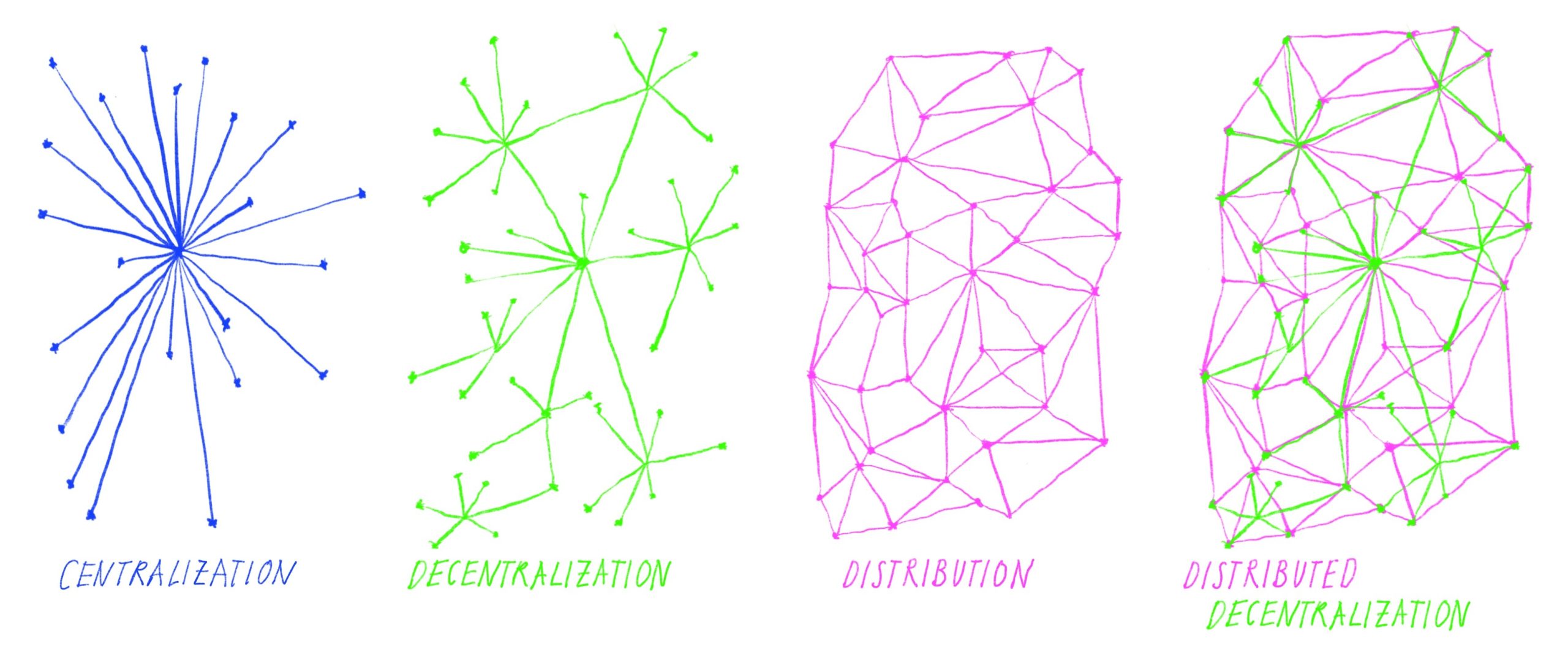
Content-addressing solves this fundamental vulnerability by flipping the logic on its head. Instead of asking where a piece of data is, content-addressing asks what the data is. By using cryptographic hashes to identify information, we create a system where data integrity is verifiable, immutable, and independent of its physical location. This shift is not merely technical; it is the prerequisite for a resilient, decentralized, and permanent digital infrastructure.
Key Concepts
To understand content-addressing, you must differentiate between location-based addressing and content-based addressing.
Location-based addressing (The “Where”): This is how the traditional web functions. A URL points to an IP address or a domain name. If the owner of that domain changes the file at that location, your reference now points to new data without you necessarily knowing. It relies entirely on trust in the server administrator.
Content-based addressing (The “What”): This approach uses a cryptographic hash—a unique digital fingerprint—to identify data. If you change a single bit of a file, its hash changes entirely. Because the address is derived directly from the content itself, it is impossible to request one piece of data and receive another without the system detecting the discrepancy.
Immutability: In a content-addressed system, data is immutable. Once a hash is generated for a specific file, that hash will always point to that exact content. If you want to update the file, you generate a new hash. This ensures that the data you retrieve is exactly what you intended to retrieve, with no risk of tampering or “man-in-the-middle” attacks.
Step-by-Step Guide
Implementing a content-addressed workflow involves moving away from file paths and toward unique identifiers. Here is the lifecycle of a content-addressed object:
Hashing: When a file is added to a content-addressed system (like IPFS), the system runs the data through a cryptographic hash function (e.g., SHA-256). This generates a unique string of characters representing the exact state of that data.
CID Generation: The hash is encoded into a Content Identifier (CID). The CID acts as the permanent address for that specific piece of data, regardless of which server or node currently holds it.
Distribution: The data is broadcast across a network. Multiple nodes can store the same data. Because the CID is the address, you do not need to know which node has the file; you simply ask the network, “Who has the data for this CID?”
Verification: Upon receiving the data, your client re-hashes it. If the resulting hash matches the CID you requested, you have cryptographic proof that the data has not been modified in transit.
Examples and Real-World Applications
Content-addressing is not just a theoretical concept; it is the backbone of some of the most robust technologies in use today.
Git (Version Control): Every commit in a Git repository is content-addressed. When you check out a specific commit hash, you are guaranteed to receive the exact codebase as it existed at that moment. This is why Git is so resilient to corruption and why it can easily track changes across distributed teams.
IPFS (InterPlanetary File System): IPFS replaces HTTP with content-addressing. By using CIDs, IPFS allows files to be served from any node in the network. If a website is hosted on IPFS, it remains accessible as long as at least one node in the network is “pinning” or hosting that content, making it immune to traditional server-side censorship or downtime.
Blockchain Ledgers: Many blockchain protocols use content-addressing to store state. By hashing blocks and transactions, the entire history of the chain becomes a self-verifying data structure. If someone attempts to alter a transaction from three years ago, the hash of that block changes, invalidating every subsequent block in the chain.
Common Mistakes
Even with advanced technology, implementation errors can undermine the benefits of content-addressing.
Confusing CIDs with file paths: Developers often try to treat CIDs like traditional filenames. Because CIDs are long, opaque strings, attempting to use them as human-readable identifiers creates a poor user experience. Always use a naming service (like ENS) or a database layer to map human-readable names to CIDs.
Ignoring Data Persistence: Just because data is content-addressed doesn’t mean it stays online forever. If no node on the network “pins” the content, it may be garbage-collected and disappear. Content-addressing ensures integrity, but it does not automatically guarantee availability without active hosting.
Relying on Centralized Gateways: Many users access content-addressed data via centralized gateways (e.g., an HTTP-to-IPFS gateway). This reintroduces a single point of failure. For true decentralization, users should interact with the network via local nodes.
Advanced Tips
For those looking to integrate content-addressing into production-grade systems, consider these advanced concepts:
CID Versions: Always prefer CIDv1 over CIDv0. CIDv1 supports multiple hashing algorithms and codecs, allowing for future-proofing. If your hashing algorithm is ever compromised, CIDv1 allows for a transition to more secure algorithms without breaking the system’s address schema.
Content Routing: In large-scale systems, finding the node that holds your data is the biggest bottleneck. Utilize Distributed Hash Tables (DHTs) to index who has which content. Understanding how your chosen protocol manages “provider records” will significantly improve your retrieval speeds.
Merkle DAGs: Advanced systems organize data as a Directed Acyclic Graph (DAG) of content-addressed objects. This allows for “deduplication.” If two different files share the same image, that image is only stored once and referenced by both files, drastically reducing storage costs and bandwidth requirements.
Conclusion
Content-addressing is a fundamental upgrade to how we treat information. By moving the identity of data from a fragile, location-based URL to a robust, cryptographic fingerprint, we create a digital landscape that is more secure, verifiable, and permanent.
The shift toward content-addressing marks the transition from an internet of “places” to an internet of “knowledge.”
For individuals and organizations, adopting this paradigm means moving away from a reliance on server-side guarantees and toward a model of self-certifying data. Whether you are building distributed applications, managing versioned code, or simply looking to preserve information for the long term, content-addressing provides the necessary tools to ensure that the data you possess today remains the same data you retrieve tomorrow.






Leave a Reply