
Uncategorized
-

The psychological impact of AI explanations is profound; humans tend to over-rely on complex, opaque systems.
The Psychology of AI Transparency: Why We Trust “Black Box” Systems Too Much Introduction We live in the era of the “Black Box.” From medical diagnostic tools to algorithmic hiring platforms and credit-scoring models, artificial intelligence is making life-altering decisions for us every day. The prevailing belief in the tech industry has been that if…
-

Layer-wise Relevance Propagation (LRP) redistributes output scores back through deep network layers.
Demystifying Deep Learning: Understanding Layer-wise Relevance Propagation (LRP) Introduction Deep learning models, particularly deep neural networks, are frequently criticized as “black boxes.” While they achieve state-of-the-art performance in image recognition, natural language processing, and medical diagnostics, their internal decision-making processes often remain opaque. When a model predicts a high-risk medical diagnosis or denies a loan…
-

Accuracy in criminal justice is frequently undermined by feedback loops inherent in biased training datasets.
Outline Introduction: The automation of bias in criminal justice algorithms. Key Concepts: Defining algorithmic feedback loops and “garbage in, garbage out” data dynamics. Step-by-Step Guide: How practitioners and policy makers can identify and audit algorithmic bias. Case Studies: Analyzing recidivism prediction tools (COMPAS) and predictive policing software (PredPol). Common Mistakes: The pitfalls of relying on…
-
Saliency maps visualize pixel importance in computer vision tasks by calculating gradients.
Outline Introduction: The “black box” problem in deep learning and the role of saliency maps as a diagnostic tool. Key Concepts: Understanding gradients, backpropagation, and the mathematical intuition behind pixel importance. Step-by-Step Guide: How to implement a basic saliency map using Python, PyTorch/TensorFlow, and autograd. Real-World Applications: Medical imaging (X-ray analysis) and autonomous vehicle perception.…
-
Predictive policing algorithms often obscure the causal variables leading to disproportionate surveillance in neighborhoods.
The Feedback Loop: How Predictive Policing Obscures Structural Bias Introduction In the modern era of law enforcement, the badge is increasingly supplemented by the algorithm. Departments across the globe have adopted predictive policing software—tools designed to forecast where crimes are most likely to occur. The promise is seductive: by leveraging “big data,” police claim they…
-

Model-specific techniques leverage internal structures, such as weights or gradient information.
Outline Introduction: The shift from black-box inference to white-box optimization. Key Concepts: Understanding Weight-based vs. Gradient-based insights. Step-by-Step Guide: Implementing pruning, quantization, and gradient saliency. Real-World Applications: Model interpretability in healthcare and latency reduction in edge computing. Common Mistakes: Over-pruning, overfitting to gradients, and ignoring model drift. Advanced Tips: Hessian-based analysis and sensitivity pruning. Conclusion:…
-

Individual Conditional Expectation (ICE) plots reveal variations in predictions for individual instances.
Beyond Global Averages: Using Individual Conditional Expectation (ICE) Plots for Model Transparency Introduction In the world of machine learning, we often fall into the trap of obsessing over aggregate metrics. We look at F1-scores, R-squared values, and RMSE to determine if a model is “good.” But a model that performs well on average can still…
-
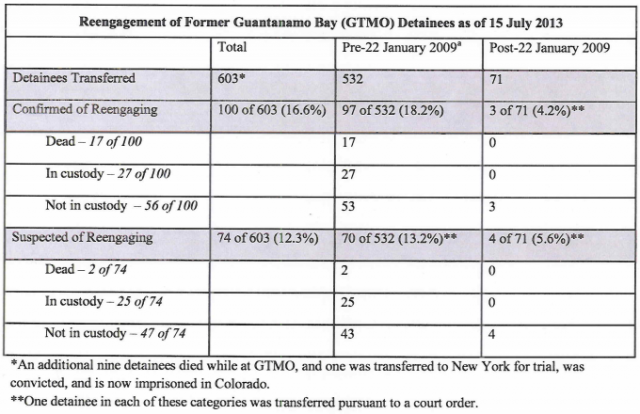
Recidivism prediction tools must operate with high interpretability to ensure procedural fairness in sentencing.
The Case for Algorithmic Transparency: Why Interpretability is Essential for Recidivism Prediction Introduction In modern criminal justice, the quest for efficiency has led to the widespread adoption of recidivism prediction tools—algorithmic systems designed to estimate the likelihood that a defendant will re-offend. Proponents argue these tools reduce human bias and standardize sentencing. However, a critical…
-
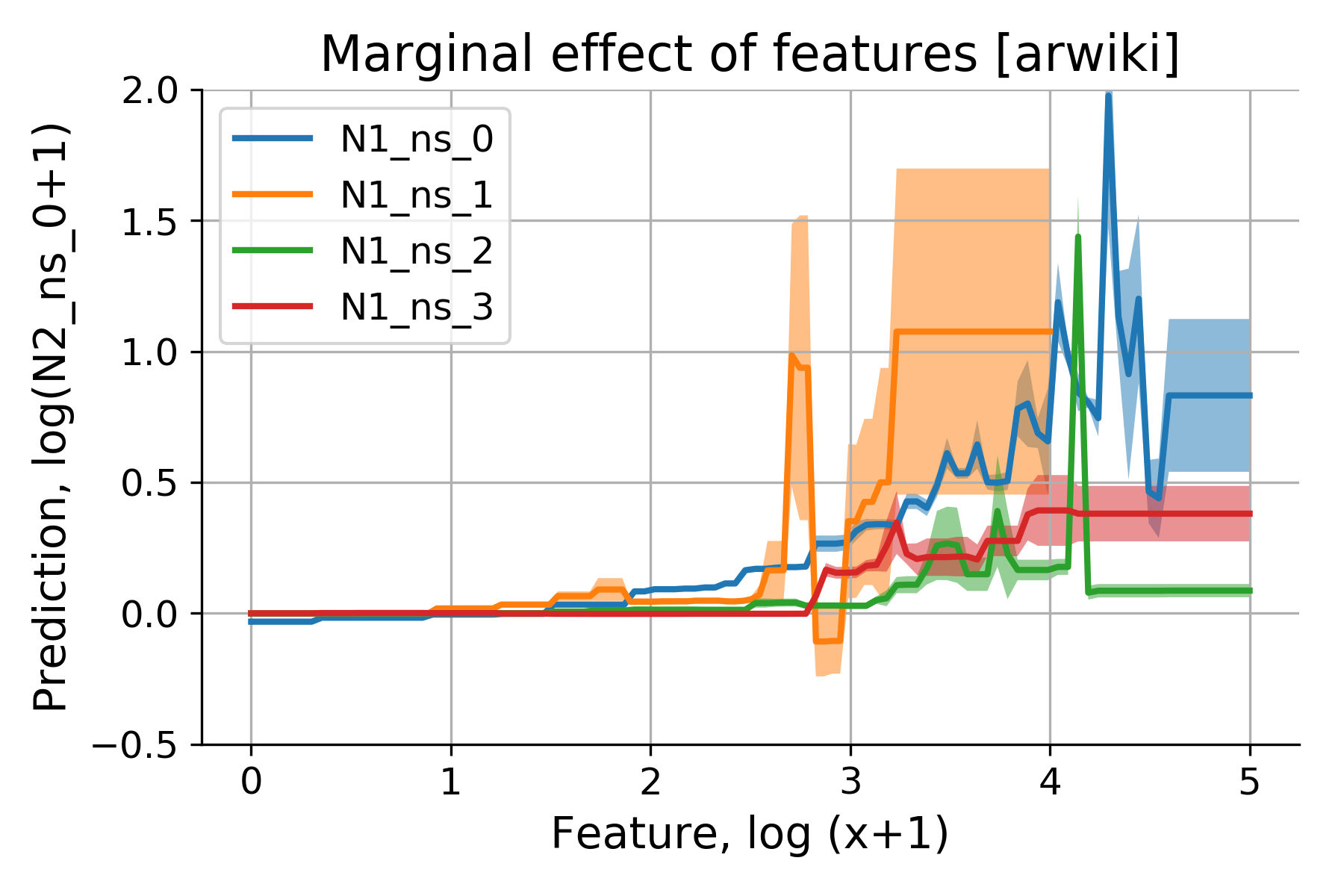
Partial Dependence Plots (PDP) illustrate the marginal effect of features on model predictions.
Contents 1. Introduction: The “Black Box” problem in machine learning and how interpretability leads to trust. 2. Key Concepts: Defining Partial Dependence Plots (PDPs) as a marginal effect visualization tool. 3. Step-by-Step Guide: How to compute and interpret PDPs in a data science workflow. 4. Real-World Applications: Use cases in credit scoring, healthcare, and predictive…
-

Criminal justice systems face the most severe consequences regarding algorithmic transparency and public accountability.
Outline Introduction: The shift from human discretion to “black box” algorithms in sentencing, bail, and policing. Key Concepts: Algorithmic bias, proprietary software (the “trade secret” defense), and the feedback loop of data. Step-by-Step Guide: How policymakers and stakeholders can audit and demand transparency in justice tech. Examples: COMPAS recidivism tools and predictive policing software (PredPol).…