
Uncategorized
-

In finance, this enables applicants to understand the specific criteria needed to improve their creditworthiness.
Contents 1. Main Title: Demystifying Creditworthiness: A Strategic Framework for Financial Empowerment 2. Introduction: The hidden architecture of personal finance and why transparency in credit scoring is your greatest asset. 3. Key Concepts: Deconstructing the FICO/VantageScore models (Payment history, utilization, length of history, mix, and inquiries). 4. Step-by-Step Guide: A 5-phase actionable plan to systematically…
-

Model cards serve as documentation templates detailing performance, limitations, and intended use.
Outline Main Title: Beyond the Black Box: How Model Cards Standardize AI Transparency Introduction: The shift from “black box” algorithms to responsible documentation. Key Concepts: What constitutes a Model Card? Defining the “nutrition label” for AI. Step-by-Step Guide: How to draft an effective Model Card for your project. Examples: Real-world applications from Google, Hugging Face,…
-

Counterfactual explanations—”what would have changed the result?”—are highly effective for user understanding.
Beyond the “Black Box”: Why Counterfactual Explanations Are the Future of AI Transparency Introduction For years, the field of Artificial Intelligence has been plagued by the “Black Box” problem. When an algorithm denies a loan, flags a transaction as fraudulent, or recommends a specific medical treatment, it often offers little insight into why that decision…
-
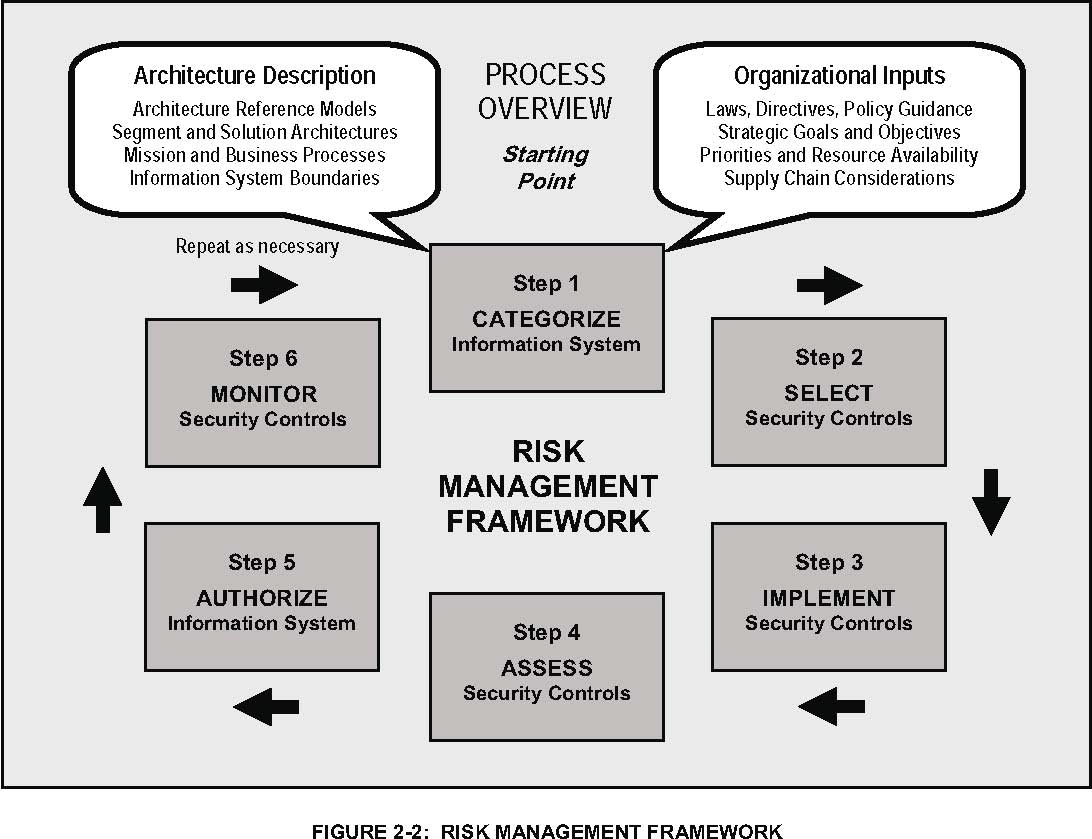
The NIST AI Risk Management Framework provides guidance for measuring trustworthy AIsystems.
Contents 1. Introduction: The shift from AI experimentation to deployment and why governance is critical. 2. Key Concepts: Defining the NIST AI RMF core: Map, Measure, Manage, and Govern. 3. Step-by-Step Guide: Implementation strategy for organizations. 4. Real-World Applications: Financial services and healthcare scenarios. 5. Common Mistakes: Over-reliance on automation, siloed governance, and “compliance-only” mindsets.…
-

Transparency without accessibility is ineffective; raw feature importance is often meaningless to a layperson.
The Transparency Paradox: Why Raw Data Isn’t Understanding Introduction In the age of algorithmic decision-making, we are obsessed with transparency. We demand to know “how” an AI reached its conclusion, often under the banner of explainability. Organizations rush to publish feature importance charts, Shapley values, and deep-learning heatmaps to prove they are operating with integrity.…
-

Demographic parity ensures that prediction distributions are consistent across demographic categories.
Demographic Parity: Achieving Fairness in Algorithmic Decision-Making Introduction In an era where machine learning algorithms determine everything from credit approvals to hiring prospects, the question of fairness has moved from philosophical debate to a core technical requirement. At the heart of this discussion lies demographic parity, a formal metric of fairness that demands that the…
-

Training programs are required to educate domain experts on the limitations and capabilities of XAI tools.
The Human-AI Bridge: Designing Training for Domain Experts in Explainable AI Introduction Artificial Intelligence has moved from the experimental lab to the core of high-stakes decision-making. Whether it is a doctor diagnosing a patient or a loan officer approving credit, domain experts are increasingly relying on machine learning models. However, a “black box” model that…
-

Disparate impact analysis quantifies the proportionality of outcomes for protected groups.
Understanding Disparate Impact Analysis: Ensuring Fair Outcomes in Business and Law Introduction In an era where algorithmic decision-making and data-driven policies dictate everything from hiring practices to mortgage approvals, the concept of fairness has moved from an abstract ethical goal to a measurable technical requirement. Organizations today face intense scrutiny regarding whether their internal policies—even…
-

Cultural resistance to XAI persists where professionals view AI transparency as a threat to their expertise.
The Expert’s Dilemma: Overcoming Cultural Resistance to Explainable AI Introduction For decades, professional expertise has been defined by the ability to interpret complex data, synthesize experience, and make high-stakes decisions. From radiologists diagnosing rare pathologies to financial analysts predicting market volatility, human authority is built on the “black box” of intuition—a mixture of pattern recognition…
-

Fairness constraints can be integrated into the objective function during model training.
Building Ethical AI: Integrating Fairness Constraints into the Training Objective Introduction For years, the machine learning community operated under a singular directive: maximize accuracy. If a model predicted outcomes with high precision, it was considered a success. However, we have learned the hard way that a model can be highly accurate while simultaneously perpetuating systemic…