
Uncategorized
-

Collaborative filtering explanations clarify why specific recommendations were generated.
### Article Outline 1. Introduction: Defining the “black box” problem in AI and why transparency builds user trust. 2. Key Concepts: Understanding collaborative filtering (User-User vs. Item-Item) and the role of explainability (XAI). 3. Step-by-Step Guide: Implementing explainability layers within a recommendation engine architecture. 4. Examples and Case Studies: Analyzing Amazon’s “Customers who bought this…”…
-

Non-technical stakeholders require explanations focused on outcomes rather than mechanics.
Translating Value: How to Align Technical Projects with Business Outcomes Introduction Every technical professional has experienced the “glazed-over look.” You are deep in the weeds of a system architecture discussion, explaining latency optimization or database sharding, only to realize the stakeholders in the room have stopped listening. The disconnect isn’t a lack of intelligence; it…
-

Visual metaphors simplify complex statistical concepts like probability and risk.
Visual Metaphors: Simplifying Probability and Risk for Better Decision Making Introduction The human brain is not hardwired for statistics. We are biologically predisposed to seek patterns and narratives, often viewing the world through anecdotal evidence rather than raw data. When faced with complex probabilistic scenarios—such as investment volatility, medical diagnostics, or project management timelines—the abstract…
-

User-centered design involves mapping stakeholder goals to specific model explanations.
Bridging the Gap: Mapping Stakeholder Goals to Model Explanations Introduction Artificial Intelligence is no longer a “black box” experiment; it is the engine powering modern enterprise decision-making. Yet, a persistent disconnect remains: data scientists build complex models to maximize accuracy, while stakeholders—ranging from frontline employees to executive leadership—struggle to trust or interpret the results. The…
-

Error logging interfaces provide a history of why previous decisions were rejected.
Contents 1. Introduction: The “Black Box” problem in decision-making and why error logs are the institutional memory of software systems. 2. Key Concepts: Understanding error logging not as a nuisance, but as a forensic diagnostic tool. The difference between transient alerts and historical decision-rejection telemetry. 3. Step-by-Step Guide: Implementing a robust, context-aware error logging interface…
-
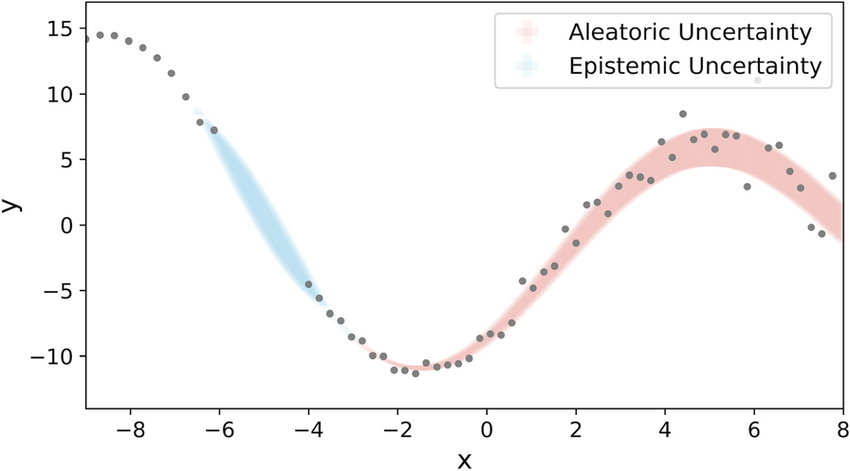
Uncertainty quantification signals when a model lacks sufficient data for a decision.
The Silent Alarm: Using Uncertainty Quantification to Detect Data Deficits Introduction In the age of generative AI and automated decision-making, we often treat model outputs as gospel. We ask a question, we receive a response, and we act. However, the most dangerous output a model can provide is a confident falsehood born from insufficient data.…
-

Personalization of explanations helps meet the unique needs of diverse stakeholders.
Contents 1. Introduction: The “Curse of Knowledge” and the necessity of audience-centric communication. 2. Key Concepts: Defining personalized explanations (The “Why, What, How” framework). 3. Step-by-Step Guide: A tactical framework for tailoring complex information. 4. Case Studies: Financial literacy for clients vs. technical briefings for engineers. 5. Common Mistakes: Cognitive load, jargon traps, and tone…
-

Natural language summaries translate complex weights into actionable, context-aware advice.
Contents 1. Introduction: Bridging the gap between raw data (AI/ML weights) and human decision-making. 2. Key Concepts: Defining “complex weights” and the transition to Large Language Models (LLMs) as translators. 3. Step-by-Step Guide: How to turn technical outputs into narrative strategy. 4. Real-World Applications: Finance, healthcare, and enterprise software examples. 5. Common Mistakes: Over-trusting automation…
-

Accessibility standards must be integrated into the visualization of AI logic.
Outline Introduction: The “Black Box” problem and the ethical imperative of accessible AI interpretability. Key Concepts: Defining AI visualization (Explainable AI – XAI) and its intersection with WCAG standards. Step-by-Step Guide: Integrating accessibility into the design pipeline for AI logic dashboards. Real-World Applications: Healthcare diagnostic tools and financial credit scoring interfaces. Common Mistakes: Over-reliance on…
-

Progressive disclosure allows users to explore deep model details only as needed.
Outline Introduction: Defining cognitive load and the necessity of progressive disclosure in complex interfaces. Key Concepts: The “Core vs. Context” framework and how it manages user attention. Step-by-Step Guide: A practical approach to implementing progressive disclosure in UI/UX workflows. Examples and Case Studies: Analysis of real-world implementations (SaaS dashboards and e-commerce). Common Mistakes: Pitfalls such…