
Environment
-

The Future of Climate Tech: How Competitive Emergent Behavior Simulators Are Solving Complex Problems
Introduction The climate crisis is not a single, linear problem. It is a dense web of interconnected variables—energy grids, consumer behavior, policy shifts, and environmental feedback loops. Traditional predictive models often fail because they treat these systems as predictable machines. In reality, climate systems are “complex adaptive systems” where the actions of individual players create…
-

Verifiable Topological Computing: The Future of Resilient Energy Systems
Introduction As our global energy infrastructure transitions toward decentralized, intermittent renewable sources, the complexity of managing the power grid has reached a breaking point. Traditional linear computing models struggle to maintain stability when faced with the chaotic, non-linear dynamics of millions of interconnected smart devices. Enter verifiable topological computing—a mathematical framework that treats energy grids…
-

Open-World Climate Adaptation Control Policy: Navigating Environmental Risks in XR Environments
Introduction As Extended Reality (XR)—encompassing Augmented, Virtual, and Mixed Reality—moves from niche gaming into the backbone of industrial design, urban planning, and digital twins, the stakes for environmental stability have shifted. We are no longer just building digital assets; we are building “Open-World” ecosystems that must interact with physical climate data. An Open-World climate adaptation…
-

The Path to Net-Zero: Building a Scalable Carbon Removal Benchmark for Edge and IoT
Introduction The global race to achieve net-zero emissions has shifted from macro-level policy to granular operational reality. While large-scale carbon capture projects grab headlines, the silent revolution is happening at the periphery: in our Edge computing nodes and the Internet of Things (IoT). With billions of devices processing data closer to the source, the cumulative…
-

Topology-Aware Brain-Computer Interfaces: The Next Frontier in Geoengineering
Introduction The intersection of neuroscience and climate science has long been relegated to the realm of speculative fiction. However, as our planet faces unprecedented ecological instability, the convergence of Brain-Computer Interfaces (BCIs) and geoengineering—the intentional, large-scale intervention in the Earth’s natural systems—is emerging as a critical theoretical framework. By utilizing topology-aware BCIs, we move beyond…
-

Energy-Aware Programmable Biology: Simulating the Future of Climate Tech
Introduction The climate crisis is a computational problem as much as it is a biological one. As we race to decarbonize the global economy, we are increasingly turning to synthetic biology—the engineering of biological systems—to create carbon-negative materials, sustainable fuels, and resilient crops. However, the traditional trial-and-error approach to laboratory-based synthetic biology is too slow…
-

Trustworthy Alignment and Value Learning: A Framework for Geoengineering
Introduction Geoengineering—the deliberate, large-scale intervention in the Earth’s natural systems to counteract climate change—is no longer a fringe concept. Whether through stratospheric aerosol injection (SAI) to reflect sunlight or marine cloud brightening to cool oceanic temperatures, these technologies offer the potential to avert catastrophic warming. However, the stakes are existential. If we deploy systems that…
-

Multimodal Theory of Mind: The Future of AI Simulation in Climate Tech
Introduction The global climate crisis is not merely a problem of physics or carbon cycles; it is a problem of human behavior, policy friction, and complex stakeholder dynamics. As we race toward net-zero targets, the ability to predict how humans—from industrial CEOs to local policymakers—will react to climate interventions is paramount. This is where Multimodal…
-
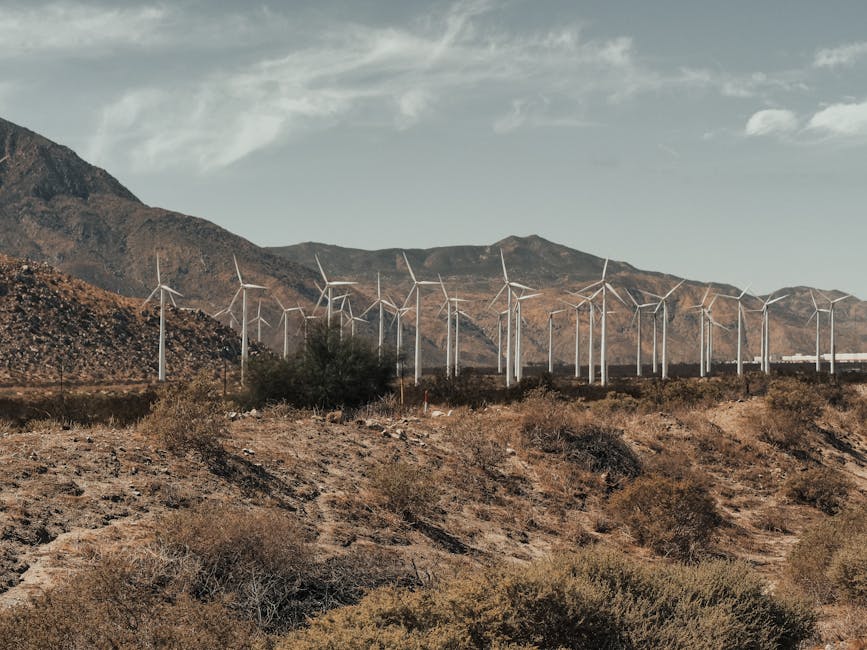
Resource-Constrained Climate Adaptation Standards for Distributed Ledgers
Introduction The intersection of blockchain technology and climate action is often framed through the lens of carbon credits and transparency. However, a critical, often overlooked challenge exists: the environmental footprint of the distributed ledgers themselves. As we integrate blockchain into global infrastructure, we face a paradox where the technology intended to solve climate issues consumes…
-

Balancing the Metaverse: Developing Energy-Aware Carbon Removal Policies for XR
Introduction The promise of Extended Reality (XR)—encompassing Augmented, Virtual, and Mixed Reality—is transformative. From remote surgery simulations to immersive architectural design, XR is reshaping how we interact with digital data. However, this digital revolution comes with a significant, often invisible, cost: an enormous energy footprint. High-fidelity rendering, continuous network synchronization, and the hardware requirements of…