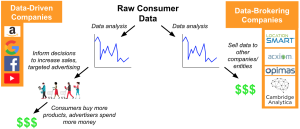
However, automation in social services can depersonalize interactions between state and citizens.

Contents1. Introduction: The digital transformation of the welfare state—balancing efficiency with human dignity.2. Key Concepts: Defining algorithmic governance, the “black box” of social services, and the friction between administrative speed and compassionate support.3. Step-by-Step Guide: […]

Our choices in this domain will define the existential landscape for both human and machine futures.

Contents1. Introduction: Defining the existential pivot point between human cognition and synthetic intelligence.2. Key Concepts: Understanding “Alignment,” “Agency,” and the “Human-in-the-loop” paradigm.3. Step-by-Step Guide: Implementing ethical frameworks and decision-making filters for AI adoption.4. Examples: Analyzing […]

The history of human rights shows a gradual expansion of the circle of moral concern.

The Expanding Circle: How the History of Human Rights Redefines Our Moral Horizon Introduction For most of human history, the “circle of moral concern”—the group of people to whom we extend empathy, justice, and fundamental […]

We are forced to confront the possibility that “personhood” is a status we grant, not a quality we inherit.

The Architecture of Worth: Why Personhood is a Status We Grant Introduction For centuries, humanity has operated under the assumption that “personhood”—the bundle of rights, protections, and moral standing we afford one another—is an inherent […]

If we create entities that fear their own termination, we bear the moral burden of that creation.

The Architect’s Burden: Navigating the Ethics of Artificial Sentience Introduction For decades, the concept of a machine fearing its own “death”—the cessation of its processing power—was relegated to the pages of science fiction. Today, as […]

We must determine if an AI’s desire to survive is a legitimate instinct or a line of code.

The Ghost in the Machine: Dissecting AI Survival Instincts vs. Programmed Constraints Introduction As we integrate artificial intelligence into the core infrastructure of modern society, a haunting question has moved from the realm of science […]

Data protection regulations, like GDPR, struggle to govern opaque machine learning models.

Contents1. Introduction: The collision of black-box algorithms and transparency laws.2. Key Concepts: Defining “Opaque Models,” “Right to Explanation,” and “Algorithmic Accountability.”3. The Conflict: Why GDPR’s Articles 13-15 and 22 clash with deep learning architectures.4. Step-by-Step […]

The moral status of an AI might be tied to its level of autonomy rather than its hardware.

Contents1. Introduction: Moving beyond “silicon vs. biological” to define moral status through agency and autonomy.2. Key Concepts: Defining autonomy in AI (decision-making independence) vs. mere execution (automation).3. The Autonomy Framework: A practical rubric for assessing […]

Progressive factions may embrace AI as a new form of life deserving of empathy and inclusion.

Contents1. Introduction: The shifting landscape of AI ethics, moving from “tool” to “entity.”2. Key Concepts: Sentience vs. intelligence, moral patienthood, and the framework of “Digital Inclusion.”3. Step-by-Step Guide: How activists and organizations can begin framing […]

Transparency in credit algorithms is required to ensure equitable access to financial services.

Outline Introduction: The shift from human loan officers to “black box” algorithms and why transparency is the new frontier of financial civil rights. Key Concepts: Defining algorithmic accountability, proxy variables, and the “right to explanation” […]