Train operations staff on the limitations of specific diagnostic AI models.

Training Operations Staff on AI Diagnostic Limitations: Bridging the Human-Machine Gap Introduction Artificial intelligence is no longer a futuristic concept; it is an active participant in operational decision-making. From predictive maintenance in manufacturing to triage […]


Utilize HITL feedback loops to refine training data based on real-world errors.

Contents 1. Introduction: Bridging the gap between model training and real-world performance through Human-in-the-Loop (HITL).2. Key Concepts: Defining HITL, feedback loops, and the distinction between static training and iterative refinement.3. Step-by-Step Guide: Establishing a production-to-training […]

Implement mandatory human review cycles for automated financial transaction approvals.

Outline Introduction: The tension between speed and security in automated finance. Key Concepts: Defining “Human-in-the-loop” (HITL) and risk-based segmentation. Step-by-Step Guide: Implementing a tiered review system for automated approvals. Examples and Case Studies: Real-world applications […]

Define clear escalation paths when AI systems encounter high-uncertainty inputs.

Contents1. Introduction: The “automation bias” trap and why high-uncertainty inputs are the silent killers of AI reliability.2. Key Concepts: Defining uncertainty (aleatoric vs. epistemic), confidence thresholds, and the “Human-in-the-Loop” (HITL) framework.3. Step-by-Step Guide: Mapping the […]

Design user interfaces that clearly communicate model confidence levels to operators.

Designing for Trust: Communicating AI Model Confidence to Operators Introduction Artificial Intelligence is no longer a “black box” experiment; it is a critical tool integrated into high-stakes environments like medical diagnostics, autonomous logistics, and financial […]

Integrate human-in-the-loop (HITL) protocols for high-stakes automated decisions.

Integrating Human-in-the-Loop (HITL) Protocols for High-Stakes Automated Decisions Introduction As artificial intelligence systems grow increasingly sophisticated, the temptation to automate every operational process is high. However, when algorithms dictate decisions involving human lives, legal standing, […]

Practical Implementation, Human-in-the-Loop, and Organizational Culture

Outline Introduction: The shift from “AI versus Human” to “AI-Augmented Human Intelligence.” Key Concepts: Defining Human-in-the-Loop (HITL) and the cultural prerequisites for adoption. Step-by-Step Guide: A practical roadmap for deploying HITL systems. Case Studies: Practical […]

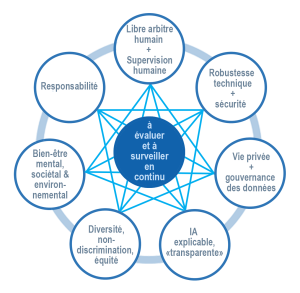
Trustworthy AI is the ultimate objective, balancing technical progress with human-centric values.

Trustworthy AI: Balancing Technical Progress with Human-Centric Values Introduction Artificial Intelligence is no longer a futuristic concept relegated to science fiction; it is the engine driving our modern infrastructure. From the algorithms that curate your […]

Public-private partnerships foster the development of shared tools for evaluating model safety.

Collaborative Governance: How Public-Private Partnerships are Building the Foundation for AI Safety Introduction The rapid proliferation of Large Language Models (LLMs) has placed us at a technological crossroads. While the innovation cycle moves at breakneck […]

Vendor risk assessments extend the duty of care to third-party AI software and data providers.

Contents 1. Introduction: The shifting landscape of digital liability; why “black box” AI requires more than standard IT procurement.2. Key Concepts: Defining Third-Party AI Risk (Data lineage, model drift, and algorithmic bias).3. The Duty of […]