The psychological impact of AI explanations is profound; humans tend to over-rely on complex, opaque systems.

The Psychology of AI Transparency: Why We Trust “Black Box” Systems Too Much Introduction We live in the era of the “Black Box.” From medical diagnostic tools to algorithmic hiring platforms and credit-scoring models, artificial […]

Layer-wise Relevance Propagation (LRP) redistributes output scores back through deep network layers.

Demystifying Deep Learning: Understanding Layer-wise Relevance Propagation (LRP) Introduction Deep learning models, particularly deep neural networks, are frequently criticized as “black boxes.” While they achieve state-of-the-art performance in image recognition, natural language processing, and medical […]

Saliency maps visualize pixel importance in computer vision tasks by calculating gradients.

Outline Introduction: The “black box” problem in deep learning and the role of saliency maps as a diagnostic tool. Key Concepts: Understanding gradients, backpropagation, and the mathematical intuition behind pixel importance. Step-by-Step Guide: How to […]

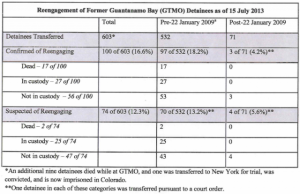
Recidivism prediction tools must operate with high interpretability to ensure procedural fairness in sentencing.

The Case for Algorithmic Transparency: Why Interpretability is Essential for Recidivism Prediction Introduction In modern criminal justice, the quest for efficiency has led to the widespread adoption of recidivism prediction tools—algorithmic systems designed to estimate […]

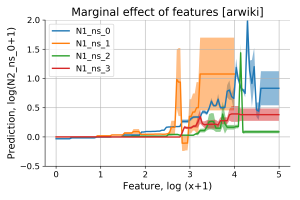
Partial Dependence Plots (PDP) illustrate the marginal effect of features on model predictions.

Contents1. Introduction: The “Black Box” problem in machine learning and how interpretability leads to trust.2. Key Concepts: Defining Partial Dependence Plots (PDPs) as a marginal effect visualization tool.3. Step-by-Step Guide: How to compute and interpret […]

Criminal justice systems face the most severe consequences regarding algorithmic transparency and public accountability.

Outline Introduction: The shift from human discretion to “black box” algorithms in sentencing, bail, and policing. Key Concepts: Algorithmic bias, proprietary software (the “trade secret” defense), and the feedback loop of data. Step-by-Step Guide: How […]

The trade-off in finance often manifests as a tension between maximizing predictive profit and model auditability.

Outline Introduction: The tension between “Black Box” performance and “Glass Box” compliance. Key Concepts: Explaining Predictive Profit (accuracy/alpha) vs. Model Auditability (interpretability/regulatory scrutiny). Step-by-Step Guide: A framework for balancing complexity with transparency in financial modeling. […]

The successful integration of XAI will determine the long-term societal acceptance of artificial intelligence. Technical Methodologies and Standards for AI Interpretability

Outline Introduction: The “Black Box” problem and the trust deficit in AI. Key Concepts: Defining XAI (Explainable AI), Feature Attribution, and Surrogate Models. Technical Methodologies: A step-by-step framework for integrating interpretability into workflows. Real-World Applications: […]

Ultimately, XAI is a tool for accountability, ensuring that human agency remains central to high-stakes decisions.

The Accountability Engine: Why XAI is Essential for Human-Centric Decision Making Introduction We are currently witnessing a seismic shift in how decisions are made. From mortgage approvals and medical diagnostics to predictive policing and hiring […]

In finance, XAI is critical for regulatory transparency regarding credit scoring and automated loan approvals.

The Black Box Problem: Why XAI is Essential for Modern Credit Scoring Introduction In the high-stakes world of financial services, the speed of decision-making is often matched only by the complexity of the algorithms behind […]