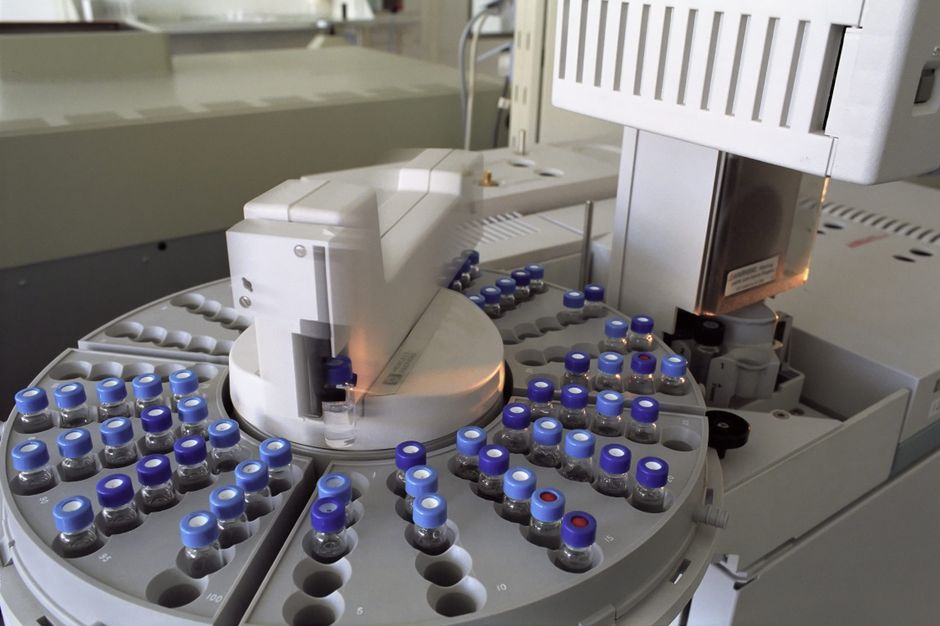
The Industrialization of Innovation: Why Automated Chemical Synthesis is a Strategic Imperative
Most organizations treat R&D as a black box—a high-burn-rate endeavor where inputs are capital and talent, and outputs are unpredictable discoveries. In the realm of chemical synthesis, this model is rapidly becoming obsolete. The shift toward automated 125-series synthesis platforms represents more than a technological upgrade; it is a fundamental restructuring of how a firm captures competitive advantage through the velocity of experimentation.
When synthesis becomes a programmable function rather than a manual craft, the bottleneck shifts from physical execution to strategic design. Leaders who fail to integrate high-throughput automation into their operational core are not just losing time; they are ceding the ability to iterate at a pace their competitors will soon dictate as the industry standard.
The Economics of High-Throughput Synthesis
Manual synthesis is inherently limited by the cognitive and physical bandwidth of the scientist. By introducing automated 125-well plate protocols, an organization effectively decouples throughput from headcount. This is a classic exercise in operational excellence. You are no longer scaling by adding bodies; you are scaling by optimizing the architecture of your workflow.
The strategic value here is optionality. With automated platforms, a team can explore a wider chemical space in a single week than a traditional lab might cover in a quarter. This density of data allows for a more aggressive testing of hypotheses, effectively shortening the feedback loop. In any high-stakes environment, the entity that learns faster, wins. Automation provides the infrastructure for that accelerated learning.
From Execution to Decision-Making
When you automate the “how,” you must upgrade your focus on the “what.” Automated synthesis produces vast streams of data, which transforms the role of the lead scientist from a technician to a director of decision-making. The challenge is no longer performing the reaction; it is determining which reactions carry the most strategic weight for the organization’s long-term objectives.
High-performance teams use this transition to shift their best talent toward high-level synthesis planning and AI-driven predictive modeling. If your top scientists are still spending hours at a fume hood performing routine tasks that a robotic system can execute with higher precision and lower variance, you are misallocating your most expensive assets. True leadership involves identifying these friction points and replacing them with systems that prioritize intellectual output over manual labor.
The Integration of AI and Synthesis
The convergence of automated synthesis and machine learning creates a closed-loop system—a “self-driving” lab. By feeding the results of automated 125-well runs directly into an algorithmic model, the system can autonomously suggest the next set of parameters to optimize yield, purity, or stability. This is the epitome of high-performance thinking applied to physical systems.
However, this requires a rigorous data strategy. Automation is useless if the data generated is siloed, poorly structured, or lacks the metadata required for machine learning models to draw meaningful conclusions. Strategic execution demands that your automated hardware and your digital architecture speak the same language. If they do not, you are merely automating chaos.
Operationalizing the Shift
Transitioning to automated 125-well synthesis is not a plug-and-play procurement exercise. It requires a cultural shift within the R&D department. Teams must pivot from a culture of “personal ownership of the bench” to “stewardship of the pipeline.” This requires clear communication from management regarding the redirection of human capital. When the process becomes standardized, the value of the human contribution shifts to the creative design of experiments and the interpretation of complex, high-volume datasets.
Success in this transition is measured by the reduction in “time to insight.” If the technology does not drive a measurable increase in the rate of discovery or a decrease in the cost per data point, it is not being managed correctly. Keep the focus on the metrics that matter, and ensure that the autonomy granted to these systems is matched by the rigor of your oversight.