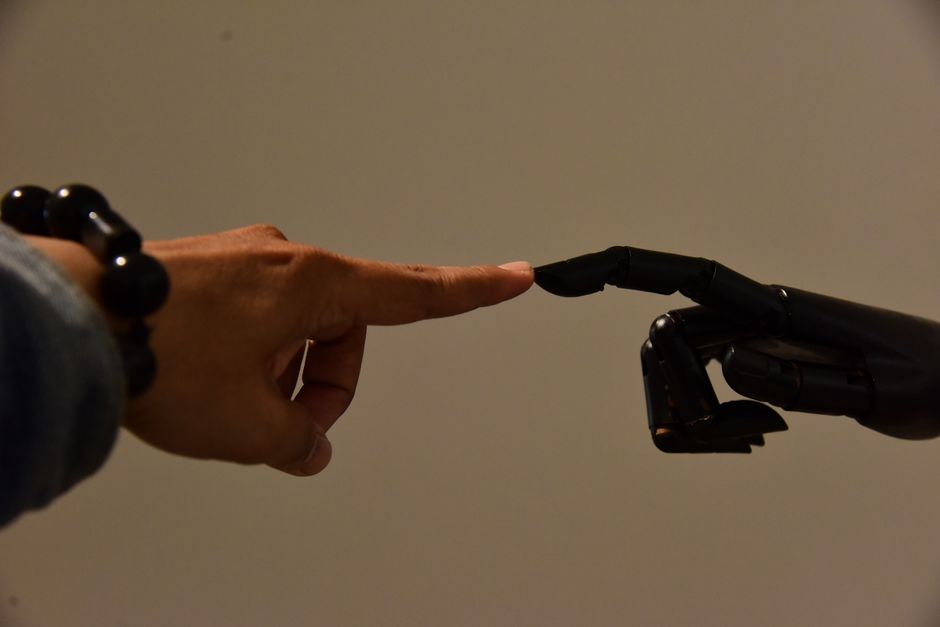
The End of the Solo Creator Myth
For decades, the design process has been romanticized as a solitary pursuit—a lone visionary staring at a blank canvas until inspiration strikes. This archetype is not just outdated; it is a bottleneck. In high-stakes environments, relying on the cognitive limits of a single human mind is a failure of strategy. The arrival of sophisticated generative models has shifted the paradigm from creation to curation, turning the designer into a director of intelligence.
Human-AI collaborative design is not about automating the aesthetic; it is about expanding the boundaries of decision-making. When you integrate AI into the design loop, you are not merely using a tool—you are augmenting your operational capacity to iterate, test, and refine at a speed that renders traditional workflows obsolete.
From Execution to Architectural Direction
High-performance thinking requires a clear distinction between the “what” and the “how.” In traditional design, the human is often mired in the “how”—the pixel-pushing, the layout adjustments, and the repetitive technical cleanup. By delegating these granular tasks to AI, the human designer is elevated to the role of an architect.
This shift demands a new set of skills. You no longer need to be the fastest hand; you must be the sharpest judge. The value lies in your ability to define the constraints, identify the problem space, and curate the output of the machine. This is leadership applied to design: setting the vision and providing the feedback loops that force the system toward the desired outcome.
The Constraint-Based Framework
Effective collaboration with AI relies on superior prompt engineering, which is essentially the art of setting high-fidelity constraints. Without clear parameters, AI produces mediocrity. To achieve excellence, you must treat the AI as a junior partner who requires a precise brief:
- Define the Objective: What is the business outcome? Is it clarity, conversion, or brand authority?
- Establish Visual Constraints: Define the design language, color theory, and structural limitations before the model begins generation.
- Iterative Feedback: Treat the initial output as a prototype. Use your domain expertise to refine the iteration, pushing the model toward higher-order solutions.
Operational Excellence Through Rapid Prototyping
The greatest risk in design is falling in love with a first-draft idea. Human-AI collaboration mitigates this risk by making the cost of failure near zero. When you can generate fifty iterations of a concept in the time it once took to draft one, the process of elimination becomes the process of discovery.
This is where execution meets agility. By leveraging AI to pressure-test design hypotheses, you identify flaws in logic and usability before a single line of production code is written. This is an exercise in decision-making: choosing to invest in the most robust concepts while discarding the noise early in the cycle.
The Human Edge: Intuition and Empathy
AI excels at pattern recognition and speed. It does not, however, possess intuition or empathy. It cannot understand the subtle emotional resonance required to move a market or the cultural nuances that define a premium brand experience. These remain the exclusive domain of the human designer.
The goal is not to replace human insight but to clear the path for it. By offloading the mechanical aspects of design, you reclaim the mental bandwidth necessary for high-level creative strategy. You are no longer fighting the software; you are focusing on the audience. This distinction is what separates commoditized design from work that commands authority.
Building the Collaborative Workflow
To institutionalize this approach, organizations must move beyond the “AI as a toy” mindset. It requires a fundamental restructuring of how design teams interact with technology:
- Standardize the Brief: If your team cannot articulate the design constraints clearly, the AI will fail. High-performance teams document their design systems to act as the “source of truth” for AI models.
- Adopt a “Director” Workflow: Shift the focus of weekly reviews from technical execution to strategic alignment. Ask not how the design was made, but how it serves the business objective.
- Continuous Skill Acquisition: The tools change every quarter. The ability to unlearn outdated workflows and adopt new collaborative interfaces is the ultimate competitive advantage.
Human-AI collaboration is not a temporary trend; it is the new standard for operational excellence. Those who master the ability to direct machine intelligence will define the next generation of creative output, while those who cling to solo execution will find themselves sidelined by the velocity of the market.