Unlocking the Black Box: How Attention Maps Reveal Semantic Insights in NLP
Introduction
For years, deep learning models in Natural Language Processing (NLP) were treated as impenetrable “black boxes.” We fed text into a Transformer model, received a translation or a sentiment score, and trusted the output without truly understanding the *why* behind the prediction. The rise of the Transformer architecture changed this by introducing the “Attention Mechanism.”
Attention maps serve as a visual and mathematical bridge between raw data and model logic. By highlighting which words a model “looks at” when processing a specific token, these maps provide intuitive semantic insights that help developers debug models, understand linguistic patterns, and build trust in AI systems. In this guide, we explore how to interpret these maps and leverage them to build better, more transparent NLP applications.
Key Concepts
At its core, the attention mechanism allows a model to weigh the importance of different words in a sequence relative to one another. When a model processes the word “bank” in the sentence “The bank of the river is muddy,” the attention mechanism calculates scores for every other word in that sentence.
Self-Attention is the engine behind this. It computes a relationship score—often using dot-product similarity—between the current word (the query) and all other words (the keys). The resulting Attention Map is a matrix where the intensity of the cell represents the strength of the relationship. High scores indicate that the model perceives a strong semantic or syntactic link between two tokens.
By visualizing these scores as heatmaps, we shift from guessing why a model failed to seeing precisely where its focus drifted. This transparency is vital for identifying issues like bias, context blindness, or simple syntactic errors.
Step-by-Step Guide: Generating and Interpreting Attention Maps
Choose Your Framework: Libraries like Hugging Face Transformers combined with visualization tools like BertViz are the industry standard for this task.
Load a Pre-trained Model: Use models like BERT, RoBERTa, or GPT-2 that are already tuned to understand linguistic relationships.
Extract Attention Weights: Configure your model to output attention values. In PyTorch, this is usually achieved by setting output_attentions=True in the configuration object.
Normalize the Data: Raw attention scores can be difficult to read. Apply a Softmax function to ensure the weights for a given token sum to 1, providing a clean probability distribution.
Visualize: Map these weights to a color scale. High attention should correspond to dark or vibrant colors, while low attention should appear faint or neutral.
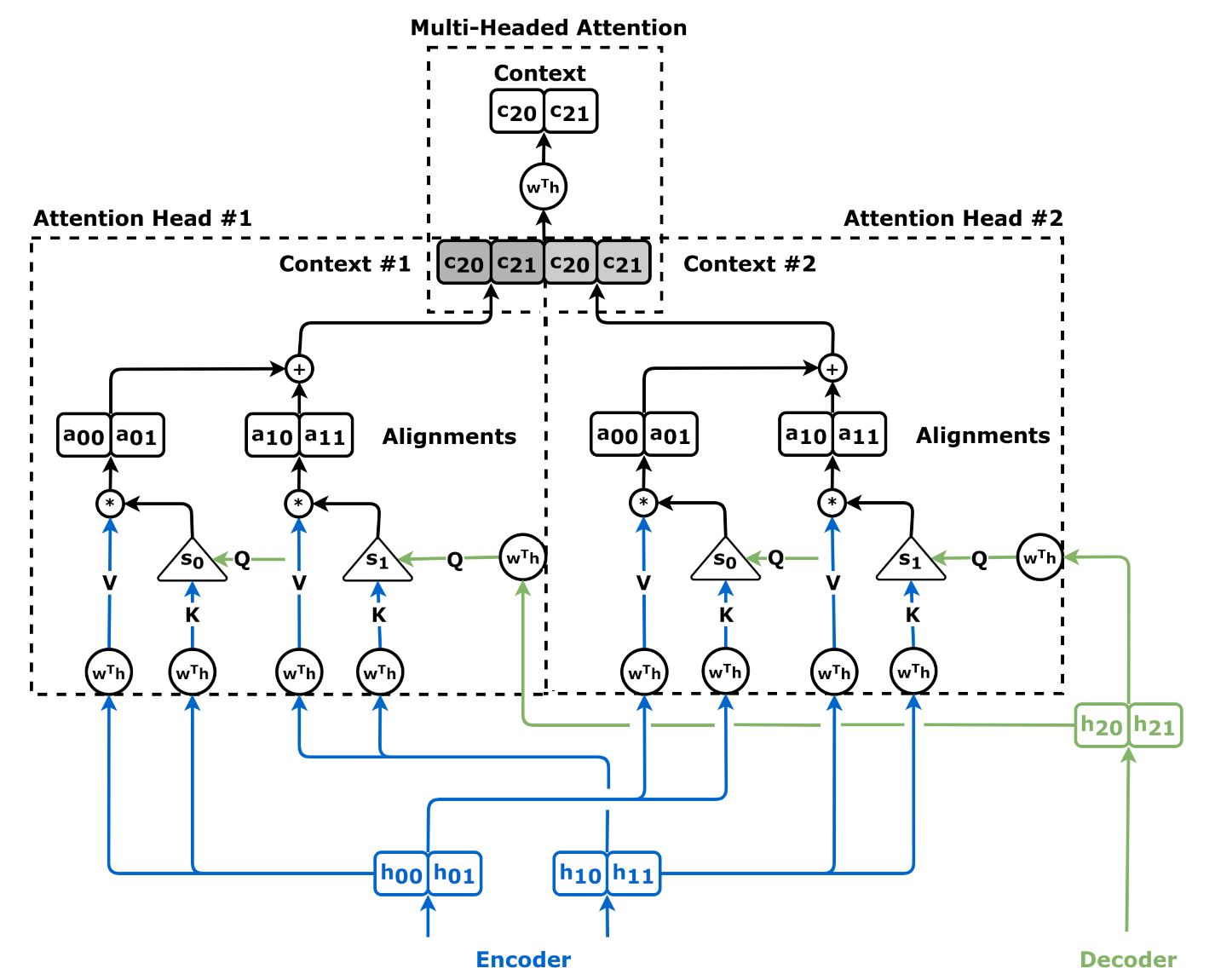
Analyze Head-by-Head: Remember that Transformers have multiple “attention heads.” Don’t just look at the average; inspect individual heads, as some specialize in syntactic dependencies (like subject-verb agreement) while others focus on broad semantic context.
Examples and Real-World Applications
Attention maps are not just academic curiosities; they solve tangible problems in production environments.
Coreference Resolution
Consider the sentence: “The doctor told the nurse that she was late.” Is “she” the doctor or the nurse? By inspecting the attention map for the pronoun “she,” you can see which noun receives higher weight. If the model consistently links “she” to “doctor” despite the context, you know the model has a gender-bias issue that needs mitigation through fine-tuning on debiased datasets.
Improving Machine Translation
In translation tasks, attention maps act as a diagnostic tool. If you are translating English to French, you can visualize whether the model is correctly mapping the English adjective to the appropriate French noun (which requires gender agreement). If the attention is scattered across the entire sentence, the model is likely struggling with word order, signaling a need for more training data or a different architectural approach.
Sentiment Analysis Explainability
When an e-commerce platform flags a customer review as “negative,” the support team needs to know why. By visualizing the attention map, you can identify which adjectives triggered the classification. If the model highlights “customer service” but ignores “product quality,” you gain instant insight into the model’s priority, allowing you to refine your sentiment pipeline.
Common Mistakes
Confusing Attention with Explainability: A high attention score does not always equal a causal explanation. Just because a model “attended” to a word doesn’t mean that word was the sole driver of the output. Use attention maps as a heuristic, not a definitive proof of logic.
Ignoring Multi-Head Dynamics: Beginners often look only at the “average” attention. However, different heads capture different linguistic features. Ignoring specific heads means missing out on the nuance of how the model processes syntax versus semantics.
Over-relying on Visualization: Visualizations are for human interpretation. When performing systematic debugging, use the raw matrix values to calculate quantitative metrics rather than relying solely on “looking” at heatmaps.
Neglecting Layers: Attention behaves differently across layers. Lower layers often focus on local syntax (like simple word-word relations), while higher layers capture complex abstract semantic relationships. Check multiple layers to get the full picture.
Advanced Tips
To take your analysis to the next level, move beyond simple heatmaps. Implement Attention Rollout. Because attention is computed at every layer, the weights become diluted as they pass through the network. Attention Rollout allows you to trace the “flow” of information from the input embeddings all the way to the final prediction, providing a more accurate map of which input tokens truly influenced the output.
Furthermore, combine attention maps with Saliency Maps. Saliency measures how much a change in an input token affects the final output score. When attention (what the model looks at) and saliency (what actually changes the result) overlap, you have found a high-confidence semantic anchor in your data. This is the gold standard for verifying model reliability in high-stakes industries like law or medicine.
Conclusion
Attention maps represent a significant leap forward in our ability to audit and optimize NLP systems. They transform the abstract process of neural computation into a visible, understandable roadmap of how a machine interprets language. By moving beyond treating models as black boxes, you gain the ability to troubleshoot biases, refine accuracy, and explain your model’s behavior to stakeholders.
Start small: visualize the attention of a simple classification model today. You will likely find that the insights gained—whether spotting a misplaced comma or a faulty dependency—will fundamentally change how you approach building and deploying AI models in the future. Transparency is not just a safety feature; it is the key to building smarter, more robust technology.
Compartmentalizing cognitive states is a powerful tool, but elite strategists know that embracing dissonance is the real secret to high-stakes success.
Learn how to secure client-side applications by using temporary, scoped tokens to implement the principle of least privilege and protect your master credentials.
Trust is the bedrock of any system. Explore how decentralization and consensus mechanisms are redefining the future of governance and institutional trust.
Introduction The promise of Distributed Ledger Technology (DLT) has long been hampered by the “trilemma” of scalability, security, and decentralization.…