Architectural Psychology: Designing Environments for High Performance
— by
Steven Haynes
The Invisible Architect of Human Behavior
Most leaders treat the physical office as a background variable—a static container for activity. This is a fundamental error in strategy. The built environment is not neutral; it is an active participant in cognitive processing and emotional regulation. When your workspace does not align with the psychological demands of your tasks, it creates an invisible friction that degrades decision-making and erodes institutional output.
The Cognitive Cost of Spatial Dissonance
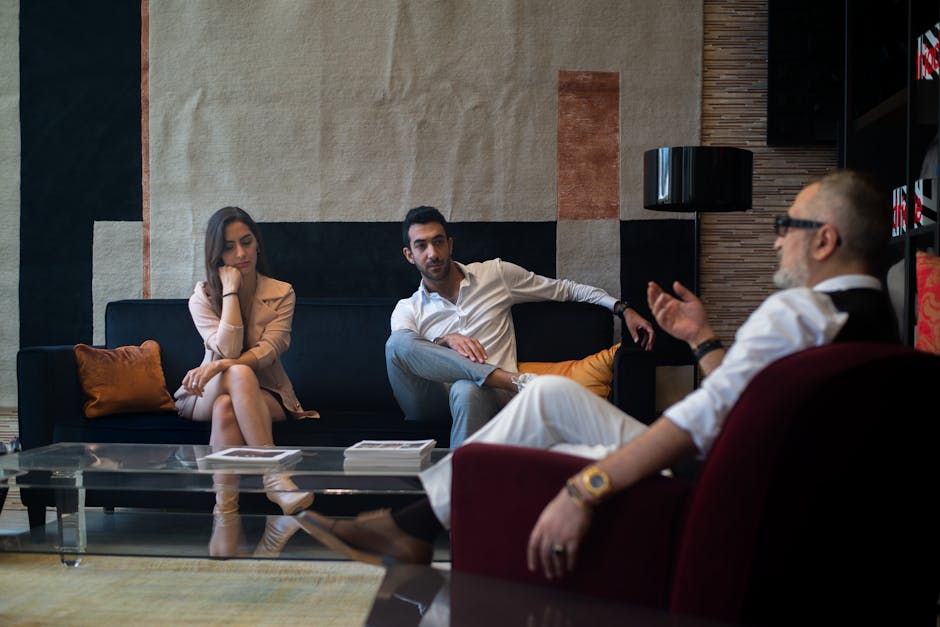
Architecture impacts the brain through sensory stimulation and spatial geometry. High-performance environments must account for the dual needs of focus and collaboration. Open-plan offices, often championed for their perceived effect on productivity, frequently trigger chronic stress due to continuous ambient noise and the loss of individual autonomy. This environmental noise acts as a cognitive tax, draining the mental bandwidth required for complex decision-making.
The challenge for operators lies in creating ‘porous’ environments—spaces that allow for deep work while facilitating spontaneous information exchange. This requires a shift from fixed furniture layouts to modular, adaptive zones. If your physical structure mandates a single mode of working, you have effectively capped the mental versatility of your team.
The Geometry of Authority and Flow
Spatial configuration dictates the speed of information flow. In many legacy organizations, the physical layout reinforces rigid hierarchy, acting as a barrier to rapid execution. To optimize for operations, architectural design must reflect the workflow rather than the org chart. By grouping teams based on task dependency rather than department, you reduce the psychological load of cross-functional communication.
Consider the ‘Prospect-Refuge’ theory, a cornerstone of environmental psychology. Humans perform best when they have a sense of overview (prospect) while feeling secure (refuge). In a modern leadership context, this translates to private spaces that provide a vantage point over the team’s progress, balanced with common areas that foster connection without constant distraction. Leaders who ignore this balance often find their teams suffering from burnout, not because the work is too hard, but because the environment demands perpetual vigilance.
Integrating AI into the Physical Workspace
As AI accelerates the need for human-centric creative work, the physical office becomes a catalyst for insight. Intelligent lighting, ergonomic sound-dampening, and biophilic design are not aesthetic flourishes; they are tools to manage circadian rhythms and cortisol levels. An office that fails to support these basic biological needs is essentially an engine running on degraded fuel. Your infrastructure must serve as a force multiplier, not an impediment to the performance of your most valuable assets: your people.
True operational excellence begins with understanding that your environment influences every neural connection made within it. By intentionally shaping space to align with human psychology, you gain a structural advantage that competitors, who view offices as mere overhead, will rarely replicate. Visit The BossMind to further refine your approach to building systems that support sustained excellence.


Leave a Reply