A scientific inquiry into the reported phenomenon of spontaneous human combustion.
— by
Steven Haynes
The Science of Spontaneous Human Combustion: Separating Myth from Forensic Reality
Introduction
For centuries, the concept of Spontaneous Human Combustion (SHC)—the idea that a living human body can ignite and burn to ash without an external heat source—has haunted the peripheries of forensic science and popular culture. From Victorian-era literary depictions in Charles Dickens’s Bleak House to modern investigative television, the image of a body reduced to cinders while the surrounding environment remains largely untouched is a profound source of macabre fascination.
However, when we pivot from folklore to empirical investigation, the narrative shifts from the supernatural to the physiological. Understanding the forensic reality of these cases is essential for fire investigators, medical examiners, and the public. By stripping away the sensationalism, we find a compelling study in thermodynamics, pathology, and the specific mechanics of human tissue incineration. This article explores the scientific inquiry into SHC and explains why what appears “spontaneous” is almost always the result of predictable, albeit rare, forensic variables.
Key Concepts: The “Wick Effect” and Forensic Thermodynamics
The core of the scientific rejection of spontaneous human combustion lies in a concept known as the “wick effect.” To understand how a human body can suffer catastrophic thermal damage while nearby objects remain unscathed, one must view the human body not as a solid entity, but as a biological candle.
The Wick Effect explained: Human bodies contain a significant percentage of adipose tissue (body fat). Under normal circumstances, fat is contained within the skin and tissues, but when a body is subjected to an external heat source—such as a dropped cigarette, an ember from a fireplace, or a faulty electrical appliance—the skin can crack. As the skin ruptures, subcutaneous fat liquefies and seeps out. This fat acts as fuel, soaking into the victim’s clothing, which functions similarly to the wick of a candle. The clothing facilitates a slow, sustained, and localized burn that can incinerate the torso over several hours.
Thermodynamic Insulation: The reason the surrounding environment often remains unburnt is due to the nature of this “slow burn.” Unlike a structural fire, which involves rapid combustion and high-intensity heat transfer, the wick effect is a low-intensity, long-duration process. The heat remains focused on the fuel source (the body and clothing) rather than spreading to the surrounding room, provided the environment lacks sufficient ventilation or combustible materials in the immediate vicinity.
Step-by-Step Guide: How Forensic Investigators Analyze Thermal Remains
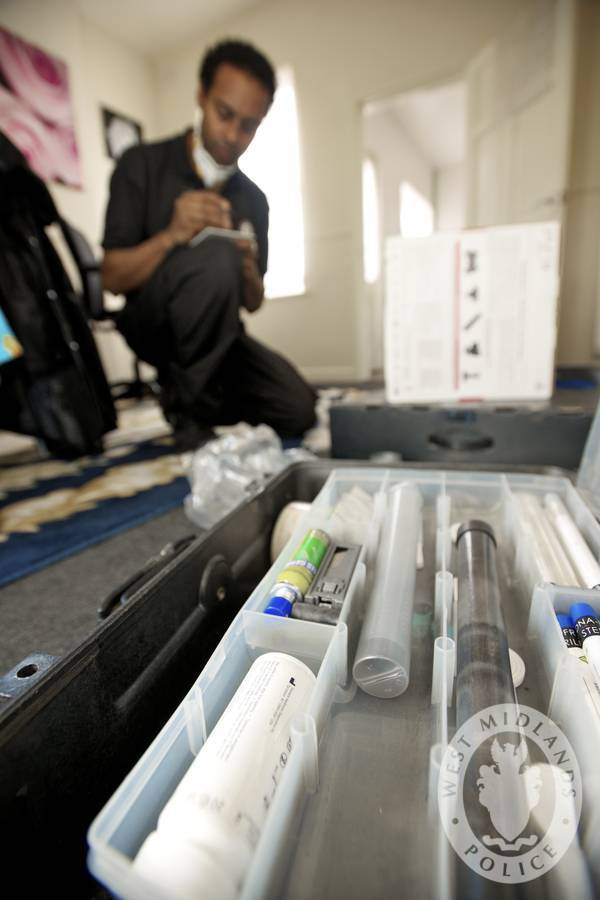
When an investigator encounters a scene where a body has been largely consumed by fire while the surroundings show little damage, they follow a rigorous investigative protocol to determine the cause of death.
Scene Mapping and Ignition Identification: Investigators first look for the “point of origin.” Even if no obvious flame source is found, investigators search for high-probability ignition items like lighters, smoking materials, or heating elements that may have fallen away from the body during the incident.
Analysis of the “Wick” Conditions: Examiners determine if the victim was incapacitated prior to the fire. In most reported SHC cases, the victims were elderly, immobile, or under the influence of alcohol or medication. This is crucial because it explains why the victim did not move to extinguish the initial, small flame.
Thermal Distribution Assessment: Specialists analyze the charring patterns. They look for evidence of localized heat—patterns that suggest the heat source was the body itself (the fuel) rather than an external accelerant like gasoline, which would leave a much larger, high-intensity burn pattern throughout the room.
Pathological Autopsy: The medical examiner checks for internal damage. If the body truly combusted from the inside out, internal organs would show evidence of thermal damage before external skin. However, findings consistently show that the burning occurs from the outside inward, consistent with an external spark.
Chemical Toxicology: Investigators test the remains for substances that might have caused the victim to lose consciousness, effectively turning them into a “sitting target” for a small spark.
Examples and Case Studies
Many historical accounts labeled as SHC have been re-evaluated by modern arson investigators. A common example involves elderly individuals living in sedentary conditions. In one well-documented case, an elderly woman was found in her chair, reduced to ash, while the chair itself was only partially damaged. Initial observers claimed SHC, but forensic investigators pointed to a nearby floor heater and the victim’s habit of wearing heavy, multi-layered clothing.
The “wick effect” acts as a form of natural fuel management. Because the fat is released slowly and consumed by the clothing, the fire does not require the oxygen-rich environment needed for a flashover fire. This is why the rest of the room often remains undisturbed, leading to the false conclusion of a spontaneous event.
Another classic case involves the 1951 death of Mary Reeser. While the “Cinder Lady” case was widely cited as a pinnacle of spontaneous combustion, further investigation noted the presence of her nightgown and the high likelihood of a dropped cigarette. The investigation confirmed that the conditions—a localized, small-scale fire—fit the physical requirements of a slow-burn ignition, regardless of how startling the final visual evidence appeared to the general public.
Common Mistakes in Analyzing Fire Scenes
Confirmation Bias: The tendency to view a body as “mysteriously burned” because the observer cannot immediately identify the ignition source. Lack of an obvious match does not equal “spontaneous.”
Ignoring Incapacitation Factors: Many investigators fail to look at the medical history of the victim. If a victim is not in a position to react to a small ember, the fire will naturally progress, regardless of how small it started.
Misinterpreting “Clean” Scenes: People often assume that a large fire must leave a scorched room. They mistake a lack of structural fire damage for an absence of any fire at all, failing to account for the controlled nature of the wick effect.
Advanced Tips for Forensic Observation
For those interested in the forensic perspective, it is vital to focus on the remains rather than the mystery. Advanced fire investigations now utilize computer modeling to recreate the conditions of a room. These models demonstrate that if a person is clothed and contains sufficient adipose tissue, the energy released during a slow burn is theoretically sufficient to reduce the remains to the states found in “SHC” reports.
Furthermore, one must account for post-mortem heat transfer. In scenarios where a house fire occurs, a body can be subjected to intense heat for hours, leading to a degree of incineration that looks abnormal to the untrained eye. Investigators should always look for “thermal shadows”—areas where furniture or walls protected by the body were not burnt—to map the directionality of the heat.
Conclusion
The phenomenon of spontaneous human combustion remains a powerful testament to our need to find explanations for the unexplainable. However, scientific inquiry provides a clear and consistent alternative to the supernatural. By applying the laws of thermodynamics and forensic pathology, we see that the human body, under very specific conditions of mobility and fuel availability, can become an efficient, self-sustaining candle.
Practical forensic investigation teaches us that there is no such thing as spontaneous combustion in the biological sense. What we see instead is a grim, rare interaction between human physiology and external ignitors. By understanding the wick effect, investigators can provide clarity to families, ensure accurate death reporting, and ground our understanding of tragedy in the realm of provable physical law.



Leave a Reply