

Mapping the Collective Unconscious: Clustering European Folklore Motifs
Introduction
For centuries, the oral traditions of Europe have been treated as static archives—dusty tomes of fairy tales and myths stored in university basements. However, folklore is fundamentally dynamic. It is a living, breathing network of motifs that migrate across borders, evolving with every retelling. By applying clustering algorithms to expansive folklore databases, we can move beyond anecdotal comparisons and visualize the hidden geography of human storytelling.
This approach does not just satisfy academic curiosity; it allows us to identify how cultural migration, trade routes, and political boundaries have influenced the evolution of narrative. Whether you are a computational linguist, a digital humanist, or a data scientist interested in cultural analytics, understanding how to apply clustering to motifs offers a unique lens into the shared—and distinct—identity of the European continent.
Key Concepts
To analyze folklore computationally, we must first translate oral tradition into data. This process relies on two fundamental pillars:
- Motif-Index Systems: The Aarne-Thompson-Uther (ATU) index is the gold standard. It categorizes folklore into standardized types (e.g., ATU 300, “The Dragon Slayer”). Each tale is broken down into constituent parts, known as “motifs,” which serve as the atomic units of our analysis.
- Clustering Algorithms: These are unsupervised machine learning techniques that group data points based on similarity. In this context, we aren’t telling the computer which story belongs to which culture; we are asking the algorithm to find natural “neighborhoods” of motifs.
The most common algorithms used here include K-Means (for identifying distinct, non-overlapping groups) and DBSCAN (Density-Based Spatial Clustering of Applications with Noise), which is particularly effective at identifying clusters of varying shapes while ignoring “noise”—or motifs that appear sporadically across the continent.
Step-by-Step Guide: Implementing Motif Clustering
- Data Preprocessing: Raw folklore data is often messy. Convert your narrative corpus into a vector space. Each story becomes a vector where dimensions correspond to the presence or absence of specific motifs (One-Hot Encoding). Ensure the data is normalized to account for varying collection lengths.
- Dimensionality Reduction: Folklore datasets are sparse—most stories contain only a few motifs out of thousands of possibilities. Use t-SNE or UMAP to reduce the dimensionality of your data while preserving the local structures of the motifs. This prevents the “curse of dimensionality” from rendering your clustering results nonsensical.
- Choosing the Metric: Folklore is categorical, not continuous. Use Jaccard Distance or Cosine Similarity rather than Euclidean distance. Jaccard distance is specifically designed to measure the similarity between sets, making it perfect for comparing which motifs overlap between two different folklore archives.
- Executing the Clustering: Run your algorithm. If using K-Means, use the “Elbow Method” to determine the optimal number of clusters (k). If you want to identify geographic patterns, ensure your input vectors include “Geographic Metadata” (latitude/longitude of collection) as a weighted feature.
- Validation and Interpretation: Cluster results must be cross-referenced with historical migration patterns. If a cluster of “Cinderella-type” stories spans the Baltic region, are these motifs truly native, or does the cluster overlap with historical Baltic trade routes?
Examples and Case Studies
One compelling application is the analysis of the Supernatural Helper motif across Central and Eastern Europe. By applying Agglomerative Hierarchical Clustering, researchers have successfully demonstrated that motifs involving “The Helpful Animal” show a distinct cluster that follows the arc of the Carpathian Mountains.
This suggests that geographical barriers acted as filters. While some stories flowed freely across the plains, specific variations in the “Helpful Animal” motif were preserved in mountain communities, creating “islands” of folklore that remained isolated from the homogenizing influence of urban printing presses in the 18th and 19th centuries.
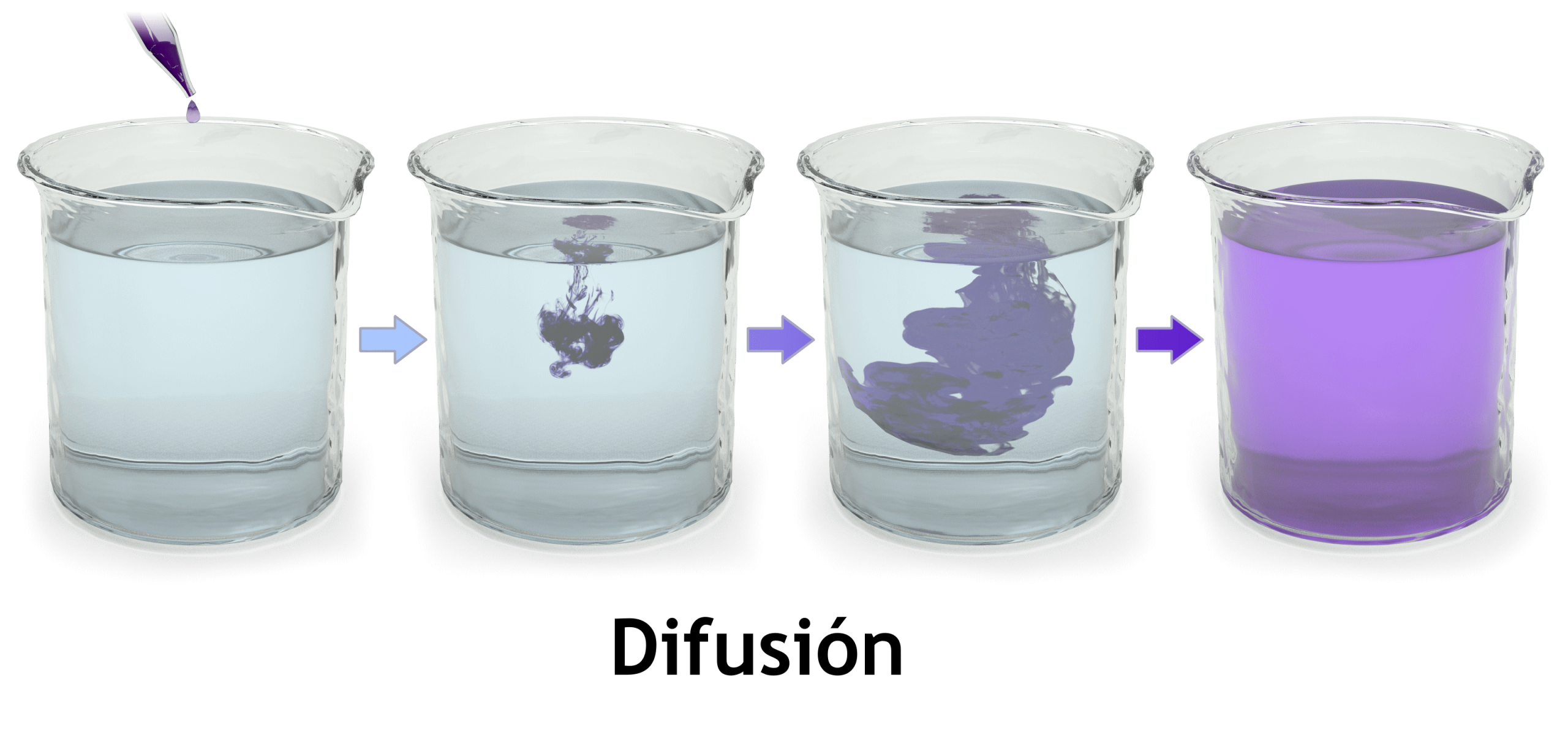
Another real-world application involves the identification of motif diffusion. By looking at temporal metadata alongside cluster membership, historians have been able to trace how specific tales were “imported” into Scandinavia from Southern Europe during the period of the Hanseatic League. The clusters reveal a clear shift: as trade routes intensified, the folklore clusters in northern port cities became statistically indistinguishable from those in Mediterranean trade hubs, proving that cultural transmission was an accidental byproduct of merchant travel.
Common Mistakes
- Ignoring Narrative Structure: A common mistake is treating motifs as a “bag of words.” While motif presence is important, the sequence often dictates the story. Consider using Sequential Pattern Mining before applying clustering to ensure you are comparing similar narrative arcs, not just a random collection of shared motifs.
- Over-reliance on Translation: Folklore databases are often multilingual. If you are comparing English archives with Hungarian or Greek ones, ensure you are using standardized indices (like the ATU index) rather than raw text. Relying on automated translation tools introduces semantic noise that will ruin your clustering accuracy.
- Ignoring “Collection Bias”: 19th-century folklore collectors often had specific agendas. They favored “peasant stories” and ignored urban tales. If your data is heavily skewed toward rural, aristocratic, or specific religious collections, your clusters will reflect the bias of the collectors rather than the reality of the oral tradition.
Advanced Tips for Refinement
To take your analysis to the next level, consider Fuzzy C-Means (FCM) clustering. Unlike standard clustering, where a story is forced into one bucket, FCM allows for membership probability. This is vital for folklore, as many stories are “hybrids”—they might belong 60% to a German-influenced cluster and 40% to a Slavic-influenced cluster. Understanding these overlaps provides a more nuanced view of cultural diffusion.
Additionally, incorporate Network Analysis. After identifying your clusters, create a graph where nodes are motifs and edges are their co-occurrence within the same story. Calculate the Betweenness Centrality of each motif. Motifs with high centrality are the “connectors” of European folklore—they are the threads that hold the entire cultural tapestry together, regardless of local variations.
Conclusion
The application of clustering algorithms to European oral traditions transforms our understanding of history. By shifting our perspective from individual tales to statistically significant motif clusters, we can map the movement of ideas, the impact of geography, and the slow evolution of human imagination.
This is a powerful tool for any researcher looking to bridge the gap between qualitative storytelling and quantitative data. Whether you are seeking to prove migration routes or simply mapping the DNA of our shared stories, clustering provides the rigor necessary to turn folklore into a measurable, analytical discipline. Start small with a well-indexed dataset, choose your distance metrics carefully, and let the clusters reveal the hidden connections that have defined European identity for millennia.

Leave a Reply