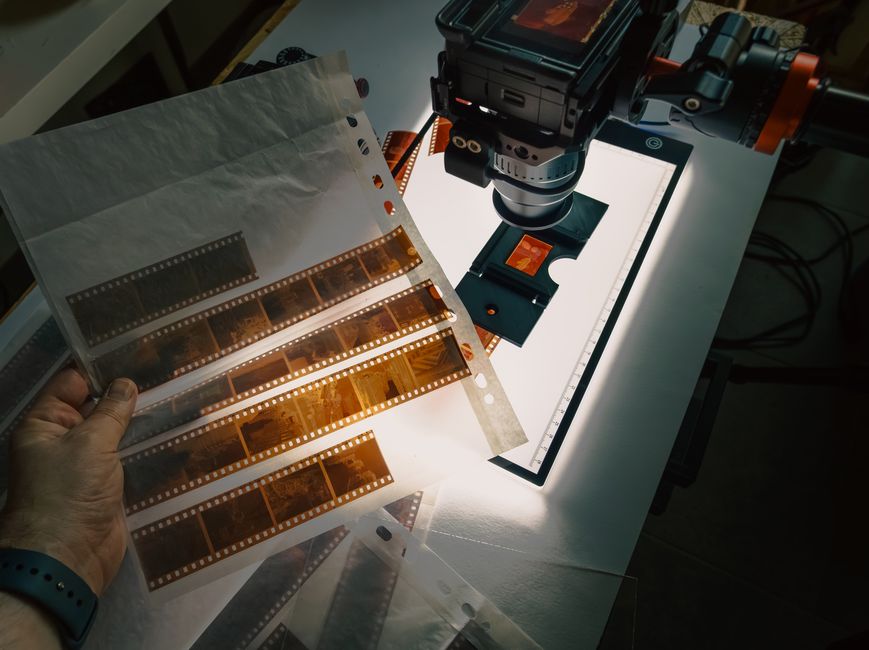
Most organizations treat cultural heritage digitization as a preservation exercise—a passive act of backing up the past. This is a strategic failure. When handled with precision, the digitization of cultural assets is not merely about storage; it is about unlocking latent intellectual property and creating a high-fidelity foundation for future innovation. If your organization holds proprietary historical data, archives, or cultural artifacts, you are sitting on a dormant asset that, once digitized, becomes a fuel for machine learning models and competitive differentiation.
\n\n
The transition from analog to digital is an operational transformation. It demands the same rigor you would apply to operational excellence in a manufacturing plant or a software development lifecycle. Without a clear strategic framework, digitizing heritage becomes a bottomless expense. With one, it becomes a flywheel for organizational authority.
\n\n
The Architecture of High-Fidelity Preservation
\n
Digitization is a multi-dimensional challenge. It is not enough to scan documents or photograph artifacts. The utility of the output is determined entirely by the metadata architecture established at the point of capture. If your data lacks context, it lacks value. Leaders must view digitization through the lens of decision-making: What specific questions will future researchers, AI agents, or internal strategists need to ask of this data?
\n\n
Establishing Taxonomic Standards
\n
Before a single sensor captures an image, you must define the ontology of your collection. Inconsistent tagging is the primary cause of project failure. By implementing rigorous taxonomic standards, you ensure that the digital archive remains searchable and scalable. This is the difference between a disorganized digital junk drawer and a high-performance database. When the data is structured, you move from simple storage to active knowledge retrieval.
\n\n
The Role of AI in Scalable Curation
\n
Human curation is an irreplaceable component of cultural heritage, but it is not scalable for mass-digitization efforts. The integration of AI—specifically computer vision and natural language processing—allows organizations to process thousands of assets with a speed that manual labor cannot match. Use AI for the heavy lifting of OCR (Optical Character Recognition), entity extraction, and pattern matching. Use your human experts for the high-level synthesis and quality assurance. This division of labor is a hallmark of strategy in the modern era.
\n\n
Operationalizing the Archive for Competitive Edge
\n
Why do organizations commit to the massive expenditure of digitizing cultural heritage? The answer lies in accessibility and the subsequent democratization of knowledge. An internal archive that is easily accessible allows for faster cross-departmental collaboration and richer institutional memory. It prevents the loss of expertise that occurs when veteran staff retire, effectively baking institutional memory into your digital infrastructure.
\n\n
Furthermore, digitized cultural heritage provides the raw material for proprietary AI training. If you are a leader focused on high-performance thinking, you understand that proprietary data is the ultimate moat. Publicly available internet data is a commodity; your organization’s unique cultural archive is a scarcity. By digitizing it, you prepare your systems to derive insights that your competitors simply cannot access.
\n\n
Mitigating the Risks of Digital Obsolescence
\n
The greatest risk in digitization is not the initial capture, but the long-term maintenance of the digital ecosystem. Hardware becomes obsolete. File formats degrade. A robust strategy includes a cycle of format migration and hardware refreshment. Treat your digital archive like any other critical IT infrastructure—it requires constant monitoring, version control, and a commitment to open-standard formats that ensure longevity.
\n\n
Avoid proprietary software lock-in at all costs. Your execution plan must prioritize interoperability. If the tools used to view your heritage today are gone in five years, the effort was wasted. Build for the next fifty years, not the next fiscal quarter.