The Rigid Constraints of Orbital Mechanics as a Model for Strategy
Most business failures occur because leaders treat strategy as a matter of creative willpower rather than a problem of physics. They assume that with enough momentum, any objective is reachable. This is a fundamental misunderstanding of systems. Just as a satellite cannot simply choose its path through the vacuum of space, an organization cannot ignore the gravitational wells created by its market, its capital structure, and its internal culture.
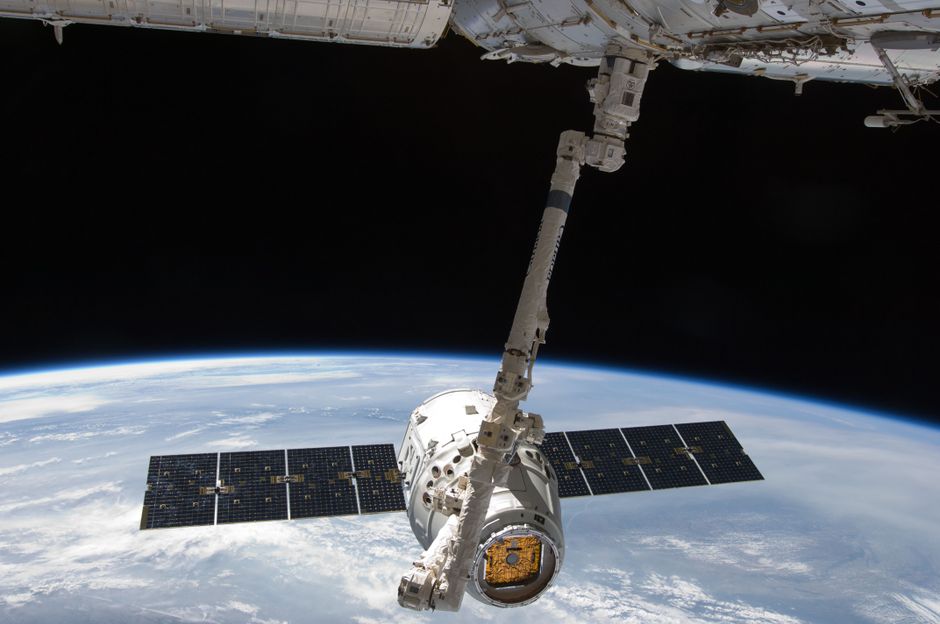
Orbital mechanics is the study of motion under the influence of gravity. It is a discipline defined by extreme precision, where a deviation of a few meters per second can result in a mission-ending trajectory error. In the leadership sphere, we often treat “vision” as a free-floating concept. In reality, your organization occupies a specific orbit. If you attempt to shift that orbit without calculating the necessary energy expenditure—or worse, without accounting for the pull of existing market forces—you will either burn through your fuel reserves or drift into irrelevance.
The Gravity of Operational Inertia
In physics, an object in orbit is essentially in a state of constant freefall. It stays aloft not by fighting gravity, but by moving sideways fast enough that the curve of its path matches the curve of the body it orbits. Organizations experience a similar phenomenon. Operational inertia acts as the gravitational pull. If your processes, hiring standards, and decision-making frameworks are not tuned to the speed of your industry, you will eventually be pulled into the center of the mass—the market—and consumed by it.
High-performance thinking requires recognizing which forces are fixed and which are variable. You cannot change the mass of a planet, just as you cannot change the fundamental economic laws governing your industry. You can, however, change your velocity and your vector. When a company attempts to pivot, it is performing an orbital maneuver. This requires a precise burn of capital—the fuel of the enterprise—at a specific point in the orbit to achieve the desired change in altitude. Most leaders fail here because they burn fuel continuously and aimlessly, rather than executing a high-intensity, short-duration maneuver at the optimal moment.
Strategic Hohmann Transfers
The most efficient way to move a spacecraft between two circular orbits is the Hohmann transfer. It is a two-impulse maneuver that uses the least amount of energy to change altitude. This is a powerful metaphor for strategy. Instead of trying to force a company to jump from its current state to a distant, lofty goal, effective leaders look for the orbital intersection points.
This process demands a cold-blooded assessment of your current trajectory. If you are operating in a low-earth orbit—handling tactical execution and daily fires—you cannot simply decide to move to a high-earth orbit where you might focus on long-term innovation. You must calculate the delta-v, or the change in velocity, required to reach that transfer orbit. This means identifying the exact moment when market conditions provide the necessary kinetic energy to support your move. If you initiate the burn too early or too late, you drift into a useless trajectory.
Calculated Risk and the Vacuum of Execution
Space is unforgiving because it does not tolerate ambiguity. Every variable is accounted for, or the mission fails. In business, we often hide behind “agile” methodologies to mask a lack of precision. We treat execution as a rough approximation. However, the most successful firms treat execution as an exercise in orbital mechanics.
When you introduce AI or new technology into your stack, you are effectively changing the mass of your system. You are altering the gravitational influence you have on your customers and your employees. If you do not adjust your thrust accordingly, that added mass will drag you down. Strategy is not about the destination; it is about the math of the path. If you do not know the specific velocity required to maintain your current position, you have no business attempting to change it.
The Discipline of the Burn
The most dangerous phase of an orbital maneuver is the burn. It is high-stakes, high-energy, and irreversible. In an organization, this is the period of intense resource allocation toward a new initiative. It is where leaders are most likely to blink. They see the energy expenditure and get scared, cutting the burn short. But a partial burn in orbital mechanics is worse than no burn at all; it leaves you in an elliptical orbit that is rarely sustainable and often leads to atmospheric reentry—the end of the venture.
True operational excellence is the ability to commit to the burn. It is the confidence that comes from having mapped the physics of your market and knowing, with mathematical certainty, that your trajectory is sound. You do not need to guess if you have enough fuel; you have already calculated the mass of your organization, the gravity of the competition, and the velocity required to achieve your objective.