The Great Filter of Expansion: Why Interstellar Migration Demands a New Operational Paradigm
Humanity is currently tethered to a single point of failure. Whether we view this through the lens of risk management or long-term existential strategy, our current planetary confinement represents a profound lack of diversification. While the conversation around immigration is traditionally confined to geopolitical borders and administrative policy, the future of our species depends on shifting that definition toward the interstellar. Moving beyond Earth is not a matter of exploration; it is the ultimate exercise in strategic planning for survival.
To reach another star system, we must abandon the “discovery” mindset—which is reactive and chaotic—in favor of an “engineering” mindset, which is proactive and precise. Scaling a civilization across light-years requires the same discipline found in high-performance organizations, where resource allocation, execution, and the mitigation of catastrophic failure are the only metrics that matter.
The Physics of Constraints and Operational Excellence
Interstellar migration presents a logistical challenge that makes terrestrial supply chains look trivial. We are bounded by the tyranny of the rocket equation and the absolute speed limit of light. In any high-stakes environment, when the environment is hostile and the margin for error is zero, you cannot rely on intuition. You must rely on first-principles thinking.
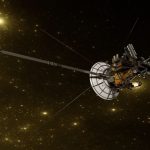
If we treat an interstellar mission as a corporate scaling challenge, the bottleneck is not merely propulsion—it is energy density and system redundancy. Just as a leader must optimize for operational efficiency to avoid burning through venture capital, an interstellar vessel must optimize for mass-to-energy conversion. Any inefficiency in the design of a colony ship is a debt that will be compounded over centuries of transit.
Designing for Multi-Generational Continuity
The most significant hurdle to interstellar migration is not the hardware; it is the human element. Maintaining performance, mission integrity, and social cohesion over hundreds of years requires a radical departure from current organizational structures. We are accustomed to short-term cycles, quarterly results, and rapid pivots. Interstellar transit demands an architecture of long-term strategy that transcends the lifespan of any single human.
This requires a transition to autonomous systems and AI-augmented decision-making. Human cognition is ill-equipped to monitor systems for centuries without degradation. By offloading critical infrastructure management to robust, self-correcting AI, we create a layer of stability that allows the biological crew to focus on high-level problem solving rather than routine maintenance.
The Strategy of Asymmetric Growth
Immigration, at its core, is the movement of value from a saturated environment to one with higher potential. On Earth, this is a zero-sum game of territory and resources. In the interstellar context, it becomes a positive-sum game of expansion. However, the cost of entry is astronomical. We cannot simply transplant Earth’s current socio-economic model into a vacuum.
We must adopt a decentralized leadership framework. Centralized command structures are vulnerable to communication delays and single-point failures. For a colony fleet to succeed, each module must function as an independent, high-performance unit capable of autonomous execution. This mirrors the best practices of distributed engineering teams—clear alignment on the mission, absolute clarity on protocols, and the autonomy to act within defined constraints.
Decision-Making Under Extreme Latency
In high-performance organizations, speed of decision-making is often prized. In interstellar space, speed is irrelevant; accuracy is everything. When dealing with light-lag, the ability to make a high-quality decision without real-time feedback is the difference between a successful landing and total loss.
We need to develop decision-making heuristics that function in the absence of centralized oversight. This is the ultimate test of decision-making maturity. If your systems and your people cannot function without constant direction from “home,” they are not equipped for the vacuum. They must be conditioned to operate based on principles rather than instructions.
The Future as a Product of Execution
Interstellar migration is the ultimate frontier for those who prioritize high-performance culture. It requires a level of rigor, foresight, and systematic planning that current planetary governance does not demand. If we intend to move beyond our solar system, we must stop thinking like tourists and start thinking like architects of a new civilization. We are currently in the prototyping phase, and the lessons we learn in optimization, resilience, and automation today will define our success among the stars tomorrow.