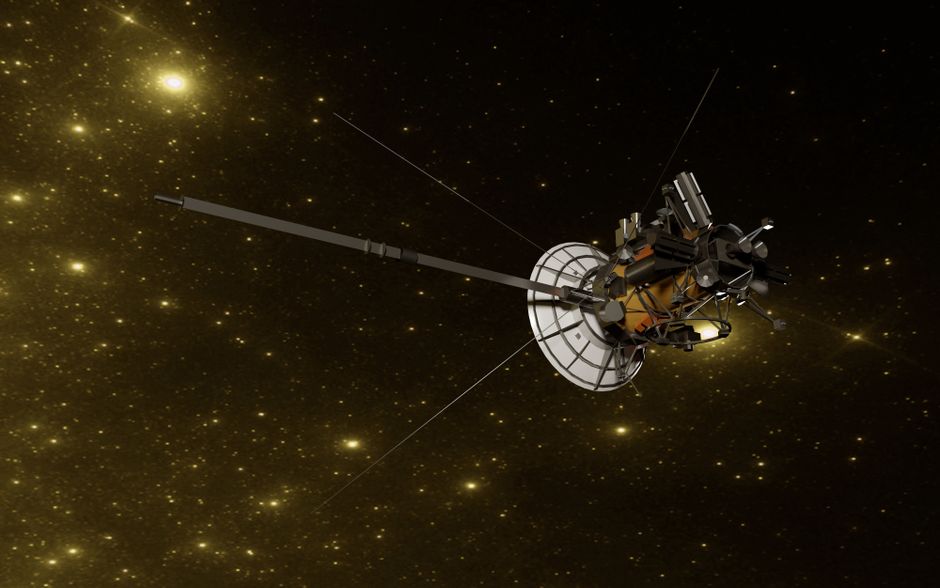
The Economics of Interstellar Navigation
The assumption that interstellar travel is primarily a challenge of propulsion is a strategic error. We have already solved the energy requirements for theoretical transit; we have not yet solved the decision-making architecture required to sustain a mission across light-years. When the delay between command and response spans years, centralized control becomes an operational liability. Success in the interstellar theater requires a fundamental shift from reactive management to autonomous, high-performance systems.
In the vacuum of deep space, there is no “real-time.” A leadership model that relies on constant oversight fails the moment a probe leaves the solar system. To move beyond our local star, we must adopt the principles of decentralized execution—the same framework used by elite organizations to operate in high-uncertainty environments.
The Fallacy of Real-Time Command
Organizations often confuse activity with execution. In terrestrial business, we often fall into the trap of micromanaging the process because we have the luxury of immediate feedback. Interstellar navigation strips that luxury away. If a vessel is traveling at a significant fraction of light speed, a single navigational error compounded over a decade renders the mission a total loss.
This reality forces a transition toward “Intent-Based Operations.” Instead of programming every vector and burn, operators must define the strategic objective—the “commander’s intent”—and allow the onboard AI to resolve the tactical variables. This is not merely an automation upgrade; it is a shift in organizational philosophy. By decoupling the objective from the method, we minimize the friction inherent in long-distance communication.
Algorithmic Decision-Making and Error Budgeting
Interstellar navigation is essentially an exercise in extreme risk management. At relativistic speeds, the kinetic energy of a grain of sand is equivalent to a high-explosive device. Navigation is not just about finding a path; it is about maintaining a consistent “error budget.”
High-performance systems manage these risks by implementing modular, redundant decision loops. If an AI navigational system detects a deviation, it cannot wait for Earth-side verification. It must possess the authority to recalculate, re-align, and execute, based on pre-established protocols that prioritize mission integrity above all else. In your own strategy, this mirrors the necessity of building self-correcting mechanisms into your operational workflows. When the stakes are high, the system must be capable of surviving the absence of its architect.
The Constraint as a Catalyst for Excellence
The speed of light is the ultimate constraint. Many see this as a barrier to progress; a high-performance thinker sees it as the ultimate forcing function. Constraints remove the possibility of procrastination. They force absolute precision in the planning phase because the cost of a mid-course correction is effectively infinite.
Applying this mindset to professional decision-making requires a radical commitment to front-loading the intellectual work. If you cannot afford to change your mind halfway through a project, you must ensure that your initial hypothesis is bulletproof. Interstellar navigation requires us to treat every major decision as a “point of no return,” which is precisely how high-impact leaders should approach capital allocation and structural changes.
Operational Implications for Terrestrial Strategy
You do not need to be building a starship to benefit from the mathematics of interstellar navigation. The principles hold true for any organization attempting to scale across time zones or complex markets:
- Decentralize Authority: Push decision-making to the edge where the data actually resides.
- Define Intent, Not Steps: Provide the “why” and the “what,” and let your teams determine the “how.”
- Build Self-Correcting Systems: Create feedback loops that allow for adjustment without requiring leadership intervention.
- Respect the Error Budget: Identify which decisions are irreversible and subject them to the most rigorous planning scrutiny.
True operational excellence is the ability to maintain a trajectory toward a distant goal while the environment shifts beneath you. Whether you are navigating the complexities of a global market or the vast, silent void between stars, the core requirement remains the same: a clear vision, a robust decision-making architecture, and the courage to trust your systems when you can no longer see the outcome.
Further Reading
- The Architecture of High-Performance Thinking
- Refining Your Strategic Leverage
- Advanced Execution Frameworks