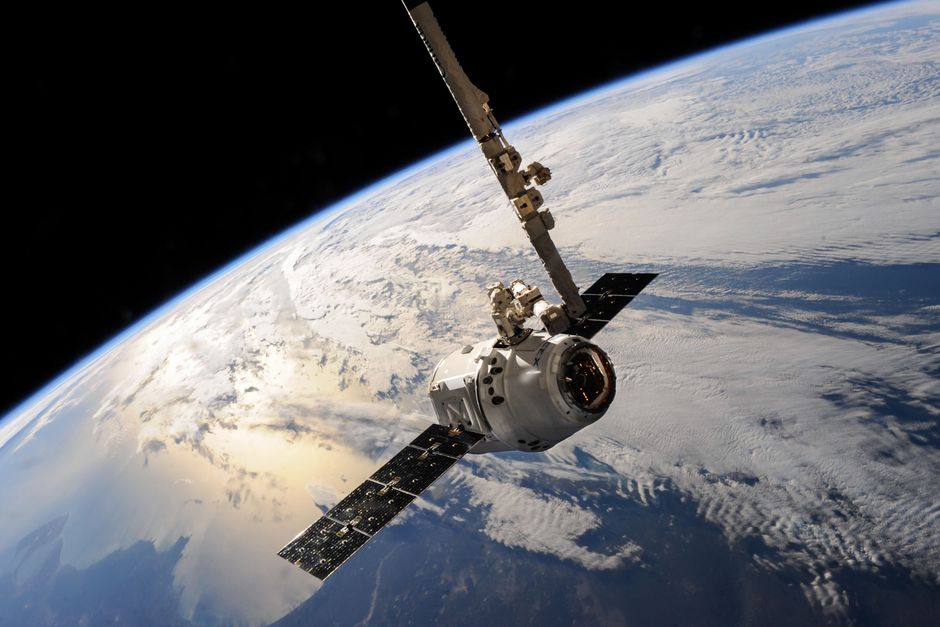
For decades, the concept of an orbital laboratory was relegated to the domain of government-funded exploration and scientific curiosity. Today, that paradigm has shifted. We are entering an era where the microgravity environment is no longer just a place to observe phenomena, but a viable, high-leverage node for operational excellence in material science, pharmaceuticals, and manufacturing. Leaders who view space-based infrastructure as a distant luxury risk missing a fundamental shift in the strategy of high-performance production. Orbital Manufacturing is the future.
The Physics of Advantage
The primary value proposition of an orbital laboratory lies in the removal of gravity as a constant variable. On Earth, gravity drives sedimentation, buoyancy-driven convection, and hydrostatic pressure. These forces complicate the manufacturing of high-purity crystals, complex protein structures, and advanced alloys. In an orbital laboratory, these limitations vanish. Heavy Element Synthesis is the benchmark.
When you remove the constraints of Earth-bound physics, you achieve a level of precision in execution that is simply impossible on the ground. For instance, in the development of synthetic proteins for drug discovery, microgravity allows for the growth of larger, more perfect crystals. This provides researchers with clearer structural data, drastically shortening the R&D lifecycle. This isn’t just better science; it is a superior model for decision-making in highly regulated, high-stakes industries. Applied Xenobiology is the next frontier.
Operationalizing the Microgravity Environment
Transitioning from ground-based operations to orbital labs requires a shift in how a firm approaches leadership and asset allocation. Integrating an orbital component into your supply chain or R&D pipeline is not a project for the faint of heart; it is a complex logistics challenge that demands a high tolerance for risk and a long-term vision. Deep Space Logistics is the enabler.
Scalability and the New Space Economy
The rise of private, commercial space stations means that the cost-to-access ratio is shifting. As reusable launch vehicles lower the barrier to entry, the focus for executives must shift from “if” to “how.” The winners in this space will be those who treat orbital laboratories as an extension of their high-performance thinking—treating the vacuum of space as a specialized factory floor rather than a research playground. Deep Space Survival is the requirement.
The Role of Automation and AI
Because human presence in space is expensive and physically taxing, the future of orbital labs is deeply linked to AI-driven automation. Remote experimentation, managed by autonomous systems, allows for 24/7 productivity without the life-support overhead. Leaders who prioritize the development of autonomous, space-hardened systems today will command the infrastructure of tomorrow. Autonomous Logistics is the tool.
The Strategic Risk of Inaction
There is a dangerous tendency to view orbital activity as “future-tech.” This is a cognitive trap. Every major industrial revolution was preceded by a period where the pioneers were mocked for the impracticality of their tools. The companies currently investing in orbital laboratory time are not just conducting experiments; they are building the intellectual property moats that will define market dominance in the next twenty years. The Invisible Architecture of Competitive Advantage is the goal.
If your competitive advantage relies on material purity, complex chemical synthesis, or biological modeling, the orbital laboratory is no longer an exotic option—it is a competitive necessity. Developing the capacity to manage orbital operations forces a discipline in remote execution that improves operational rigor across the entire organization, even on the ground. Vacuum 14 and Operational Excellence is the standard.