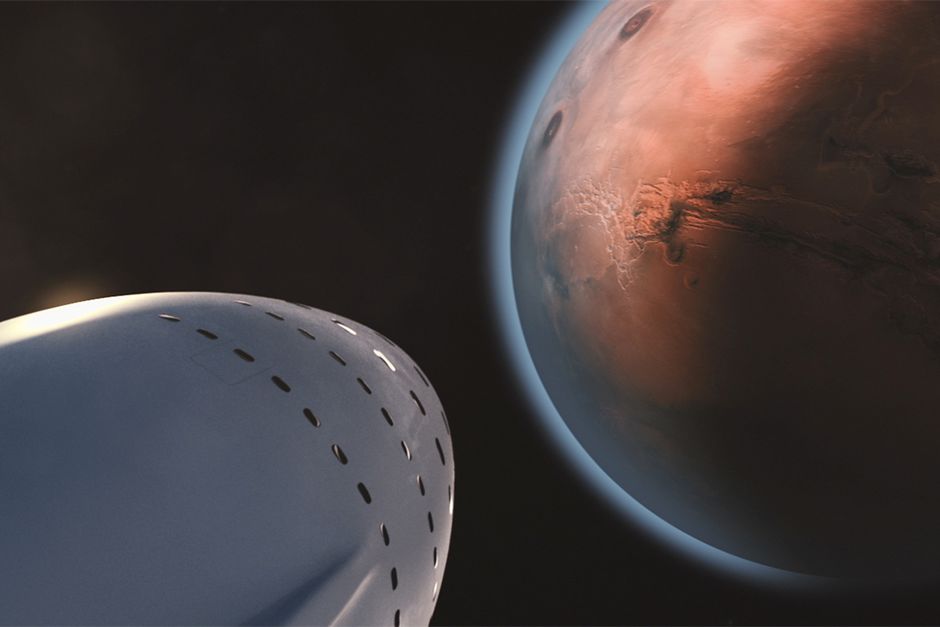
The mission to Mars or the outer solar system is not a propulsion problem; it is a materials science crisis. While propulsion gets the headlines, the invisible, relentless bombardment of cosmic radiation is the true limiting factor for human expansion. To move beyond low Earth orbit, we must shift our leadership perspective from “getting there” to “surviving there.”
Cosmic radiation consists of high-energy protons and atomic nuclei stripped of their electrons. When these particles strike a spacecraft, they create a secondary shower of radiation—a phenomenon known as spallation. If your shielding is too thin, the radiation passes through. If it is too thick or made of the wrong material, the impact creates a secondary blast of particles that is often more lethal than the original radiation. This is the ultimate strategy challenge: how to design a barrier that protects without becoming a source of danger itself.
The Physics of High-Performance Shielding
Traditional thinking favors heavy metals like lead or tungsten. On Earth, high atomic number (Z) materials are excellent at stopping radiation. In space, they are a liability. High-Z materials facilitate the production of secondary neutrons through fragmentation. We require low-Z materials—substances rich in hydrogen—to minimize these secondary emissions.
Polyethylene, water, and even liquid hydrogen are currently the gold standards for radiation mitigation. However, integrating these into a structural hull requires a fundamental rethink of operational excellence. We are no longer building a shell; we are building a multi-functional ecosystem. The shielding must be structural, thermal, and biological all at once.
Hydrogen-Rich Polymers and Composite Integration
The most promising path forward lies in boron-nitride nanotubes and hydrogenated carbon composites. By embedding hydrogen-rich polymers directly into the structural framework, we eliminate the need for dedicated, dead-weight shielding. This is the essence of leverage: making the ship’s primary load-bearing structure perform double duty as a radiation filter. High-performance teams in the aerospace sector are currently iterating on these materials to ensure they maintain structural integrity under extreme thermal cycling while providing the necessary attenuation for deep-space missions.
Decision-Making Under Asymmetric Risk
Engineers and mission planners face a classic decision-making trap: the “Acceptable Risk” threshold. Cosmic radiation does not offer a linear degradation of health; it presents a binary outcome of mission viability versus catastrophic biological failure. When the data is incomplete—which it always is in deep space exploration—the decision-making process must rely on robust risk-modeling frameworks rather than speculative optimism.
We must optimize for the “worst-case” solar particle event while maintaining the agility to adjust for lighter, baseline galactic cosmic ray exposure. This requires a modular approach to shielding, where thickness can be adjusted based on the mission phase or the specific radiation environment of the target destination.
Operational Execution: The Future of Space Habitats
The transition from short-duration missions to long-term habitation necessitates a shift in how we approach execution. We cannot rely on the internal shielding of a transit vehicle for long-term surface operations. Instead, we must utilize in-situ resource utilization (ISRU) to create “regolith-based” shields. By burying habitats under several meters of Martian or lunar soil, we utilize the natural mass of the planet to do the work that we cannot carry from Earth.
This is the ultimate high-performance thinking: stop trying to bring the environment of Earth with you, and start bending the local environment to serve your needs. The mission parameters for deep space survival are shifting from “carrying protection” to “engineering the environment.”