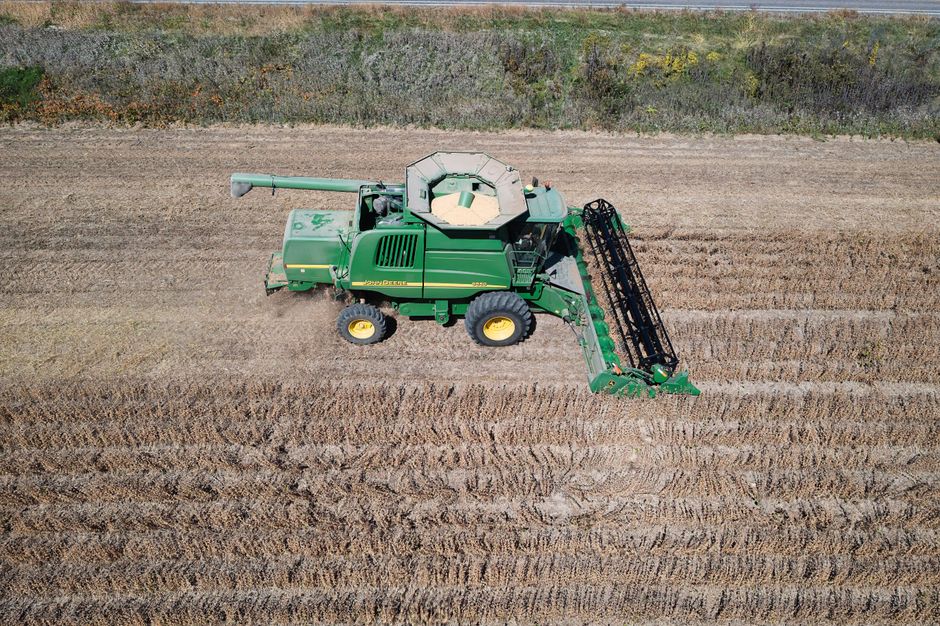
The traditional model of agricultural expansion relies on a linear relationship: more land requires more labor, which requires more management, which eventually leads to diminishing returns. This is a trap. For decades, the industry has viewed scale through the lens of human capacity. Agricultural automation—the integration of robotics, computer vision, and autonomous systems—is finally breaking this dependency, shifting the operational focus from managing people to managing systems.
Leaders in the sector are no longer asking how to recruit more seasonal labor. They are asking how to architect an environment where machines handle the high-repetition, high-precision tasks that were once considered “human-only.” This is not merely an operational excellence play; it is a fundamental shift in capital allocation and risk management.
The Shift from Maintenance to Precision
Agricultural automation is moving beyond the “tractor with GPS” phase. We are entering the era of the intelligent field, where individual plants are treated as unique data points. When a machine identifies a weed or a nutrient deficiency at the micro-level, it changes the economics of the entire operation. This is high-performance thinking applied to biology.
The strategic advantage here is the reduction of variance. Humans are variable; machines are consistent. By removing the inconsistency of manual labor from weeding, harvesting, and planting, operators gain a level of predictability that allows for more aggressive decision-making. You cannot optimize what you cannot measure, and you cannot measure what you cannot standardize. Automation provides the baseline of standardization necessary for true optimization.
Strategic Constraints and Autonomous Execution
Adopting automation requires a radical redesign of the “how.” Many organizations fail to see the gains because they attempt to automate existing, flawed manual processes. This is a strategic error. If you automate a poor process, you simply reach failure at a higher velocity.
Effective leaders apply strategy by re-engineering the workflow around the machine’s capabilities rather than the human’s limitations. This means rethinking row spacing, field geometry, and data feedback loops. The machine is the new constraint, and the operation must be built to facilitate its maximum utilization. When you treat the autonomous system as the center of your production architecture, you stop looking for ways to “fit” technology into the farm and start building the farm around the technology.
The Data-Performance Loop
Automation generates a byproduct that is often more valuable than the labor savings: high-resolution data. Every pass of an autonomous harvester is an audit of the crop’s performance. This creates a recursive loop of improvement. The data informs the next season’s planting strategy, which informs the robot’s pathing, which generates better yield data. This is how you achieve a compound interest effect on operational efficiency. It is the application of AI to physical assets, turning a field into a laboratory.
The Leadership Requirement
The barrier to agricultural automation is rarely the technology itself. It is the organizational culture. Moving from a labor-heavy operation to a machine-centric one requires a workforce that understands systems, sensors, and software maintenance. The leader’s role shifts from managing teams of pickers to managing a fleet of assets.
This requires a different profile of leadership—one that is comfortable with technical debt, hardware maintenance cycles, and software versioning. If your management team cannot oversee an autonomous fleet, your strategy will fail regardless of how advanced your robotics are. You must bridge the gap between agronomy and engineering, creating a unified language across the organization. The most successful operators are those who view their agricultural enterprise as a technology company that happens to grow food.