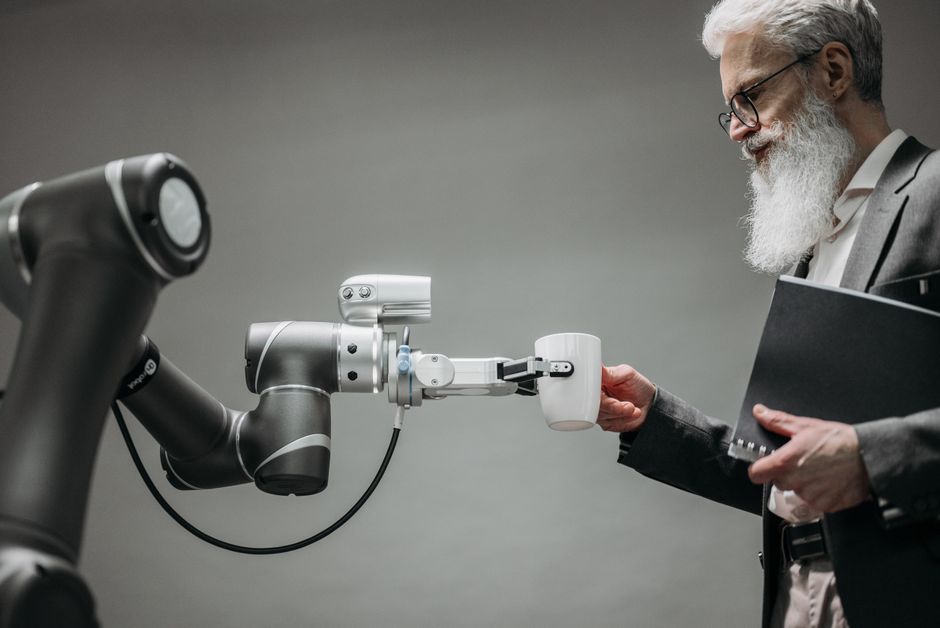
The Algorithmic Caretaker: Redefining Operational Limits in Aging Populations
The demographic collapse of the aging population is not a social issue—it is an operational excellence crisis. As the ratio of caregivers to the elderly continues to skew toward unsustainable levels, human-centric models are hitting a hard ceiling. Robotic elderly care is no longer a futuristic curiosity; it is the inevitable outcome of a system requiring radical efficiency to maintain basic service levels.
Leaders who view robotics in healthcare as merely a replacement for human touch miss the point. This technology represents a fundamental shift in resource allocation. By automating the logistical, monitoring, and repetitive physical tasks of elderly care, organizations can redirect high-value human empathy toward complex decision-making and palliative support, where it actually provides leverage.
Beyond Automation: The Strategic Integration of AI
Robotic care systems—ranging from autonomous mobility assistants to social robots—operate on a framework of continuous data ingestion. Unlike a human caregiver who experiences fatigue or cognitive bias, these systems provide a persistent, objective stream of metrics. This is the bedrock of high-performance thinking: the ability to make decisions based on precise, real-time diagnostic data rather than subjective observation.
When you integrate AI into the care cycle, you create a feedback loop. Sensors detect subtle deviations in gait, speech patterns, or hydration levels, triggering preemptive interventions. This shifts the operational model from reactive crisis management—which is expensive and resource-heavy—to proactive, data-driven maintenance of human health.
The Execution Gap in Robotic Deployment
The primary barrier to adoption is not technological capacity; it is the failure of execution. Organizations often deploy robotics as an isolated pilot program rather than a systemic infrastructure upgrade. This is a common failure in strategy. If the robot exists in a vacuum, it creates friction rather than flow.
To succeed, leadership must treat robotic elderly care as a core component of the organizational stack:
Systemic Integration: Robotics must communicate directly with medical records and staff scheduling software to ensure a seamless transition of care.
Personnel Alignment: Staff must be upskilled to manage the robotic interfaces, shifting their role from manual laborers to system architects.
Ethical Accountability: Decision-making protocols must be codified. When a machine detects a decline, the escalation path to a human expert must be instantaneous and unambiguous.
Operational Resilience in Care
High-level leaders understand that scalability requires removing the human bottleneck from non-cognitive tasks. Robotic elderly care allows for a predictable, high-quality standard of service that is not subject to the volatility of labor markets. By offloading monitoring and routine assistance to non-human entities, the organization secures a baseline of operational stability that protects both the patient and the bottom line.
The transition to robotic-assisted care is a test of organizational agility. Those who wait for the technology to become “perfect” will be left behind by the sheer scale of the demographic shift. The goal is not the elimination of the human element, but the perfection of its application. By embracing robotics, you are not choosing machines over people; you are choosing to prioritize the human element where it is most indispensable.