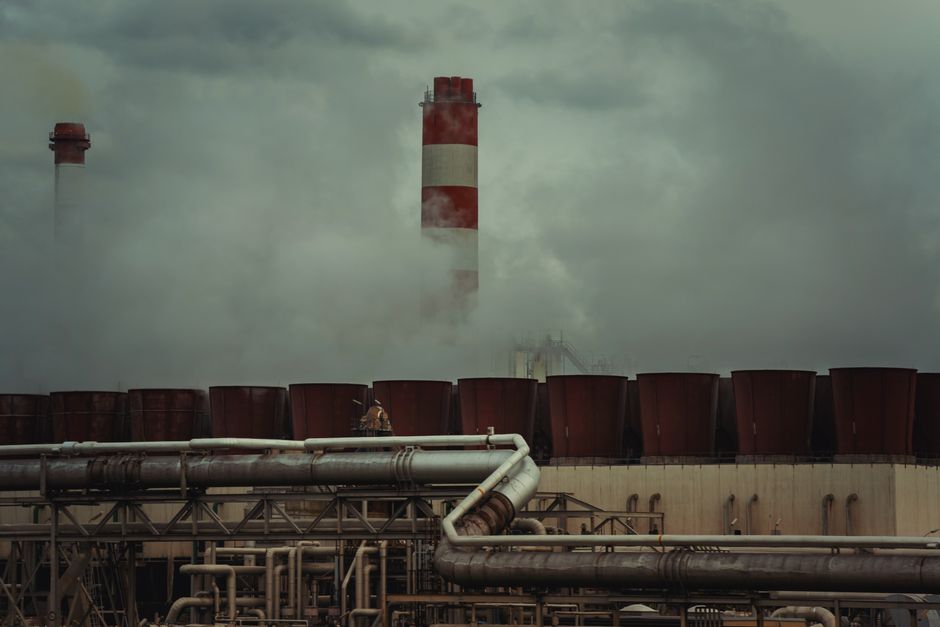
Most industrial strategies view carbon emissions as an inescapable tax on growth—a liability to be offset or mitigated through expensive credits. This perspective is fundamentally flawed. True operational excellence in the modern era requires moving beyond net-zero targets and embracing carbon-negative manufacturing. This is not merely a sustainability initiative; it is a structural redesign of the supply chain that converts atmospheric CO2 into a primary feedstock.
For the high-performance operator, the shift toward carbon-negative systems represents a move from defensive compliance to offensive competitive advantage. By integrating carbon capture directly into production cycles, companies decouple their profitability from fossil fuel volatility and position themselves at the forefront of the next industrial epoch.
The Shift from Mitigation to Feedstock
Traditional manufacturing operates on a linear, extractive model. You pull raw materials from the earth, burn energy to process them, and release carbon as a byproduct. A carbon-negative framework flips this logic. It treats CO2 not as waste, but as a carbon source for synthetic fuels, polymers, and construction materials.
When you transition your strategy to incorporate carbon-negative inputs, you solve two problems simultaneously. First, you reduce your reliance on volatile commodities markets. Second, you insulate your company against future carbon taxes and regulatory shifts. This is high-stakes decision-making: choosing to invest in the infrastructure of the future while your competitors remain tethered to the legacy costs of the past.
Mineralization and Synthetic Biology
The most viable path to carbon-negative production lies in two domains: mineral carbonation and synthetic biology. Mineralization processes allow manufacturers to inject captured CO2 into concrete or aggregates, permanently trapping the gas within the structure of the material. This turns a building site into a carbon sink.
Synthetic biology offers a more aggressive frontier. By utilizing engineered microbes, firms can convert CO2 into high-value chemicals or plastics. This is where AI becomes critical. Managing the complexity of bioreactors and chemical synthesis requires advanced predictive modeling to optimize yield and ensure the carbon sequestration rate exceeds the energy required to drive the reaction. Leaders who master these digital twin environments will dominate the next decade of industrial output.
Operationalizing Negative Emissions
Implementing carbon-negative manufacturing requires a total rethink of your execution philosophy. You cannot bolt carbon-negative processes onto a broken foundation. It requires a systemic overhaul.
Input Audits: Map your supply chain to identify where carbon-sequestering alternatives can replace traditional raw materials. If you can build with mineralized concrete or use carbon-derived polymers, you eliminate a massive portion of your Scope 3 emissions.
Energy Decoupling: A carbon-negative process is self-defeating if it relies on a coal-heavy grid. The energy source must match the ambition of the production goal. Integrate microgrids or onsite renewable storage to ensure your operational footprint remains net-negative.
Lifecycle Value Capture: Shift your accounting to reflect the value of sequestered carbon. If your product actively removes CO2 from the atmosphere, it carries a premium in global markets. Develop the reporting mechanisms to quantify this, turning your environmental performance into a measurable asset on your balance sheet.
The Leadership Imperative
The transition to carbon-negative manufacturing is a test of leadership. It requires the courage to abandon legacy processes that still generate profit in favor of emerging systems that generate long-term resilience. This is the essence of high-performance thinking: the ability to recognize that the constraints of today are the business models of tomorrow.
Do not wait for the market to force your hand. Regulation will eventually catch up, and when it does, the firms that have already integrated carbon-negative processes into their core business will have a insurmountable moat. Those that haven’t will be scrambling to retrofit their operations under the pressure of punitive taxation.
The question is no longer whether your production can be carbon-negative. The question is how fast you can reorganize your assets to make it so.