Utilize graph theory to map the interpersonal network connections between members of19th-century occult societies via archival correspondence.
— by
Steven Haynes
Mapping the Esoteric: Using Graph Theory to Decipher 19th-Century Occult Networks
Introduction
The 19th century was a golden age for hermeticism, spiritualism, and ritual magic. From the Hermetic Order of the Golden Dawn to the Theosophical Society, these groups were defined by their intense internal communication. However, history often views these organizations through the lens of individual figureheads—like Aleister Crowley or Helena Blavatsky—while ignoring the complex web of correspondence that actually fueled their expansion.
By applying graph theory to archival correspondence, researchers can move beyond static biographies. We can visualize the flow of ideas, map the influence of “hidden” members, and quantify the strength of intellectual factions. This approach transforms brittle, yellowed letters into a dynamic digital architecture, revealing how occult knowledge moved across borders and social classes.
Key Concepts
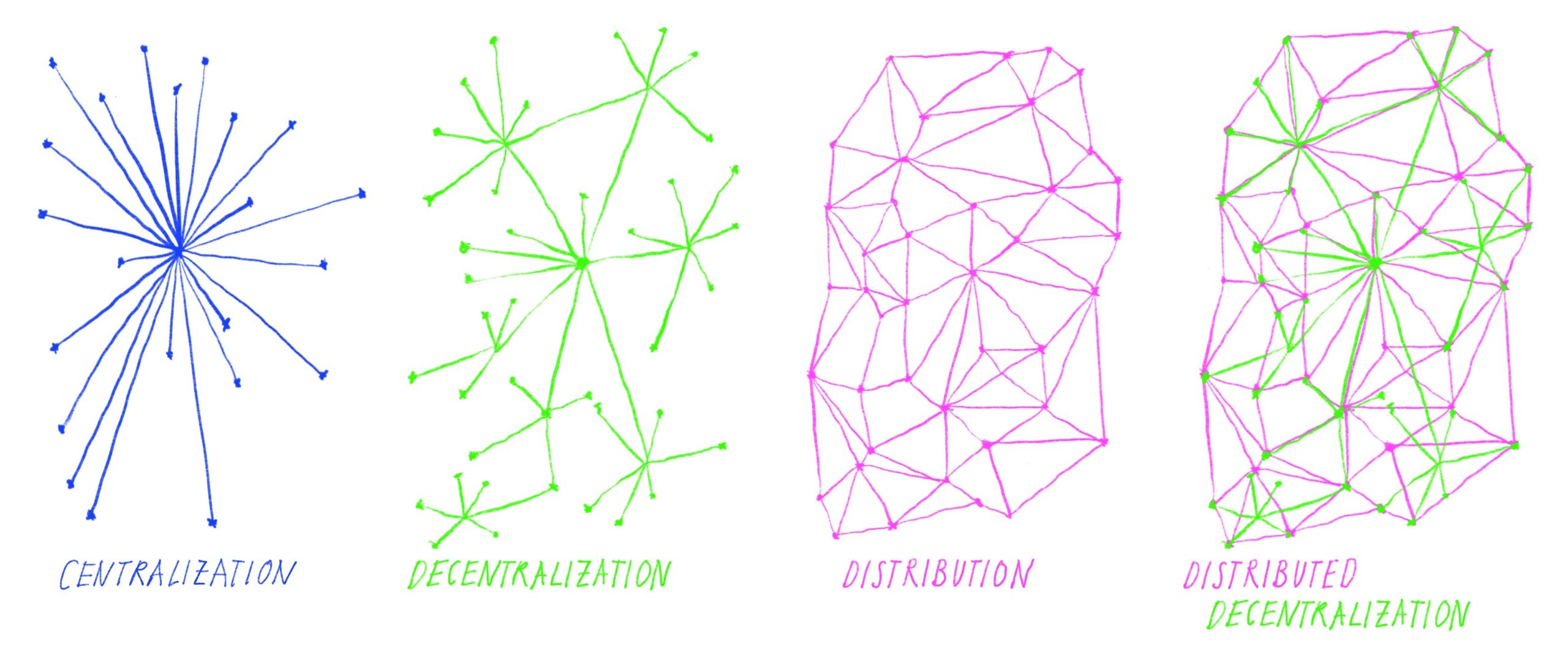
Graph theory is the mathematical study of networks, consisting of nodes (vertices) and edges (links). In the context of archival research:
Nodes: Represent the individuals (occultists, patrons, publishers) or entities (lodges, specific rituals, journals).
Edges: Represent the relationship, most commonly identified as a specific letter, a signed membership record, or a shared bibliography.
Degree Centrality: This measures how many connections a node has. In an occult society, a high-degree node might represent a “Grand Master” who acted as a hub for all communication.
Betweenness Centrality: This identifies “brokers”—individuals who connect two otherwise isolated cliques. This is crucial for finding members who facilitated the exchange of ideas between, for example, London-based Rosicrucians and Parisian occultists.
Community Detection: Algorithms (like Louvain modularity) that identify clusters within a network, revealing splinter groups or secret factions that are not immediately obvious in primary sources.
Step-by-Step Guide: Mapping the Esoteric
Digitization and Extraction: Create a structured database from your archives. You need three primary columns: Source (the author), Target (the recipient), and Weight (frequency or intensity of the correspondence). Include metadata such as date, location, and topic tags to refine your analysis.
Data Cleaning: 19th-century occultists often used pseudonyms or “magical names.” You must create an entity resolution table to ensure that “S.R.M.D” and “Samuel Liddell MacGregor Mathers” are treated as the same node.
Network Construction: Use tools like Gephi, Cytoscape, or Python libraries such as NetworkX. Import your CSV files to visualize the raw graph.
Algorithmic Analysis: Apply layout algorithms like “ForceAtlas2” to allow highly connected nodes to move toward the center and peripheral nodes to drift outward. Run modularity statistics to see if the network naturally breaks into distinct groups.
Temporal Mapping: If your dataset covers several decades, use a timeline slider. This allows you to watch the network evolve, showing how a society might have started as a tightly knit group and devolved into a fragmented web of feuding factions.
Examples and Case Studies
Consider the Hermetic Order of the Golden Dawn. A graph-theoretical analysis of their internal circulars reveals that while William Wynn Westcott was a nominal leader, his betweenness centrality began to crater years before his official departure. Conversely, Florence Farr—often treated as a secondary figure in traditional histories—maintained a high degree of connectivity between the Order’s London and Horus temples. Mapping this reveals her to be the true structural glue of the organization.
The power of graph theory lies in its ability to highlight the “silent” influencers—the archivists, printers, and junior members who facilitated the transmission of ideas that leaders claimed as their own.
Another application is in the study of cross-continental Theosophy. By mapping letters between India and Europe, researchers have successfully identified “intellectual bridgeheads”—specific individuals whose correspondence created a bidirectional flow of Hindu philosophy into Victorian esoteric circles, essentially acting as conduits for cultural appropriation and translation.
Common Mistakes
Confusing Proximity with Influence: Just because two people wrote to each other frequently does not mean they shared an ideology. Distinguish between “social” correspondence and “doctrinal” correspondence in your edge weights.
Ignoring “Negative” Space: A lack of correspondence is also data. If two prominent members of the same society never corresponded despite being active at the same time, this structural hole (a “lacuna”) suggests ideological or personal friction.
Over-reliance on Centrality: Don’t assume high-degree nodes are the most important. Often, the most radical ideas originate in peripheral, low-degree nodes that eventually “infect” the core of the network.
Static Analysis: Analyzing an entire century of correspondence as one network obscures growth. Occult societies were volatile; mapping them in five-year increments provides a much more accurate historical narrative.
Advanced Tips
To move your research into a professional tier, incorporate Bipartite Mapping. A bipartite graph separates the network into two distinct types of nodes: people and documents. This allows you to see which individuals were tied to which specific grimoires or secret rites. This reveals not just who knew whom, but who had access to specific “knowledge capital.”
Furthermore, use Sentiment Analysis in conjunction with network maps. If you can perform basic NLP (Natural Language Processing) on the digitized letters, you can color-code your edges based on tone. A “hostile” edge (aggressive rhetoric) versus a “collaborative” edge (sharing research) creates a multi-layered visualization of the society’s internal political stability.
Finally, always keep your provenance clear. If a letter is missing or lost, don’t represent that as an absence in your graph. Instead, use “uncertainty nodes” to track the influence of lost archival data, ensuring your map remains intellectually honest about the limitations of the historical record.
Conclusion
Utilizing graph theory to analyze 19th-century occult correspondence allows us to move beyond anecdotal historical accounts and toward a structural understanding of esoteric movements. It forces us to address the reality that these societies were not just clusters of eccentric personalities, but complex communication systems.
By mapping these connections, we can identify the true centers of influence, the brokers of esoteric knowledge, and the structural failures that led to the eventual dissolution of these groups. As you apply these digital humanities tools to your own research, remember that the map is not the territory—but it is the most reliable way to navigate the hidden histories of our past.
The Invisible Architecture of Influence: Beyond the Node – TheBossMind
[…] We are identifying the early protocols of modern ideological warfare. While it is fascinating to utilize graph theory to map the interpersonal network connections of these societies, the true value lies in understanding not just who was talking to whom, but how […]



Leave a Reply