Verification of output provenance helps identify the lineage of generated information.
— by
Steven Haynes
Contents
1. Introduction: Define the crisis of trust in the AI era and introduce “Output Provenance.”
2. Key Concepts: Deconstruct provenance, metadata, and the chain of custody for digital information.
3. Step-by-Step Guide: A practical framework for tracing data back to its source.
4. Real-World Applications: Focus on journalism, legal discovery, and corporate compliance.
5. Common Mistakes: Errors such as relying on black-box systems and neglecting metadata integrity.
6. Advanced Tips: Implementing cryptographic hashing and digital watermarking.
7. Conclusion: Summarizing the importance of verifiable trust in information systems.
***
The Chain of Trust: Why Output Provenance is the Future of Information Integrity
Introduction
We live in an era where synthetic content—generated by artificial intelligence, automated scripts, and deepfake technologies—has reached near-parity with human-created information. The primary casualty of this technological surge is trust. When a report, a financial forecast, or a news headline lands on your desk, how do you verify its origin? More importantly, how do you verify the path it took to arrive at its current state?
This is where the concept of output provenance becomes mission-critical. Output provenance is the systematic process of documenting, tracking, and verifying the lineage of information. It answers the fundamental questions: Where did this data originate? Who or what transformed it? What evidence exists that it hasn’t been surreptitiously altered? Understanding provenance is no longer a niche requirement for data scientists; it is a fundamental literacy requirement for every professional operating in a digital-first economy.
Key Concepts
To master output provenance, we must distinguish between content and context. Content is the information itself; context is the history of that information. Output provenance relies on three pillars:
Lineage: The sequential record of the data’s lifecycle, from raw ingestion through various stages of processing, summarization, or synthesis.
Attribution: The identification of the specific agent—whether human, algorithmic, or a hybrid—responsible for generating or modifying the data at each stage.
Integrity Verification: The use of cryptographic methods to ensure that the data at the end of the chain is identical to the data as it was at the point of origin, or that modifications are documented and reversible.
Think of it like a document’s “passport.” Just as a passport stamps your travel history to provide an audit trail of your whereabouts, provenance metadata serves as a digital stamp for information, documenting every “border crossing” a piece of data makes as it moves through an organization’s AI or data pipeline.
Step-by-Step Guide to Establishing Provenance
Implementing a provenance-aware workflow is an investment in institutional reliability. Follow these steps to audit your information lifecycle:
Map the Data Pipeline: Document every touchpoint your information hits. This includes data lakes, API calls, LLM prompt engineering, and human-in-the-loop editing.
Implement Metadata Tagging: At each stage, assign a unique identifier (a “provenance ID”) to the information. This metadata should capture the timestamp, the model version, the prompt used for generation, and the user identity.
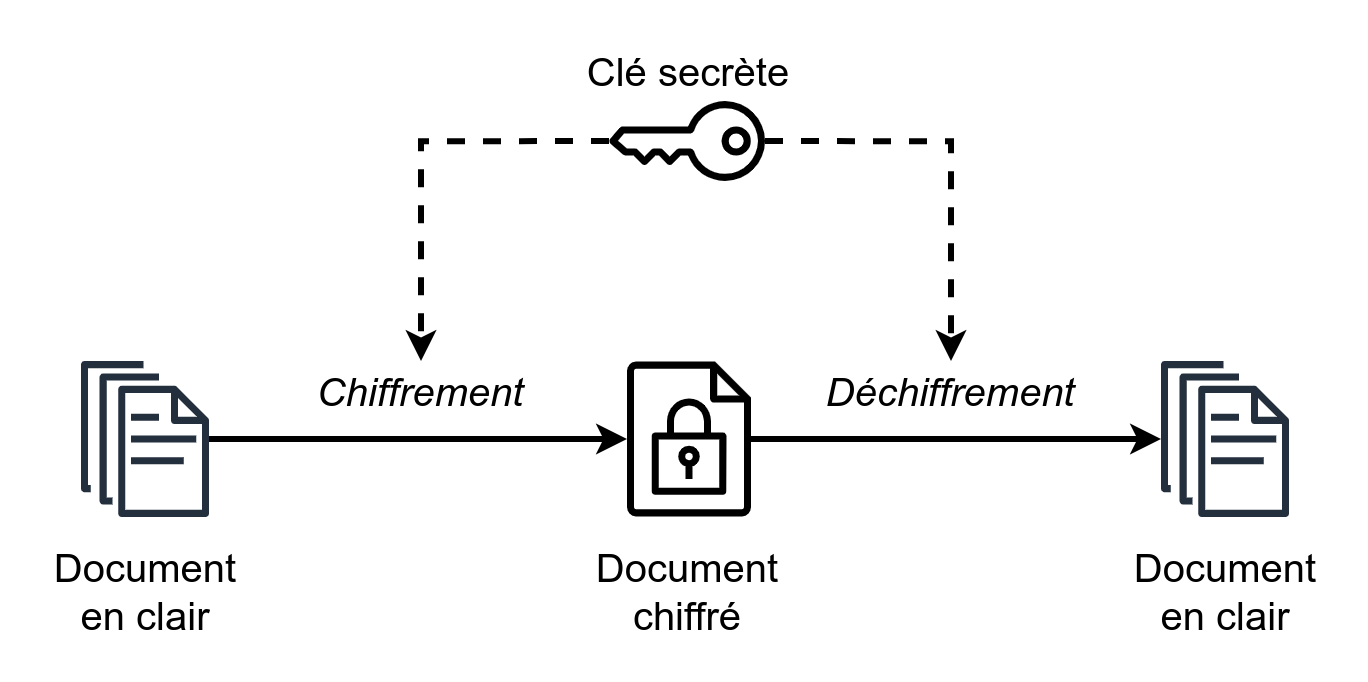
Use Cryptographic Hashing: Generate a hash of your output at every significant step. If a single character in the document changes, the hash will change, instantly signaling that the output is not authentic to its last recorded state.
Maintain a Immutable Log: Store these provenance records in an append-only ledger or a secure database. This ensures that even if the output is altered, the record of the alteration remains intact.
Enable Auditability: Create tools that allow stakeholders to “click through” from the final report to its constituent sources. Transparency is the antidote to skepticism.
Real-World Applications
The applications for output provenance extend far beyond tech labs. Consider these industries where reliability is not just preferred, but mandatory:
Journalism and Media: News organizations are increasingly vulnerable to “hallucinated” quotes or fabricated statistics. By embedding provenance metadata into articles, publishers can prove that an image or quote originated from a verified primary source, effectively neutralizing the threat of misinformation.
Legal and Regulatory Compliance: In litigation or corporate filings, the provenance of a document is essential for the chain of custody. If a firm uses AI to summarize millions of pages of discovery, they must be able to prove to a judge exactly how that summary was generated and that it hasn’t been skewed by biased prompts.
Corporate Strategy: Many firms use AI for financial modeling. If a C-suite executive makes a billion-dollar decision based on a generated projection, provenance allows the audit committee to trace the specific data sets and logic that led to that projection, ensuring the model wasn’t skewed by outdated or non-relevant input data.
“Trust in the age of automation will not be based on the reputation of the sender alone, but on the verifiable history of the content.”
Common Mistakes
Even well-intentioned organizations fall into traps that compromise their provenance efforts:
The “Black Box” Dependency: Relying on AI models that do not provide interpretability or confidence scores. If you don’t know why a model generated an output, provenance tracking cannot fill that gap.
Ignoring Middleware: Often, organizations secure their input data and their final report but ignore the “hidden” tools in the middle—such as data formatting scripts or cloud-based transformation APIs—that can introduce subtle, undocumented errors.
Metadata Stripping: A common oversight in document sharing. When files are shared via email or uploaded to cloud drives, metadata is often stripped to improve load times or file size. This effectively kills the provenance chain.
Post-Hoc Verification: Trying to verify the lineage of information months after the fact is almost impossible. Provenance must be recorded in real-time during the creation process.
Advanced Tips
For those looking to build more robust systems, consider these advanced strategies:
Implement C2PA Standards: The Coalition for Content Provenance and Authenticity (C2PA) is an open technical standard that allows creators to embed tamper-evident metadata into files. Adopting this standard ensures your provenance data is interoperable with other systems.
Active Watermarking: Beyond metadata, use invisible digital watermarking for synthetic content. This provides a “signal” within the content itself that can be detected by specialized software, even if the surrounding metadata is removed.
Adversarial Auditing: Periodically try to “break” your provenance system. Attempt to inject data without a proper audit trail and see if your monitoring systems flag the discrepancy. If they don’t, your chain of trust is still leaky.
Conclusion
The verification of output provenance is not merely a technical task; it is an essential component of modern information integrity. As we continue to lean on automated systems to synthesize, summarize, and create, the ability to look back at the “workings” of that content will define which organizations remain credible and which fall victim to misinformation and error.
Start small: begin by auditing the data pipelines you use most frequently. Map the path, verify the logic, and secure the history. By moving from a culture of blind trust to one of verifiable lineage, you insulate your decisions—and your reputation—against the uncertainties of the digital information age.




Leave a Reply