Verifiable Complex Network Control Algorithms for Energy Systems: Ensuring Grid Stability in the Age of Decentralization
— by
Steven Haynes
Introduction
The modern energy landscape is undergoing a radical transformation. As we shift away from centralized, fossil-fuel-reliant power plants toward a decentralized model dominated by intermittent renewables and microgrids, the complexity of energy distribution has skyrocketed. Maintaining stability in a system where millions of nodes—from residential solar panels to industrial batteries—are constantly interacting is a feat of engineering that traditional control methods can no longer handle alone.
This is where verifiable complex network control algorithms become critical. These algorithms provide the mathematical rigor necessary to guarantee that, regardless of local fluctuations, the global energy grid remains stable, secure, and efficient. Because energy systems are mission-critical infrastructure, “probabilistic success” is not enough; we require formal verification to prove that the system will behave exactly as intended under all specified conditions. This article explores how these control systems work and why they are the foundation for the next generation of energy infrastructure.
Key Concepts
To understand verifiable network control, we must first view the energy grid as a complex network. In graph theory, the grid is a collection of nodes (generators, consumers, storage units) and edges (transmission lines). Controlling this requires managing the state of each node while accounting for the coupling effects of the edges.
Verifiability is the defining feature here. In software engineering, formal verification uses mathematical proofs to check if a system meets its specifications. When applied to energy networks, a verifiable algorithm ensures that the control signals sent to power inverters or demand-response systems cannot lead to cascading failures, frequency instability, or voltage collapse.
Key components include:
Distributed Optimization: Algorithms that allow nodes to make local decisions that align with global grid health.
Lyapunov Stability Analysis: A mathematical framework used to prove that a system will return to a stable state after a disturbance.
Cyber-Physical Security: Ensuring that the control logic is resilient against both physical disruptions and malicious cyber-attacks.
Step-by-Step Guide: Implementing Verifiable Control
Implementing these algorithms in a real-world energy environment requires a rigorous, multi-stage approach. You can learn more about managing complex systems on thebossmind.com.
System Modeling: Develop a high-fidelity digital twin of your energy network. This model must include the physical characteristics of the lines and the operational constraints of the distributed energy resources (DERs).
Define Control Objectives: Clearly articulate the “safety envelopes.” For instance, frequency must stay within 59.9Hz and 60.1Hz, and voltage must remain within 5% of nominal values.
Algorithm Selection: Choose a verifiable framework, such as Distributed Model Predictive Control (DMPC) or Multi-Agent Reinforcement Learning (MARL) with formal constraints.
Formal Verification: Use model checking tools to prove that the algorithm cannot enter an “unsafe” state. This often involves state-space exploration to ensure that, given any input within a defined range, the output remains safe.
Deployment and Monitoring: Deploy the algorithm in a hardware-in-the-loop (HIL) testing environment before moving to the live grid. Continuous monitoring is essential to ensure that real-world sensor drift doesn’t invalidate your initial safety proofs.
Examples and Case Studies
The application of these algorithms is already transforming how we manage energy. Consider the following scenarios:
Microgrid Islanding: When a remote community is disconnected from the main grid due to a storm, a verifiable control algorithm automatically reconfigures the local microgrid. By utilizing formal verification, the system guarantees that the load-shedding protocol will prevent a total blackout, even if the solar output fluctuates by 40% in minutes.
Another real-world application is Electric Vehicle (EV) Grid Integration. As millions of EVs plug into the grid, they act as mobile batteries. Verifiable control algorithms manage the charging cycles of these vehicles, ensuring they provide grid support (Vehicle-to-Grid) without violating the battery health constraints of the individual car owners. The algorithm acts as a digital intermediary, proving that grid stability is maintained while respecting the user’s need for a charged vehicle by the morning.
Ignoring Latency: In a complex network, control signals take time to propagate. If your algorithm assumes zero latency, your stability proofs will fail in the real world. Always model communication delays.
Over-Reliance on Historical Data: Machine learning models are only as good as the data they are trained on. If your algorithm hasn’t seen a “black swan” event, it may not be able to verify safety during one. Always supplement ML with rule-based safety overrides.
Neglecting Cybersecurity: A control algorithm might be mathematically “stable,” but if the communication channel is insecure, an attacker could spoof sensor data to force the algorithm into an unstable state. Verification must include the integrity of the data stream.
Advanced Tips
To push your energy system toward true autonomy and resilience, consider these advanced strategies:
Adopt Consensus-Based Protocols: Instead of relying on a central controller, use consensus algorithms (similar to those used in distributed ledgers) where nodes agree on the state of the network. This removes the “single point of failure” risk.
Incorporate Adaptive Safety Margins: Static safety limits are often inefficient. Use adaptive margins that tighten when grid conditions are volatile and relax during peak stability. This allows you to extract more efficiency from existing infrastructure without sacrificing safety.
Cross-Layer Optimization: Ensure that your control algorithms are aware of the physical layer (the copper and silicon) and the economic layer (the market price of energy). A verifiable algorithm that is also economically optimal is the “holy grail” of modern energy management.
For those interested in the technical standards of smart grids, the IEEE Standards Association provides extensive documentation on the communication and control protocols required for these complex networks.
Conclusion
Verifiable complex network control algorithms are not merely an academic exercise; they are a prerequisite for a sustainable, reliable, and decentralized energy future. By moving beyond traditional “black-box” control and adopting rigorous, verifiable frameworks, engineers can ensure that the grid of tomorrow is robust enough to handle the volatility of renewables and the unpredictability of consumer behavior.
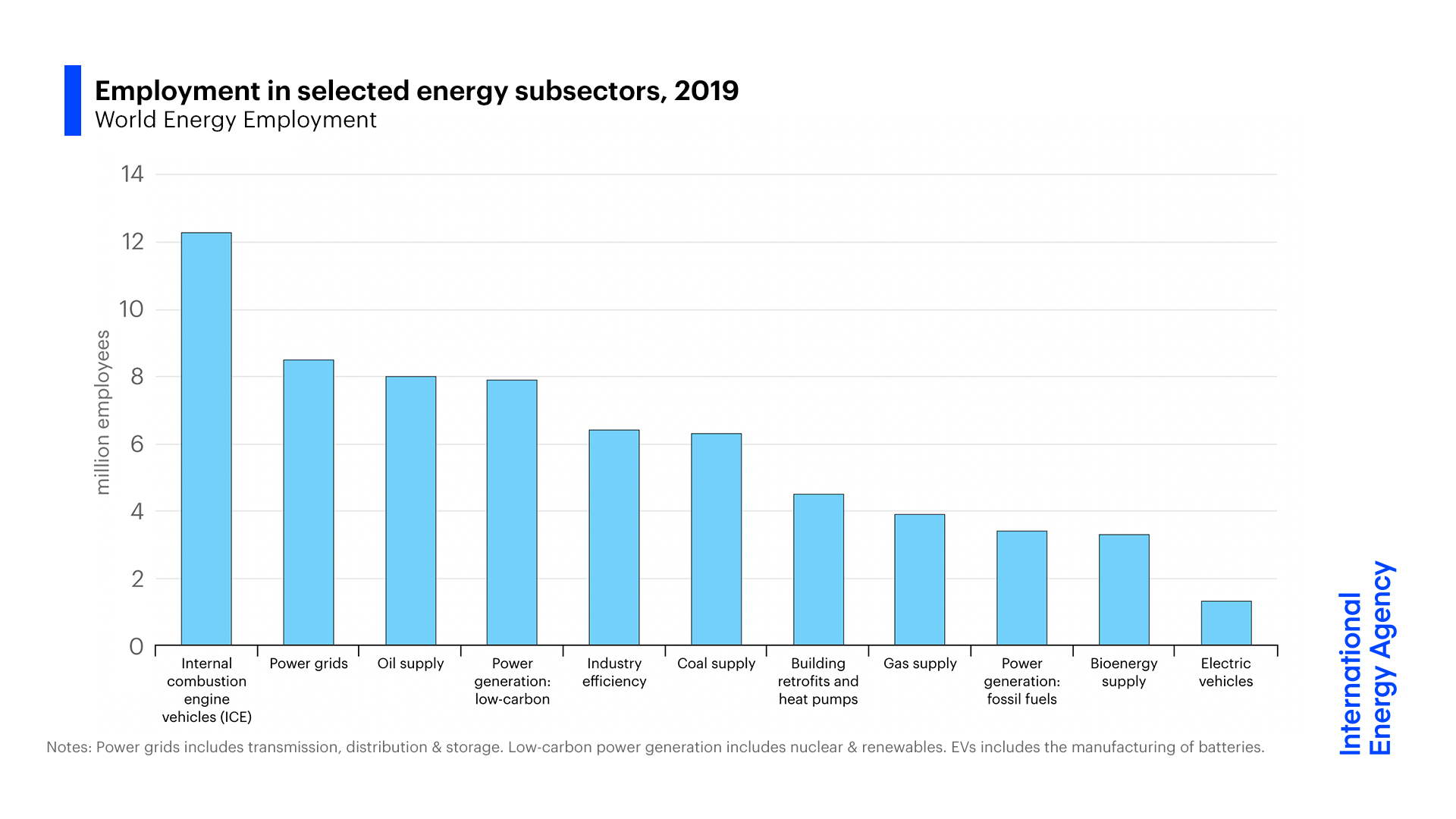
The journey toward a fully resilient grid requires a deep commitment to both innovation and safety. As we integrate more distributed energy resources, the complexity will only increase. By focusing on formal verification and distributed stability, we can build energy systems that are not only smarter but inherently safer for everyone. Remember to continue refining your knowledge on system architecture at thebossmind.com and stay informed on global energy policy through the International Energy Agency (IEA).



Leave a Reply