Use synthetic data generation to test the robustness of financial models without risking assets.
— by
Steven Haynes
Outline
Introduction: The limitations of historical financial data and the rise of synthetic data as a sandbox for risk management.
Key Concepts: Defining synthetic data, generative adversarial networks (GANs), and the concept of “statistical fidelity.”
Step-by-Step Guide: The architectural process of generating, validating, and testing data.
Real-World Applications: Stress testing, fraud detection, and algorithmic trading.
Common Mistakes: Overfitting, bias leakage, and ignoring “fat tail” events.
Advanced Tips: Moving beyond Gaussian distributions and incorporating multi-modal data.
Conclusion: Final thoughts on the future of data-driven finance.
Testing Financial Robustness: Leveraging Synthetic Data to De-Risk Innovation
Introduction
Financial modeling has long relied on the “rearview mirror” approach. Analysts build strategies based on historical price action, market volatility, and macroeconomic events. While past performance is a staple of traditional analysis, it is fundamentally limited: the market rarely repeats itself with exact precision, and historical datasets lack the extreme, “black swan” scenarios necessary to truly stress-test modern algorithmic models.
This is where synthetic data generation enters the conversation. By creating artificial datasets that mirror the statistical properties of real-world markets without exposing actual capital or sensitive personal information, financial institutions can create a “flight simulator” for their models. This approach allows developers to break their algorithms in a controlled environment, ensuring robustness before a single dollar of real assets is at stake.
Key Concepts
At its core, synthetic data is information that is artificially generated rather than produced by real-world events. In finance, the goal is not to create random noise, but to produce high-fidelity datasets that retain the complex correlations and dependencies found in actual market data.
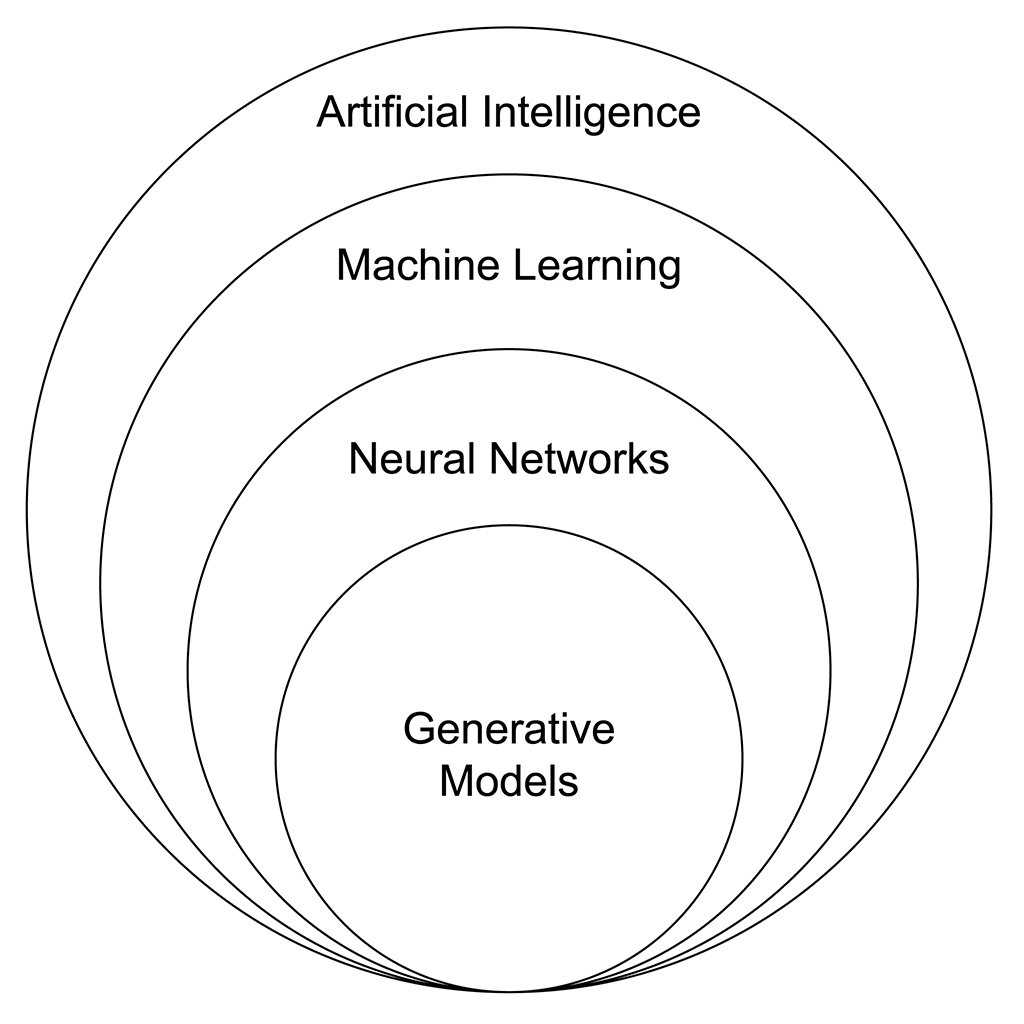
The most common tool for this is the Generative Adversarial Network (GAN). A GAN consists of two neural networks: a generator, which creates artificial data, and a discriminator, which attempts to distinguish between the artificial data and the real historical data. Over thousands of iterations, the generator learns to produce data so realistic that the discriminator can no longer tell the difference.
Synthetic data does not replace historical data; it augments it by filling in the gaps where history is thin, such as during rare market crashes or unprecedented geopolitical shifts.
Step-by-Step Guide
Identify the Variables: Define the inputs your model relies on. This might include asset prices, volatility indices, interest rate curves, or sentiment metrics from news feeds.
Define the Statistical Constraints: Before generating, you must define the “rules” of your market. This includes autocorrelation, volatility clustering, and cross-asset correlations (e.g., how the price of oil impacts airline stocks).
Train the Generative Model: Feed your historical data into a GAN or a Variational Autoencoder (VAE). The model will learn the underlying probability distribution of your inputs.
Generate “Stress” Scenarios: Program the generator to create synthetic datasets that include extreme events, such as 10-standard-deviation moves, which are statistically possible but rare in history.
Validate with Backtesting: Run your existing trading or risk model against the synthetic data. Compare the model’s performance on synthetic data vs. real data to ensure the generation process accurately represents market behavior.
Iterate and Refine: Use the feedback from your model failures to refine the synthetic generator, creating a continuous loop of testing and improvement.
Examples or Case Studies
Fraud Detection in Retail Banking: Financial institutions often struggle to train fraud detection models because actual instances of fraud are (thankfully) rare. By using synthetic data, banks can generate millions of realistic, fraudulent transactions that mimic sophisticated criminal patterns. This enables the machine learning model to learn the “shape” of fraud without needing to wait for real-world attacks to occur.
Algorithmic Trading Stress Testing: A quantitative hedge fund might rely on mean-reversion strategies. By using synthetic data, the fund can generate an artificial decade of data where interest rates hit 15% or inflation stays at 0% for years. If the trading model collapses under these synthetic conditions, developers can patch the logic before the fund loses actual assets during a real market shift.
Common Mistakes
Mode Collapse: This happens when the generator produces only a limited variety of outcomes, failing to capture the full breadth of market possibilities. Your synthetic data must be as diverse as the real market.
Ignoring Tail Risks: If your synthetic generator is built solely on normal distributions, it will fail to predict the “fat tails” that often cause financial crises. Ensure your model specifically accounts for extreme volatility.
Over-Smoothing: Real financial data is “jittery” and imperfect. If synthetic data is too clean, your model will develop a false sense of security and fail when it encounters the noise of real-world trading.
Data Leakage: Ensure that your synthetic data generation process is entirely isolated from your model’s training set. If the synthetic data is too similar to the historical training set, you will simply be overfitting your model to a slightly distorted version of the past.
Advanced Tips
To achieve professional-grade robustness, stop viewing data generation as a static process. Incorporate Multi-Modal Synthetic Data. Instead of just modeling price, integrate synthetic sentiment data (derived from simulated news events) with synthetic market volume. This creates a multi-dimensional environment that mimics the interconnected nature of modern electronic trading.
Additionally, consider implementing Adversarial Training. After you generate a set of synthetic data, have a second model—a “saboteur”—attempt to exploit weaknesses in your trading model based on that data. This “red-teaming” approach for financial models is the gold standard for institutional-grade security and robustness.
Conclusion
The ability to stress-test financial models using synthetic data is a paradigm shift for risk management. It moves the industry away from reactive adjustments based on past failures and toward a proactive, simulated environment where models can be tested against the infinite possibilities of the future.
By leveraging GANs and rigorous validation techniques, financial institutions can effectively “de-risk” their innovation, allowing for bolder strategies and more resilient portfolios. In an era of increasing market complexity, synthetic data isn’t just an experimental tool—it is a fundamental requirement for any serious quantitative or risk-focused organization.



Leave a Reply