Introduction: The intersection of AI-driven job displacement and the UBI debate.
Key Concepts: Defining UBI, the “automation gap,” and the shift from labor-based to capital-based income.
Step-by-Step Guide: How to design and pilot a localized UBI program.
Examples and Case Studies: Analysis of Stockton, CA, and Finnish experiments in the context of technological unemployment.
Common Mistakes: Inflation fears, work-disincentive myths, and poor funding models.
Advanced Tips: Moving toward negative income taxes and sovereign wealth funds.
Conclusion: Why UBI is evolving from a fringe theory to an economic necessity.
Universal Basic Income: The Economic Safety Net for an AI-Driven Future
Introduction
For decades, the concept of Universal Basic Income (UBI) was relegated to the fringes of academic economic theory. It was dismissed as a utopian dream—a handout that would stifle productivity and bankrupt the state. However, the rapid acceleration of artificial intelligence and machine learning has shifted the narrative. As generative AI and robotics move from automating repetitive manual labor to replacing high-level cognitive tasks, the structural foundation of our labor market is cracking.
We are entering an era where “technological unemployment” is no longer a distant theoretical risk but an immediate economic pressure. When human labor is decoupled from economic productivity, the traditional social contract—where income is primarily earned through employment—becomes unsustainable. This article explores how UBI models are being re-engineered as a pragmatic response to an automated future, providing a roadmap for how society might stabilize itself during this transition.
Key Concepts
At its core, Universal Basic Income is a periodic cash payment delivered to all on an individual basis, without means test or work requirement. In the context of AI-driven automation, the goal of UBI changes from simple poverty alleviation to economic stability.
The Automation Gap: This occurs when the pace of technology-driven job displacement exceeds the economy’s ability to create new roles. Unlike the Industrial Revolution, where new technology created more jobs than it destroyed, AI threatens to shrink the total demand for human labor across multiple sectors simultaneously.
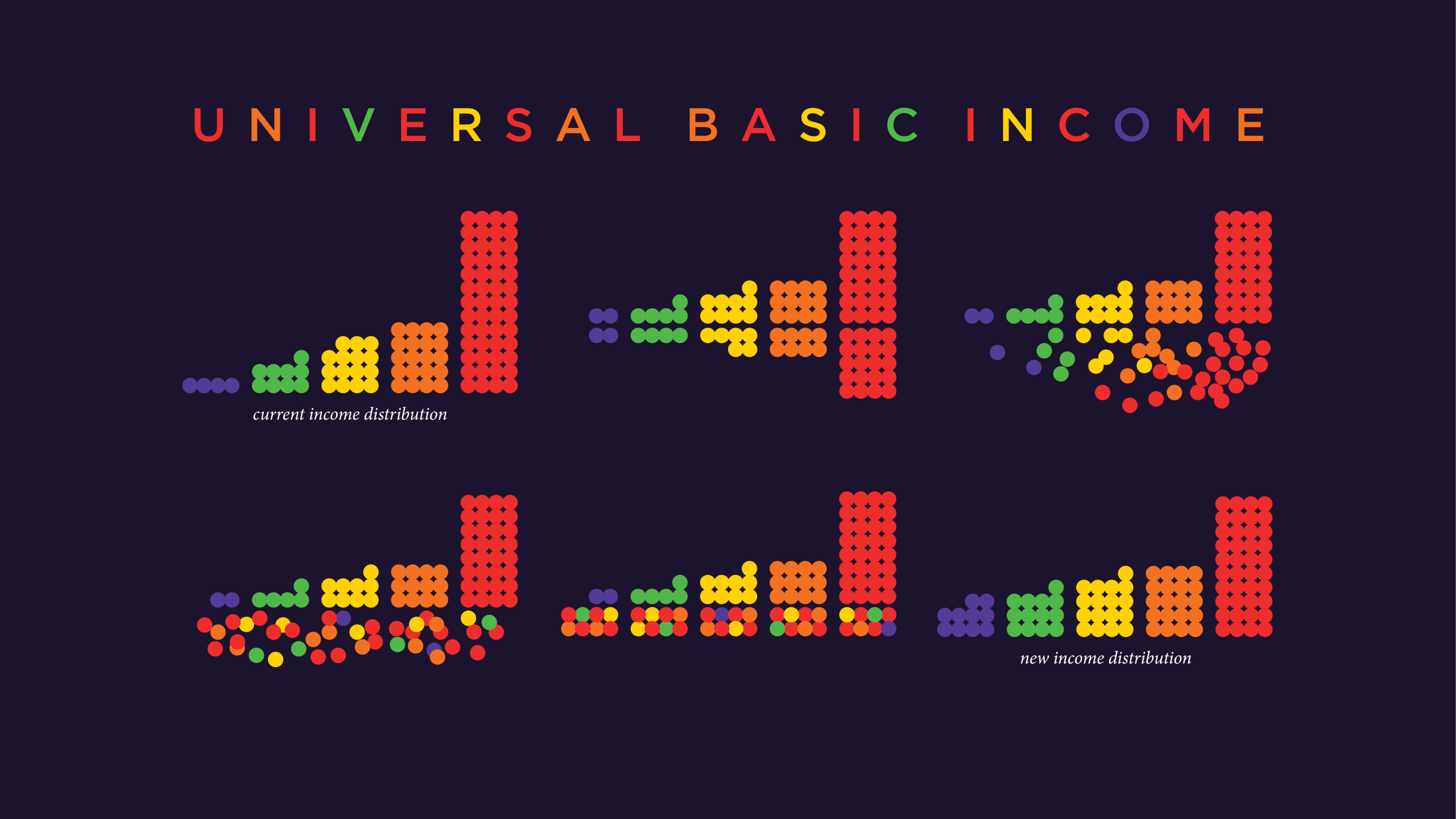
Capital vs. Labor Income: Historically, most wealth was generated by human labor. In an AI-dominated economy, value is generated by capital (the algorithms, the hardware, and the data). UBI acts as a mechanism to redistribute a portion of this capital-generated wealth back to the population, ensuring that citizens remain active consumers who can participate in the economy.
Step-by-Step Guide: Designing a UBI Pilot
Implementing a UBI program is not just about writing checks; it is about infrastructure and social engineering. Here is how municipalities and organizations are structuring successful pilot programs.
Identify the Funding Source: Most successful pilots move away from simple taxation of wages. Instead, they look toward “Data Dividends” (taxing the data companies use to train AI) or carbon taxes. You must define a sustainable, non-inflationary funding mechanism before distribution begins.
Determine the Scope: Start with a cohort that is most vulnerable to automation. For example, a city might select workers in the logistics or retail sectors who are at high risk of displacement by autonomous systems.
Define the Frequency and Amount: The payment must be enough to cover basic needs—housing, food, and utilities—but structured to encourage, rather than replace, personal ambition. Many pilots use a monthly cadence to mimic a paycheck, which aids in household budgeting.
Establish Metrics for Success: Success should not be measured solely by employment rates. Track health outcomes, educational attainment, debt reduction, and the ability to pivot to new career paths.
Implement “On-Ramping”: UBI should be paired with access to retraining and upskilling. The cash provides the stability required for an individual to spend six months learning a new skill (like AI oversight or specialized maintenance) that they otherwise couldn’t afford to pursue.
Examples and Case Studies
The Stockton Economic Empowerment Demonstration (SEED): In Stockton, California, 125 residents were given $500 a month for 24 months. Contrary to critics’ fears, the recipients did not stop working. In fact, full-time employment among the recipients actually rose by 12% compared to the control group. The guaranteed income provided the “financial floor” necessary for people to search for better jobs rather than settling for the first available gig.
The Finland Basic Income Experiment:Finland tested a UBI model on 2,000 unemployed citizens. While the employment impact was modest, the psychological impact was significant. Participants reported significantly lower levels of stress, depression, and anxiety. In an AI-driven future, where the threat of job loss is constant, this mental health stability is a critical component of a functional society.
Common Mistakes
When discussing or implementing UBI, policymakers often fall into several traps that undermine the program’s intent.
Funding via Deficit Spending: Printing money to fund UBI without corresponding productivity gains or wealth redistribution will inevitably lead to inflation, negating the value of the payment. Funding must come from the surplus value generated by automated systems.
Treating UBI as a Replacement for Social Services: A common libertarian argument is to replace all healthcare and housing subsidies with a single cash payment. This is a mistake; UBI should be a supplement to essential services, not a replacement that leaves individuals vulnerable to market-rate shocks (like sudden rent spikes).
Ignoring the “Meaning” Gap: If UBI is provided without opportunities for community engagement or skill-building, it can lead to social isolation. The program must be integrated into a larger framework of societal participation.
Advanced Tips
To move UBI from a small pilot to a national policy, we must look at more sophisticated models:
Negative Income Tax (NIT): Instead of sending everyone a check, the government automatically provides a subsidy to those whose income falls below a certain threshold. This is often more politically palatable and administratively efficient, as it integrates directly into existing tax infrastructure.
Sovereign Wealth Funds: Borrowing from the “Alaska Model,” where residents receive an annual dividend from the state’s oil wealth, governments could create an “AI Dividend.” This would involve taking equity in the companies developing the most disruptive AI technologies and distributing the dividends to all citizens. This turns every citizen into a shareholder of the automated future.
Conditional vs. Unconditional: While pure UBI is unconditional, “Participation Income” is a variation where payments are tied to socially valuable activities—such as volunteering, caregiving, or continuing education. This can help bridge the gap for those who worry about the moral implications of “getting something for nothing.”
Conclusion
The rise of AI-driven automation represents the greatest economic shift since the Industrial Revolution. While the potential for increased productivity and prosperity is immense, the transition period threatens to widen the gap between those who own the machines and those replaced by them. Universal Basic Income is not a panacea, but it is a necessary evolution of our social safety net.
The goal of a well-designed UBI is not to encourage idleness, but to provide the security required for innovation. When humans are freed from the fear of destitution, they are more likely to take the risks necessary to adapt to a rapidly changing technological landscape.
By shifting the focus from labor-based income to a more inclusive model of wealth distribution, we can ensure that the benefits of artificial intelligence are shared by the many, rather than hoarded by the few. The experiments being conducted today are the blueprints for a more stable and resilient society tomorrow.