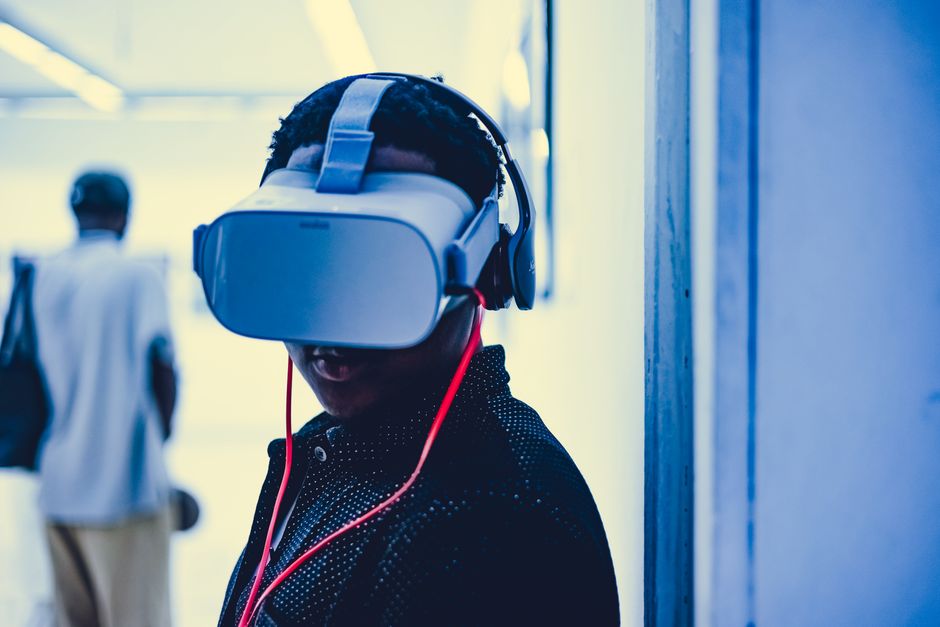
Virtual Reality is often heralded as the ultimate panacea for the data-visualization bottleneck in modern science. By allowing researchers to ‘walk through’ molecular structures or climate models, we are supposedly unlocking our evolutionary spatial intelligence. However, as we move from the experimental phase to full-scale adoption in laboratories, a contrarian reality is emerging: the ‘immersion effect’ may actually be counterproductive to deep scientific reasoning.
The Cognitive Cost of Constant Immersion
Proponents argue that VR removes the ‘friction’ of 2D monitors. But this assumes that 2D representation is a limitation, rather than a necessary abstraction. Science requires distillation. By forcing data into a hyper-realistic, three-dimensional environment, we risk overwhelming the researcher with sensory ‘noise’—unnecessary visual data that competes for limited cognitive resources. The brilliance of a well-crafted graph or a 2D projection lies in its ability to highlight the essential signal while discarding the irrelevant. When everything is experiential, the ability to maintain critical, detached analysis is diminished.
The Illusion of Understanding
There is a growing concern regarding ‘intuitive bias’ in VR-assisted R&D. When a scientist manipulates a protein model in a VR space, they are interacting with a simulation based on pre-programmed physics. The risk here is psychological: researchers may begin to equate ‘feeling right’ in a virtual space with ‘being true’ in a physical one. This visceral engagement can create a false sense of certainty, leading to a phenomenon we might call ‘simulation overconfidence,’ where the researcher neglects the messy, often contradictory anomalies that a static, non-immersive spreadsheet would have made glaringly obvious.
Beyond the Headset: A Hybrid Future
To truly advance, laboratories must resist the siren song of total immersion. The future of high-performance scientific discovery lies not in ditching the monitor, but in developing a hybrid cognitive architecture. We need environments where scientists can oscillate between the ‘deep focus’ of 2D analytical tools—which allow for high-speed, dispassionate processing—and the ‘spatial exploration’ of VR for hypothesis generation.
Operationalizing Skepticism
As organizations integrate these tools, leaders must ensure that the novelty of the medium does not eclipse the rigor of the method. High-performance teams should treat VR not as a replacement for traditional analysis, but as a supplementary ‘sandbox’ that is strictly walled off from the decision-making pipeline until the simulation results are stress-tested against standard models.
Virtual Reality is a powerful lens, but it is not a window into objective truth. By maintaining a healthy skepticism toward our own sensory input, scientific teams can leverage VR to push boundaries without falling into the trap of digital illusions.
Further Reading
Harvard Business Review: The Limits of Immersive Technology in Decision Making
MIT Technology Review: The Cognitive Pitfalls of Data Visualization
The BossMind Archives: Building Resilience in High-Stakes Innovation Cycles