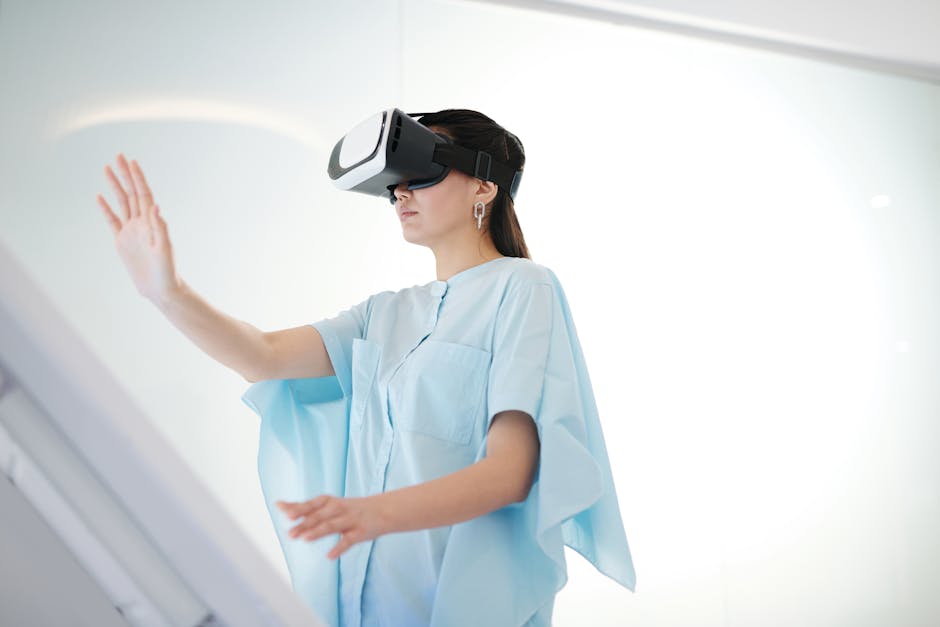
We have long championed the use of Virtual Reality as a tool for high-performance leadership—a way to step into the boots of history’s greatest strategists. But there is a dangerous, often overlooked risk in this immersive approach: The Illusion of Presence.
The Risk of Empathy Over Logic
When you stand in a high-fidelity reconstruction of a historic boardroom or battlefield, your brain triggers a biological response to ‘being there.’ This creates an intense, emotional tether to the environment. While this is excellent for engagement, it is frequently catastrophic for objective analysis. Leaders often mistake the ‘visceral feeling’ of a situation for a deep understanding of its systemic complexities.
By placing ourselves in the center of the action, we risk succumbing to retrospective bias. We see the smoke, we hear the simulated chaos, and we convince ourselves that we understand why a leader made a specific choice. In reality, we are observing a curated digital replica, not the raw data of the era. The immersion is so convincing that it obscures the fact that we are viewing a interpretation of history, not history itself.
The ‘Quantification’ Fallacy
The allure of VR is that it makes historical data feel tangible. However, as business leaders, we must distinguish between immersion and insight. A 3D model of a failing logistics network in 1920 might look impressive, but it doesn’t automatically grant you the economic context that drove the failure. In fact, the beauty of the simulation can act as a vanity metric—providing a false sense of preparedness while failing to interrogate the cold, hard numbers that actually matter.
The modern leader must avoid ‘Gamified Strategy.’ If your historical analysis becomes a consumption experience rather than a rigorous audit, you aren’t learning from history; you are consuming a high-tech narrative.
Reframing Immersive Strategy
At The BossMind, we advocate for a balanced approach. VR should not be used to ‘experience’ history, but rather to stress-test assumptions. Instead of asking, ‘What was it like to be there?’, use VR to ask, ‘What variables were ignored?’
Use VR as a Friction Generator: Force yourself to make decisions in the simulation without the benefit of the total context that historical books provide.
Strip the Aesthetics: If the high-fidelity graphics are swaying your judgment, switch to a wireframe or data-heavy mode. Focus on the geometry of the decision, not the sensory experience.
Challenge the Reconstruction: Always identify the ‘missing data’ in any simulation. What did the AI struggle to render? That limitation is often where the real historical insight lies.
Virtual Reality is a powerful lens, but it is not a substitute for critical thinking. Don’t let the fidelity of the simulation fool you into thinking you’ve mastered the strategy. The most successful leaders are those who can zoom out of the high-definition immersion to view the brutal, unadorned logic of the system beneath.