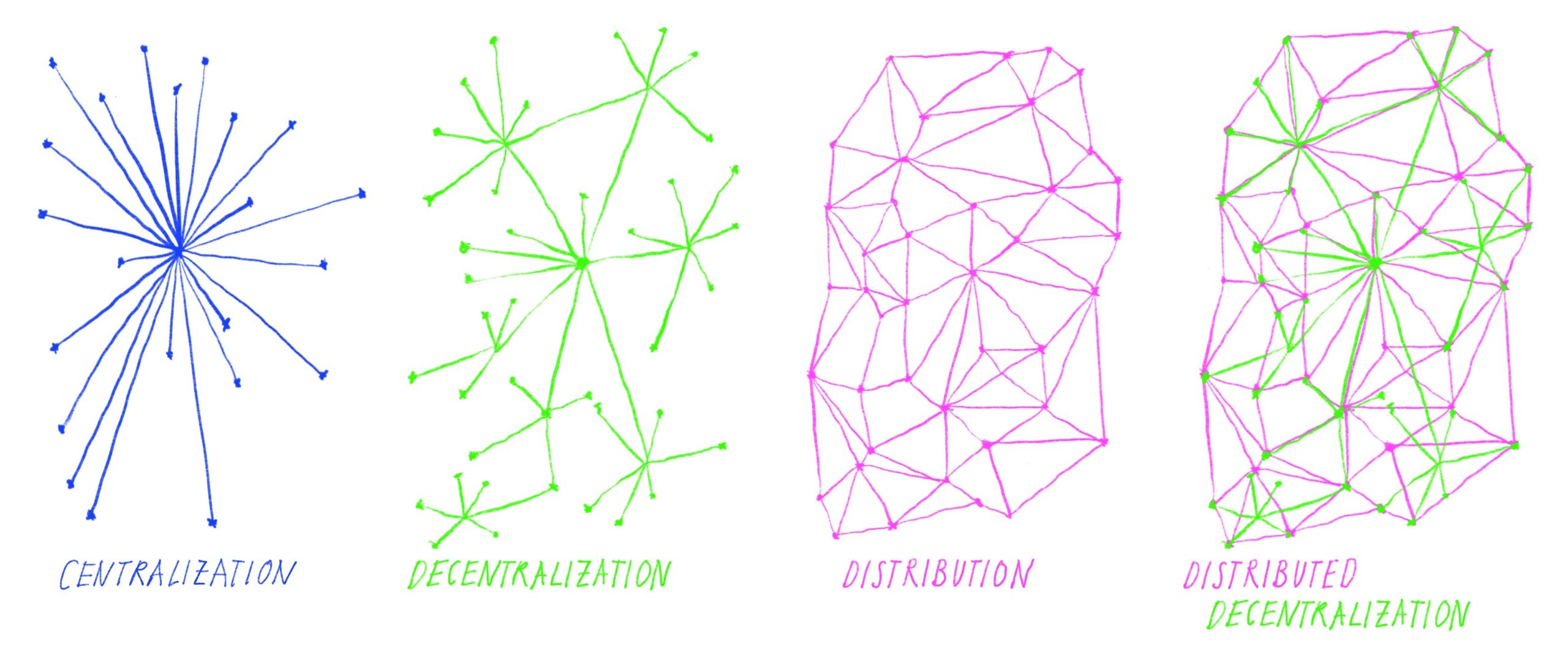
For decades, the global economy has relied on a model of ‘institutional trust.’ If you wanted to move money, clear a title, or verify a shipment, you paid a gatekeeper—a bank, a notary, or a logistics auditor—to vouch for the truth. This was the cost of doing business in an age of disparate, disconnected data silos. But we are witnessing a fundamental shift: the transition from institutional trust to mathematical verification.
The Erosion of the Middleman
The traditional business model relies on ‘rent-seeking’ intermediaries—entities that extract value simply because they sit in the middle of a transaction. The original premise of enterprise blockchain was to reduce operational friction. The reality, however, is far more disruptive. It is not just about making processes faster; it is about making intermediaries obsolete.
When companies transition to shared, immutable ledgers, the need for a ‘third-party auditor’ to reconcile books disappears. The ledger is the audit. This isn’t just an efficiency gain; it is a structural threat to every industry whose revenue is built on verifying the claims of others.
The Architecture of Frictionless Trade
If your current operational strategy still requires human intervention to ‘check the work’ of a supplier or a partner, you are carrying legacy weight. We are moving toward a ‘Zero-Trust Architecture’ where the system assumes that any party can be compromised, but the system itself cannot.
Consider the power of tokenized workflows:
Direct Settlement: Removing the 3-day clearing cycle for B2B payments by moving value alongside data.
Automated Compliance: Embedding regulatory requirements directly into the transaction logic, ensuring that illegal or non-compliant actions are physically impossible to execute, rather than just legally prohibited.
Algorithmic Governance: Replacing slow, opaque board meetings with transparent, on-chain voting and resource allocation for decentralized business units.
A Contrarian View: Don’t Decentralize Everything
There is a dangerous trend of ‘decentralizing for the sake of buzz.’ A word of caution for the C-Suite: decentralization is an expensive, difficult way to manage a database. You should not be putting your entire ERP on a blockchain. Decentralization is only a strategic advantage when the participants involved have conflicting interests.
If you control the entire supply chain, a centralized, high-performance SQL database will always beat a blockchain. You only introduce blockchain when you need to align parties that don’t inherently trust one another. That is the ‘Trust Paradox’—only use the tech when the humans involved are incentivized to cheat.
The Path Forward
Leaders must stop viewing blockchain as an ‘IT upgrade’ and start viewing it as a ‘Governance Upgrade.’ If you can automate the verification of truth, you can strip away the administrative layers that have bloated corporate structures for fifty years. The firms that win in the next decade won’t be the ones with the best accounting departments—they will be the ones that architected their operations so that verification is instantaneous, automated, and absolute.
To lead in this new era, stop asking how to optimize your current bureaucracy. Start asking: If trust were a commodity provided by software, which parts of my organization would no longer be necessary?