The Resonant CEO: Why Your Strategy Fails Because of ‘Temporal Dissonance’
— by
Steven Haynes
The Invisible Barrier to Scale
In our previous exploration of 0Radionics, we established that modern organizations are suffering from signal-to-noise ratio collapse. But there is a deeper, more insidious problem that even data-driven leaders overlook: Temporal Dissonance. You can have the perfect strategy, the most talented team, and the cleanest data, yet still fail to move the needle. Why? Because you are operating out of sync with the rhythm of your own marketplace.
The Myth of the ‘Always-On’ Enterprise
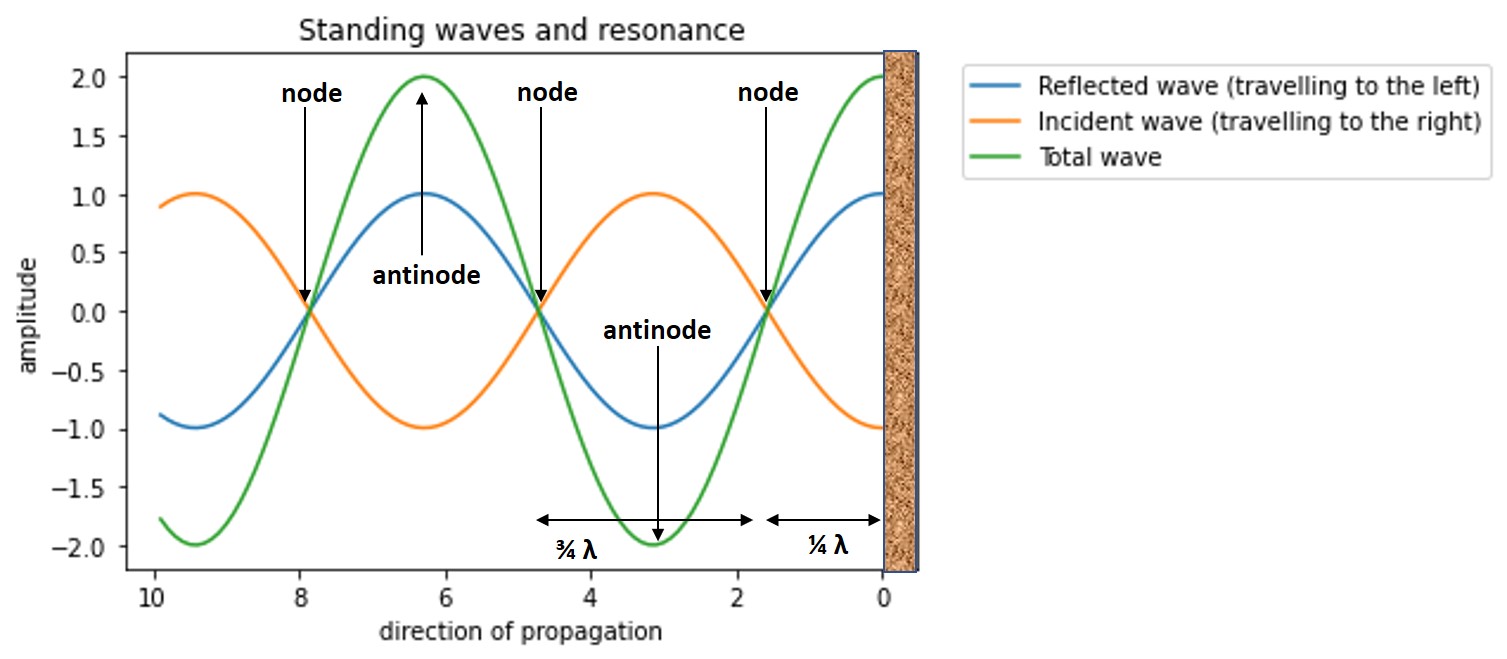
Corporate culture worships at the altar of the ‘always-on’ state. We push for 24/7 engagement, constant deployment, and continuous growth. From a physics perspective, this is a recipe for resonance failure. If you are broadcasting at maximum volume at all times, your signal becomes indistinguishable from background radiation. Customers stop hearing you; stakeholders stop believing you; your internal culture becomes a blur of perpetual urgency.
True 0Radionics isn’t about maximizing effort; it’s about timing the wave. Markets, like human biological systems, have cycles of expansion and contraction. When you force an expansion strategy during a market’s contraction phase, you create structural friction. You are effectively trying to push a string.
The Anatomy of Temporal Dissonance
Temporal Dissonance occurs when your internal operational frequency is decoupled from the external environmental frequency. You see this in:
Product Launches: Releasing a highly complex feature during a customer’s ‘consolidation phase,’ where they are focused on utility rather than discovery.
Capital Allocation: Increasing ad spend when market sentiment is in a ‘wait-and-see’ mood, resulting in high clicks but zero conversion.
Team Communication: Running high-intensity sprint cycles during a period of organizational ‘integration,’ leading to burnout and creative atrophy.
From Efficiency to Amplitude
To move beyond mere optimization, you must master the art of Amplitude Modulation. This is the strategic capability to adjust the intensity of your efforts based on the resonance of the moment. Not every week requires a ’10x’ push. In fact, trying to maintain ’10x’ intensity every week is the fastest way to dilute your impact.
The Practitioner’s Shift: The Triad of Harmonic Timing
If you want to move from ‘busy’ to ‘resonant,’ apply these three shifts to your strategic operating system:
1. Adopt the Pulse-Check Model: Instead of weekly reporting, move to pulse-based monitoring. If the market is in a low-receptivity cycle, your metrics should be focused on maintenance and infrastructure, not acquisition.
2. Match Strategy to Market ‘Tide’: Track your historical performance not by month, but by seasonal or behavioral cycles. Identify your ‘High-Resonance Windows’—those moments where your brand narrative and the market’s pain points collide—and concentrate 80% of your resources there.
3. Cultivate Intentional Silence: Just as music is defined by the spaces between the notes, your strategy is defined by the spaces between your campaigns. Use periods of low market resonance for ‘Zero-Point Maintenance’—pruning your tech stack, refining your messaging, and clearing the interference.
The Contrarian Reality
The hardest thing for a high-performing leader to do is to stop. We equate activity with productivity. But in a resonant system, sometimes the most high-leverage action you can take is to power down the machines, recalibrate your focus, and wait for the signal to align. The goal of the Resonant CEO is not to work harder than the competition, but to be the only one moving in harmony with the natural flow of the market. When you stop fighting the current, you realize you don’t need to push—you simply need to glide.


Leave a Reply