The Quantum-Proof Executive: Why Intuition is the New Competitive Edge
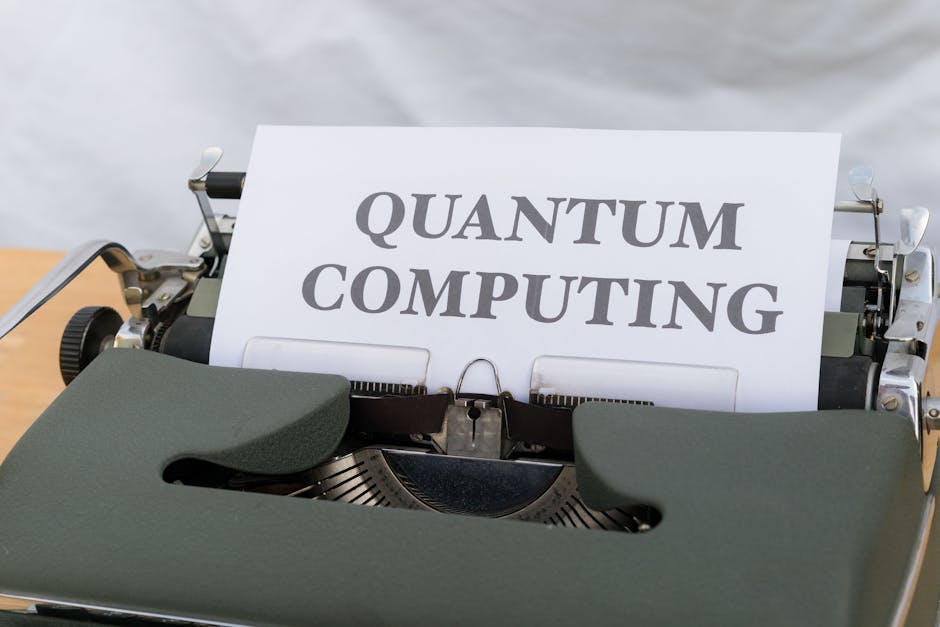
While the academic world is busy retrofitting engineering curricula to accommodate quantum mechanics, there is a dangerous oversight in the executive boardroom: the belief that the quantum age will be won by those who best understand the hardware. At The Boss Mind, we argue the opposite. As computational power shifts from deterministic to probabilistic, the primary bottleneck for elite performance will no longer be algorithmic capacity—it will be the quality of human intuition.
The Paradox of Computational Abundance
In a classical world, leaders were rewarded for their ability to narrow down variables, optimize processes, and select the ‘most efficient’ path. We taught managers to be high-speed filters for data. But quantum computing promises a future of near-infinite computational throughput. When machines can calculate every possible variable of a market shift or logistical chain simultaneously, the ‘correct’ answer becomes a commodity. The ability to calculate is no longer a differentiator; it is the cost of entry.
Reframing Human Value: Beyond Data Processing
If machines are handling the multidimensional mapping of uncertainty, what is left for the leader? The answer is Systemic Judgment. In an environment where the machine presents a cloud of high-probability outcomes rather than a singular logical conclusion, the executive’s role transitions from a processor to a filter of intent. You are no longer managing for ‘efficiency’—which the machines will master—but for ‘significance.’
We must evolve our executive education away from data-driven decision-making and toward judgment-driven design. This involves three critical pillars:
Contextual Framing: The quantum machine requires precise parameters to define what ‘success’ looks like. Leaders who cannot define the ‘why’ behind their operations will find themselves with powerful tools, but no target.
Ethical Heuristics: When outcomes are probabilistic, unintended side effects become harder to track. Elite leaders must possess a robust, non-algorithmic moral compass to steer systems that operate on complexity beyond human simulation.
Synthesized Intuition: True intuition is not a ‘hunch’; it is the result of deep pattern recognition across disparate domains. As quantum computing dissolves the boundaries between disciplines, the executive who can synthesize insights from history, philosophy, and high-level physics will outmaneuver the one relying purely on the machine’s output.
The Contrarian View on Talent
Most organizations are currently obsessed with hiring ‘Quantum-Native’ talent—data scientists who speak the language of qubits and superposition. While necessary for infrastructure, this is a race to the bottom of technical talent. The real alpha in the next decade will be held by organizations that cultivate ‘T-Shaped’ strategists: those with enough technical literacy to direct the quantum engines, but whose primary expertise lies in human dynamics, systems architecture, and high-stakes synthesis.
The Future of Elite Leadership
We are entering the Age of the Architect. The future leader does not compete with the quantum processor; they design the system that the quantum processor serves. If you are focusing your internal development programs solely on data fluency, you are preparing your team for a world that is already being automated. Start focusing on the high-level synthesis that no algorithm can replicate: the ability to define the future you want, and the wisdom to know why you want it.
Actionable Takeaways for The Boss Mind
Audit your decision-making: Are you spending your time optimizing current processes (classical) or designing new strategic frameworks (quantum)?
Promote ‘Systemic Thinking’ over ‘Data Analysis’: Stop rewarding employees for being faster at crunching numbers. Reward them for being better at questioning the assumptions underlying the model.
Cultivate Domain Diversity: Cross-pollinate your leadership teams with talent from non-technical, humanities-based backgrounds to ensure your strategic output remains human-centric.