The Panopticon of the Page: Surveillance and the Death of Subversion
— by
Steven Haynes
{
“title”: “The Panopticon of the Page: Surveillance and the Death of Subversion”,
“meta_description”: “How modern digital surveillance reshapes the literary imagination. Explore the tactical implications of constant monitoring on high-performance creative thought.”,
“tags”: [“literary criticism”, “digital surveillance”, “privacy”, “creative cognition”, “strategic thinking”, “intellectual freedom”],
“categories”: [“Culture, Indie and Trends”, “History”],
“body”: “
The Architectures of Self-Censorship
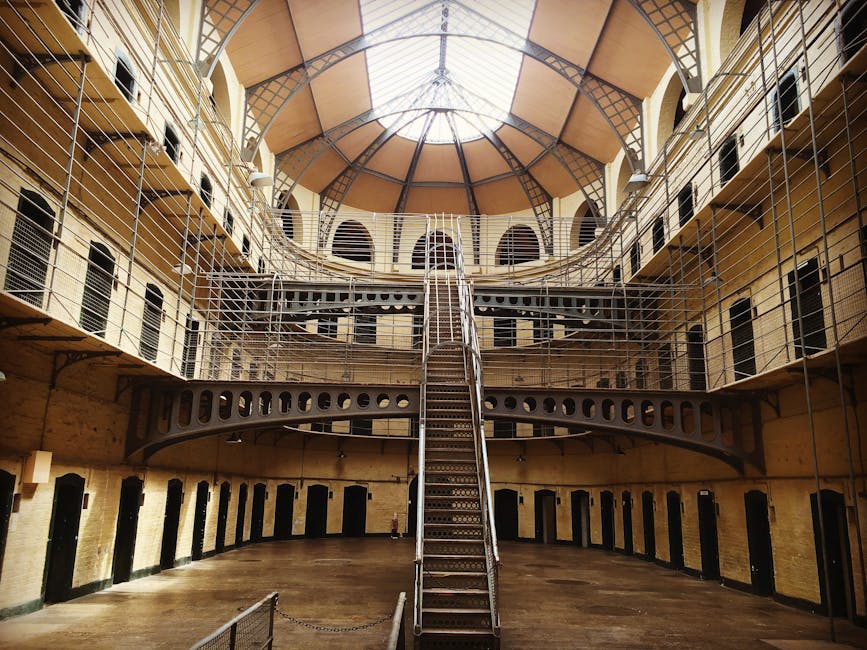
George Orwell imagined the telescreen as a top-down imposition—a cold, mechanical eye forcing compliance. Today, the surveillance state functions through internal, voluntary compliance. For the modern writer, the awareness of total data capture acts as a silent editor, pruning radical thought before it reaches the page. This is not merely an issue of privacy; it is a fundamental shift in the strategy of intellectual inquiry.
When a writer operates under the assumption that their digital exhaust—search histories, draft revisions, and correspondence—is subject to capture, the creative process undergoes an involuntary optimization. We gravitate toward safety, not because we fear the state, but because the friction of potential scrutiny makes radical ideas operationally expensive.
The Erosion of Creative Risk
High-performance thinking requires the ability to experiment with dangerous, unpopular, or counterintuitive hypotheses. Literature has historically served as the petri dish for these ideas. Surveillance acts as a chemical inhibitor in that dish. If you know that your intellectual exploration might be cataloged or misinterpreted by algorithmic classifiers, you naturally constrain your range of motion.
This creates a homogenization of ideas. In corporate environments, we describe this as groupthink; in literature, it is the death of the avant-garde. Leaders who prioritize effective decision-making understand that innovation requires the capacity to be wrong, and often, to be radically unorthodox in private. When the private sphere is abolished, the incentive to explore edge cases vanishes.
The Algorithmic Feedback Loop
The contemporary writer exists within a loop of predictive modeling. Algorithms that curate our information consumption also subtly shape our stylistic output. If a writer consumes only what the machine deems relevant, their output mirrors those biases. This is a direct threat to the cognitive sovereignty required for deep, impactful literature.
To maintain excellence, one must treat the digital environment as a high-stakes arena. Just as in business operations, where intelligence gathering dictates the competitive edge, the modern creator must employ defensive maneuvers to protect the integrity of their work. This involves radical disconnection—the purposeful act of drafting in non-networked environments—to preserve the purity of the internal monologue.
Tactical Independence
The solution is not to retreat from the world but to assert control over the interface. By consciously separating the research phase from the drafting phase, writers can regain the ability to experiment without the constant pressure of digital surveillance. This is essentially an exercise in mental performance: the ability to partition one’s focus, keeping the \”output\” secure from the \”input\” of the monitoring state.
The future of literature depends on our ability to build enclaves of genuine privacy. If we do not cultivate these spaces, we will witness the permanent atrophy of the intellectual courage that has defined human progress for centuries. Surveillance is not just a technological challenge; it is a test of our resolve to remain independent thinkers in an age of total transparency.






Leave a Reply