The Cognitive Mirage: Why ‘Flow’ Is Making You a Strategic Amateur
— by
Steven Haynes
We have been sold a bill of goods. The productivity industrial complex tells us that the pinnacle of professional achievement is ‘Flow State’—that elusive, frictionless mental zone where tasks dissolve and output accelerates. As executives, we chase this high, curating our calendars and our environments to ensure we never have to ‘context switch.’ But here is the uncomfortable truth: Flow is a trap for the strategic mind.
Flow is excellent for execution. If you are writing code, auditing a spreadsheet, or processing administrative tasks, flow is your best friend. But strategy is not an execution task. Strategy is the act of reconciling messy, competing, and often contradictory realities. When you are in ‘Flow,’ your brain is in a hyper-focused, singular track. You are narrowing your aperture. In a strategic capacity, you should be doing the exact opposite.
The Danger of the Linear Mindset
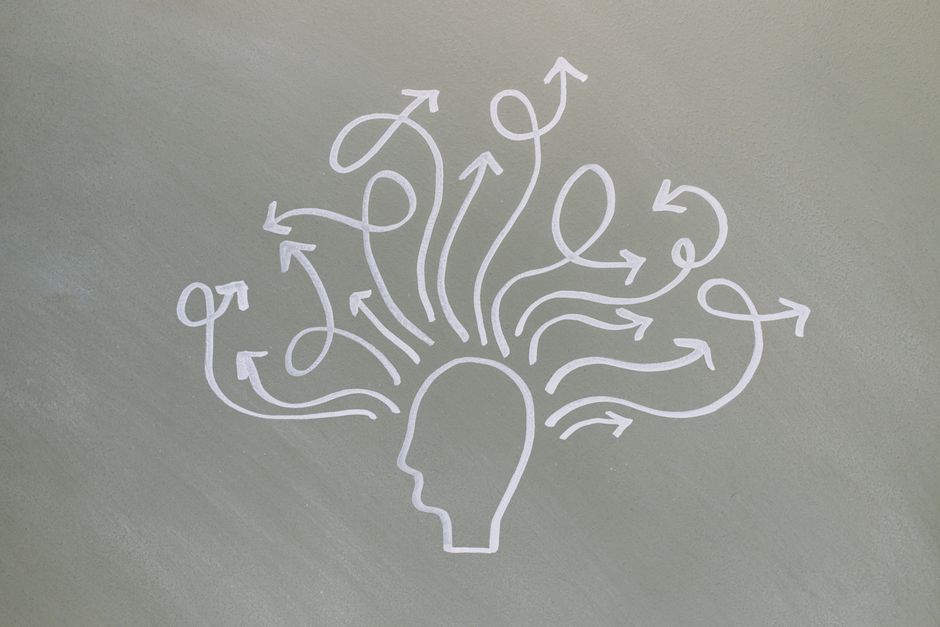
True strategic innovation requires the opposite of flow: it requires cognitive fragmentation. You need to be able to hold two conflicting ideas in your head at once and explore the tension between them. When you optimize your day to stay in ‘the zone,’ you are effectively flattening your perspective. You are creating a smooth, frictionless path for your thoughts, which makes it remarkably easy to reach conclusions that feel ‘right’ simply because they followed a linear, uninterrupted chain of logic.
The world your company operates in is not linear. It is jagged, cyclical, and riddled with noise. By training your brain to reject noise and pursue pure focus, you are losing the ability to process the very signals that indicate a market shift. Your ‘Flow’ is effectively a filter that deletes the most important data points because they are inconvenient to your focus.
The Case for ‘Strategic Interruption’
If you want to move from an executive who simply executes to one who truly leads, you must stop protecting your focus and start engineering your interruptions. I call this Strategic Interruption.
The Anti-Flow Schedule: Instead of blocking out four-hour ‘Deep Work’ sessions for strategy, try ‘Fragmented Synthesis.’ Take 20 minutes to look at a strategic problem, then force yourself to switch to a completely unrelated, low-stakes task. Returning to the strategy after a disjointed break forces your brain to re-evaluate your previous assumptions rather than just continuing the momentum of your existing logic.
The Adversarial Input: Never build a strategy in isolation. Inject ‘noise’ into your planning sessions. Invite someone from a completely different department—or better yet, an industry outsider—into your session with the sole purpose of asking ‘why’ at the most inconvenient times. Their friction is not a distraction; it is a sanity check on your own cognitive biases.
Adopt a Non-Linear Workspace: If your desk is organized to support a single flow of work, it is failing you. Keep a ‘chaos board’ in your office—a space where you dump unrelated data, market trends, and bizarre customer complaints. When you feel yourself entering that smooth, ‘flow’ state of comfort, look at the chaos board. It is a visual reminder that your neat strategic narrative is just one way to view a messy reality.
The Maturity of the Strategic Generalist
The desire to ‘optimize’ your workspace and ‘protect’ your flow is fundamentally a desire to feel in control. It is a psychological defense mechanism against the inherent unpredictability of business. But leadership isn’t about controlling the environment; it is about navigating the chaos.
Stop trying to achieve the perfect, frictionless workday. The next time you find yourself getting annoyed by a last-minute email or a shift in the meeting agenda, lean into it. That ‘annoyance’ is your brain struggling to adapt. That struggle is where the real work happens. If you are not feeling slightly scattered, slightly frustrated, and slightly overwhelmed, you aren’t doing strategy—you’re just doing chores.
True strategic genius doesn’t live in the silence of a curated sanctuary. It lives in the noise of the real world. Stop trying to find your flow and start seeking your friction.


Leave a Reply