
Contents
1. Main Title: Bridging the Knowledge Gap: Mastering Stakeholder Communication in Technical Projects
2. Introduction: The hidden cost of technical misalignment and why “translating” model outputs is a professional necessity.
3. Key Concepts: Understanding the “Expertise Spectrum”—from technical stakeholders (data scientists/engineers) to non-technical stakeholders (executives/domain experts).
4. Step-by-Step Guide: A practical framework for assessing and adapting your communication style for any audience.
5. Examples and Case Studies: How a fintech company successfully presented risk models to a board vs. a front-line team.
6. Common Mistakes: The perils of “jargon-loading” and the trap of oversimplification.
7. Advanced Tips: Utilizing visual hierarchies and interactive feedback loops to build stakeholder trust.
8. Conclusion: Final thoughts on why communication is the ultimate technical skill.
***
Bridging the Knowledge Gap: Mastering Stakeholder Communication in Technical Projects
Introduction
In the modern data-driven enterprise, the most sophisticated machine learning model or analytical framework is only as valuable as the stakeholders’ ability to understand—and act upon—its findings. All too often, technical experts fall into a trap: they assume that because a model is accurate, its output is inherently persuasive. However, stakeholders approach information through radically different lenses based on their domain expertise and technical literacy.
Failing to calibrate your communication to your audience does more than just cause confusion; it creates friction, delays decision-making, and often leads to the rejection of perfectly valid data. Mastering the art of “contextual translation” is not a “soft skill”—it is a strategic requirement for anyone managing or presenting technical systems.
Key Concepts
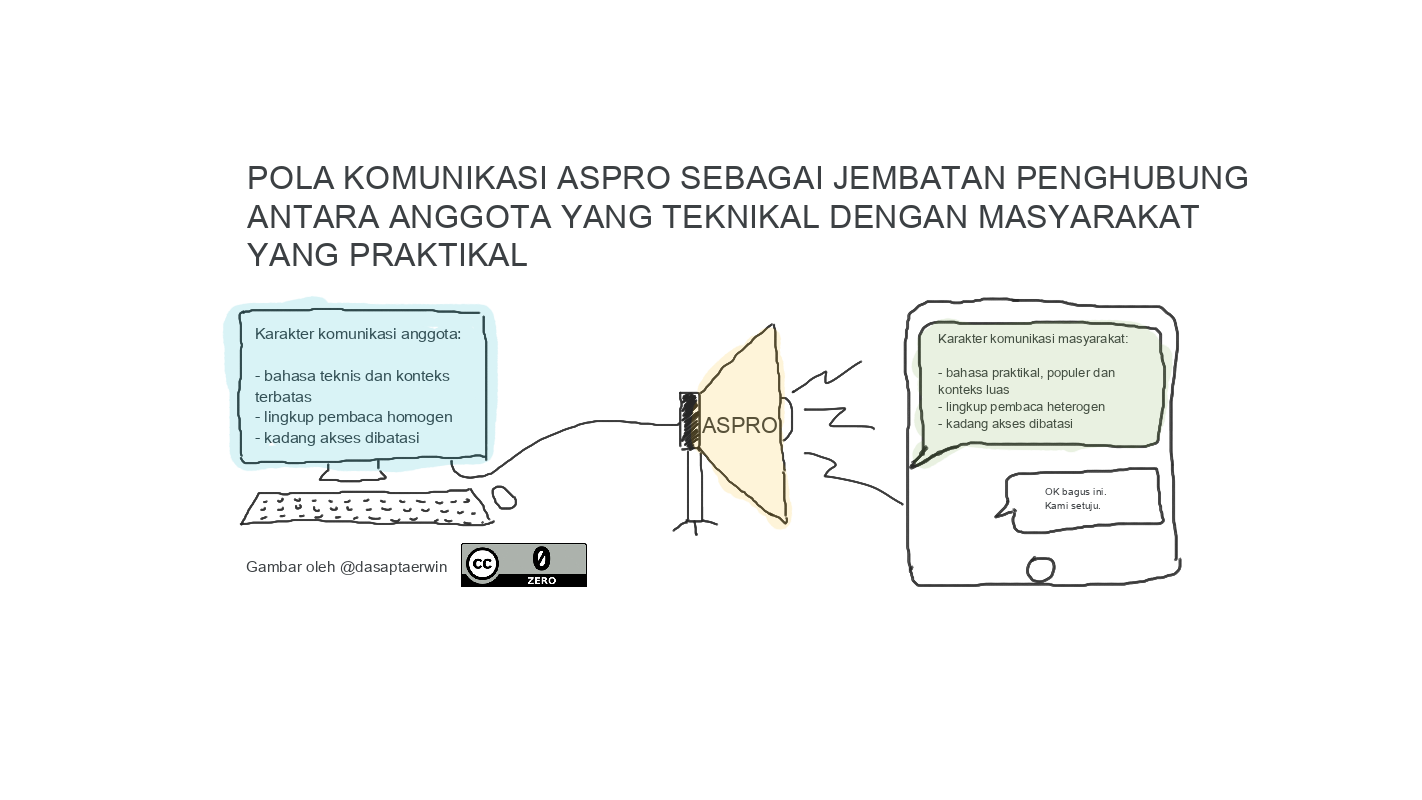
To communicate effectively, you must first categorize your audience across the “Expertise Spectrum.” This spectrum is defined by two axes: Domain Knowledge (how much they know about the business process) and Technical Literacy (how well they understand algorithms, statistics, and data structures).
- The Technical Peer (High Literacy, Variable Domain): These individuals care about model architecture, feature selection, and validation metrics (e.g., F1-score, RMSE). They want to know *how* it works.
- The Domain Expert (Low Literacy, High Domain): These stakeholders are the masters of the business process. They don’t care about the black-box mechanics; they want to know if the model aligns with their real-world experience.
- The Executive/Decision-Maker (Low Literacy, Variable Domain): Their priority is outcomes. They are looking for business impact, risk mitigation, and ROI. They want to know *why* it matters.
Understanding these archetypes prevents the “one-size-fits-all” trap. A single slide deck rarely serves all three groups simultaneously, and attempting to do so often leaves everyone under-informed.
Step-by-Step Guide: Calibrating Your Communication
- Conduct a Stakeholder Audit: Before presenting, map your audience. Ask: “Who is in the room?” and “What is the primary decision they need to make?” If you are unsure, send a pre-meeting survey or consult with the project owner to understand the background of the attendees.
- Identify the ‘North Star’ Metric: Align the technical result with a business goal. If your model achieves 95% accuracy, translate that into a financial or operational outcome. For example, “This model reduces false positives by 12%, saving the operations team 40 hours of manual review per week.”
- Layer Your Depth: Start with the “Bottom Line Up Front” (BLUF). State the key takeaway first. Then, provide the business context. Reserve the technical methodology for an appendix or a “technical deep-dive” breakout session.
- Visual Translation: Use charts that align with the audience’s cognitive style. Executives prefer high-level trend lines and heat maps; technical peers prefer error distributions and sensitivity analyses.
- Active Validation: Pause and ask, “Does this result align with what you are seeing on the floor?” This invites domain experts to validate the model’s logic through their intuition, creating a sense of ownership rather than defensive skepticism.
Examples and Case Studies
Consider a large fintech company deploying a new fraud detection model. The data science team initially presented a complex set of ROC curves and precision-recall trade-offs to the leadership team. The result was a vacant stare and a request to “do more research.”
The team pivoted. In the next meeting, they stripped out the technical jargon. Instead, they presented a dashboard showing the “Cost of Fraud” versus the “Cost of False Rejections.” They explained that by adjusting the model sensitivity, they could capture an additional $2M in fraudulent transactions while only increasing legitimate customer friction by 0.1%. The executives approved the rollout immediately.
The technical substance of the model did not change—only the frame of reference. By speaking the language of business risk, the data scientists moved from being “service providers” to “strategic partners.”
Common Mistakes
- The Curse of Knowledge: Assuming that because a concept is intuitive to you, it is intuitive to others. Avoid acronyms and assume a baseline of zero mathematical knowledge unless proven otherwise.
- Defensiveness: When non-technical stakeholders question a model’s output, technical experts often resort to explaining the math. This is a mistake. When a domain expert challenges a model, they are usually highlighting a nuance in the business process that the data may have missed. Listen to the challenge rather than defending the algorithm.
- Inconsistent Framing: Using different metrics for the same outcome in different meetings. Pick a set of KPIs and stick with them throughout the lifecycle of the project to build trust and familiarity.
- Neglecting the ‘Why’: Providing charts without narratives. Data is raw material; your job is to craft the finished product—the story that the data is trying to tell.
Advanced Tips
For high-stakes presentations, adopt the “Sandbox Strategy.” Create an interactive dashboard where stakeholders can adjust simple parameters (e.g., “What happens if we prioritize speed over accuracy?”). When stakeholders can manipulate the inputs themselves, the model stops being a mysterious “black box” and becomes a tool they control.
Additionally, always provide a “Technical Glossary” as a take-home document. This empowers your less technical stakeholders to learn your terminology at their own pace, effectively raising their literacy level over time. This long-term investment pays dividends in future meetings, as you will spend less time defining terms and more time discussing strategy.
Finally, utilize analogies effectively. If explaining a complex ensemble model, compare it to a committee: “We aren’t just listening to one expert; we are taking a vote from 50 different specialists to ensure the most robust answer.” Analogies anchor abstract technical concepts in familiar real-world experiences.
Conclusion
Technical communication is a bridge, not a barrier. When you approach stakeholders with an awareness of their domain and technical background, you shift the relationship from one of instruction to one of collaboration. Remember that your goal is not to prove how smart you are, but to ensure that the best possible decisions are made using the insights you have generated.
Start by auditing your audience, anchoring your findings in their business reality, and creating interactive avenues for feedback. By doing so, you will ensure that your work is not just understood, but championed at every level of the organization.
Further Reading

Leave a Reply