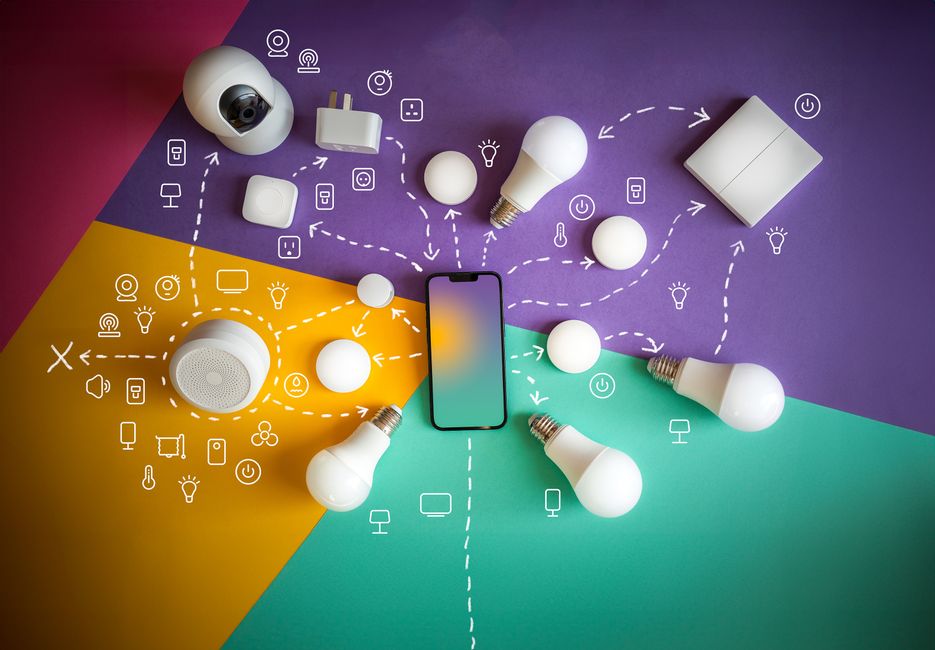
Most organizations view smart home connectivity as a consumer convenience—a way to dim lights or adjust thermostats via voice command. This perspective is a strategic blind spot. At its core, smart home connectivity represents the ultimate trial run for the Internet of Things (IoT), serving as a microcosm for the distributed, automated, and interconnected operational architectures that define modern leadership.
When your environment is fragmented, you lose cognitive bandwidth. The same principle applies to your professional ecosystem. If your digital infrastructure requires constant manual intervention, you are not managing a system; you are performing maintenance. True operational excellence demands that your environment works for you, not the other way around. Smart connectivity, when deployed with precision, is not about convenience—it is about removing the friction that prevents high-performance thinking.
The Architecture of Intentional Automation
The failure of most smart home setups is the reliance on reactive triggers. A system that only responds when you issue a command is merely a remote control with a different interface. A high-performance system is predictive.
Think of your home connectivity as a decentralized network. Each device is a node. If those nodes do not communicate without human oversight, you have failed to implement a proper strategy. You want an environment that mirrors a well-oiled executive team: individual components operating with autonomy, aligned by a singular set of objectives, and reporting only the anomalies that require human decision-making.
To move from reactive to predictive, you must audit your connectivity stack:
Latency is the enemy of flow: Any delay between intent and action creates a micro-stressor. Ensure your network backbone is robust enough to handle high-density traffic without bottlenecking.
Interoperability over brand loyalty: A system that forces you to stay within one ecosystem often trades functionality for ease. Prioritize open standards that allow different layers of your infrastructure to exchange data seamlessly.
Data-driven execution: Use the feedback loops generated by your connected devices to understand your own patterns. If your environment is consistently too cold or your lighting is distracting at peak focus hours, your system should adjust based on historical performance data rather than manual overrides.
Security as a Strategic Constraint
The primary reason most leaders hesitate to fully integrate their environments is the perceived risk of connectivity. This is a failure to manage the trade-off between accessibility and security. In any high-stakes environment, security is not a barrier; it is the foundation upon which execution is built.
You cannot effectively scale any operation—whether it is a smart home or a global enterprise—without robust governance. When you connect your physical environment to the network, you expand your attack surface. Treat your home network with the same rigor you apply to your corporate network. Segment your traffic. Isolate your high-risk IoT devices from your core data assets. If you cannot secure the perimeter, you have no business expanding the scope of your automation.
Beyond the Interface
The goal of smart connectivity is to achieve a state of “invisible infrastructure.” When the environment functions perfectly, it becomes transparent. You stop thinking about the network and start focusing on the output. This is the hallmark of sophisticated AI implementation and advanced systems management.
Stop viewing your smart home as a collection of gadgets. View it as an experimental laboratory for the systems you manage at work. If you can simplify the complexity of a smart home through rigid standards, clear hierarchies, and automated feedback loops, you are building the mental muscles required to manage much larger, more complex systems. Efficiency is not found in the tools themselves, but in the discipline of their integration.