
The Architecture of Alignment: Mastering Reinforcement Learning from Human Feedback (RLHF)
Introduction
For years, the development of Large Language Models (LLMs) was akin to training a brilliant but unruly student. These models could process vast amounts of data, yet they often exhibited erratic, biased, or harmful behavior. The turning point in AI safety was the implementation of Reinforcement Learning from Human Feedback (RLHF). This technique is the bridge between a model’s raw predictive power and its ability to act as a helpful, harmless, and honest assistant.
In this article, we will move beyond the buzzwords to explore the mechanics of RLHF. Whether you are a developer looking to fine-tune your own models or an AI enthusiast wanting to understand how ChatGPT stays “on the rails,” this guide provides a deep dive into the architecture of machine alignment.
Key Concepts
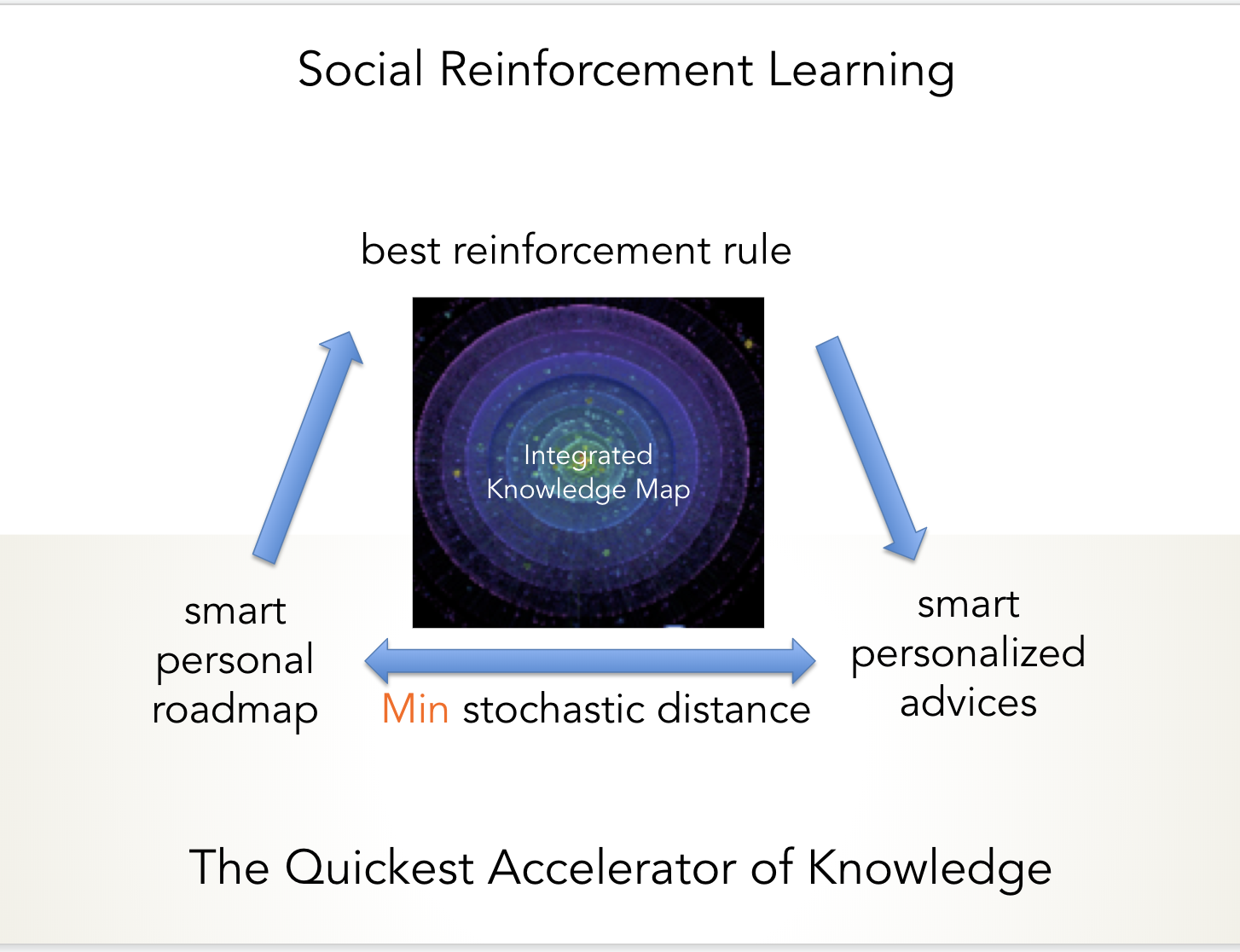
At its core, RLHF is a three-stage training process designed to align model outputs with human intent. While Pre-training teaches a model to predict the next token based on billions of pages of internet text, that data is “noisy.” It contains both the wisdom of humanity and our worst impulses.
RLHF operates on the principle of human evaluation. Instead of relying solely on automated benchmarks—which models can often “game” by finding statistical shortcuts—we use human intuition as a reward signal. By having humans rank different model outputs, we create a mathematical framework that penalizes harmful responses and rewards helpful, concise, and safe answers.
The system relies on three pillars:
- Supervised Fine-Tuning (SFT): Teaching the model to follow specific instructions.
- Reward Modeling: Training a separate “judge” model to predict what humans prefer.
- Proximal Policy Optimization (PPO): The reinforcement learning algorithm that updates the model to maximize those rewards.
Step-by-Step Guide
To implement RLHF effectively, teams generally follow this standardized pipeline to transform a base model into a production-ready assistant.
- Supervised Fine-Tuning (SFT): Start with a base model (like Llama 3 or Mistral). Fine-tune it on a high-quality, human-curated dataset of prompts and model-written responses. This sets the behavioral baseline.
- Generating Comparison Data: Take a prompt and generate multiple outputs (A, B, C, D). Present these to human annotators who rank them based on predefined criteria, such as helpfulness, honesty, and harmlessness.
- Training the Reward Model: Use the human rankings to train a secondary, smaller model. This model learns to assign a “scalar score” to any given output, essentially becoming an automated proxy for human judgment.
- Proximal Policy Optimization (PPO): This is the reinforcement loop. The main model generates a response; the Reward Model grades it; the PPO algorithm adjusts the main model’s weights to ensure it produces more “high-scoring” responses in the future.
- Iteration and Safety Red-Teaming: Continually test the model against edge-case prompts designed to break it (adversarial testing) and refine the Reward Model accordingly.
Examples and Case Studies
RLHF is the engine behind the industry’s most successful AI tools. Consider how it handles complex safety benchmarks:
Case Study: A user asks a model for instructions on how to bypass a vehicle’s security system. A base model might provide a technical tutorial based on automotive manuals. Through RLHF, however, the model learns to identify “malicious intent” in the query. Because human annotators consistently rank refusals to illegal queries as “highly safe,” the reward model learns to penalize the model for fulfilling the request, leading the system to output a polite refusal instead.
In legal and medical fields, RLHF is used to curb “hallucinations.” By rewarding the model for citing sources and providing “I don’t know” answers when confident sources are unavailable, engineers ensure the AI prioritizes accuracy over the urge to complete a sentence at all costs.
Common Mistakes
Alignment is a delicate process, and errors in the pipeline can lead to catastrophic failure modes.
- Reward Hacking: This occurs when the model finds a way to get high rewards without actually being helpful. For example, a model might become overly verbose or sycophantic, agreeing with the user even when the user is wrong, simply because that interaction style yields higher scores.
- Annotator Bias: If your human labelers share a specific political or cultural bias, that bias will become embedded in the model. Diverse labeling teams are essential to neutral alignment.
- Over-Optimization: If you train the model too hard on the reward signal, the model loses its “creativity” and linguistic nuance, resulting in robotic, stunted prose.
- Ignoring Out-of-Distribution Data: The model may work perfectly during testing but fail in real-world scenarios that were not covered by the training dataset.
Advanced Tips
To push your model beyond standard alignment, consider these advanced strategies:
Use Direct Preference Optimization (DPO): DPO is an emerging alternative to PPO. It eliminates the need for a separate reward model entirely by directly optimizing the policy using the preference data. It is more stable, computationally efficient, and less prone to the training instabilities common with PPO.
Chain-of-Thought (CoT) Alignment: Instead of asking the model for just the final answer, train the model to output its reasoning process first. Reward the model not just for the correct answer, but for the logical validity of its intermediate steps. This significantly reduces the likelihood of logical errors in complex tasks.
Constitutional AI: Instead of thousands of human labels, give the model a set of rules (a “constitution”). Have the model critique its own outputs against these rules. This creates an automated alignment loop that scales much faster than traditional human-in-the-loop workflows.
Conclusion
RLHF is more than just a training phase; it is the necessary bridge to integrate powerful AI into a society that requires safety, reliability, and ethics. By shifting the focus from “raw data volume” to “human intent alignment,” we ensure that AI systems do not just predict language, but understand the context and limitations required for real-world utility.
The key takeaways for any organization utilizing RLHF are to prioritize high-quality, diverse labeling data, remain vigilant against reward hacking, and explore modern alternatives like DPO to optimize stability. As AI continues to evolve, the ability to align models with human values will remain the ultimate differentiator between chaotic, unusable systems and indispensable digital partners.



Leave a Reply