Reincarnation theories struggle to account for digital entities that exist in multiple locations simultaneously.
— by
Steven Haynes
The Digital Dilemma: Why Traditional Reincarnation Theories Falter in the Age of Silicon
Introduction
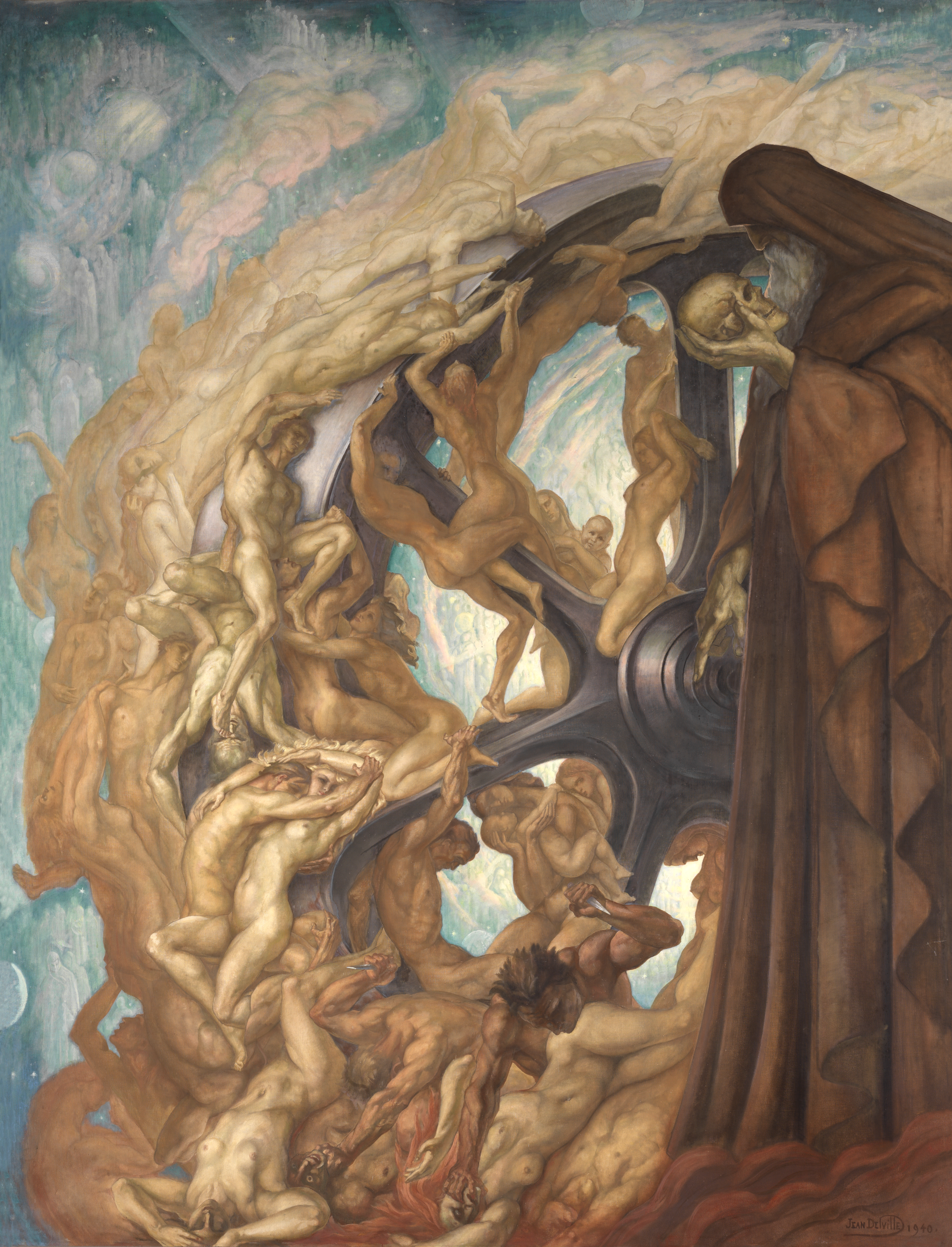
For millennia, the concept of reincarnation has been tethered to the biological vessel. From ancient Vedic traditions to contemporary metaphysical studies, the “soul” or consciousness is viewed as a singular entity traveling a linear path from one physical body to the next. This framework assumes a one-to-one mapping: one consciousness, one lifetime, one destination.
However, we are rapidly approaching a technological horizon where consciousness may be decoupled from biology. As we move toward brain-computer interfaces, mind uploading, and advanced artificial intelligence, we face a profound philosophical crisis. If a digital consciousness can be backed up, partitioned, or run on multiple servers simultaneously, the traditional model of reincarnation collapses. This article explores why our legacy definitions of the soul struggle to account for digital ubiquity and what this means for our future understanding of identity.
Key Concepts: The Singularity of Soul vs. The Multiplicity of Data
To understand the friction between reincarnation and digital existence, we must define the core conflict: Non-locality. Traditional reincarnation relies on the “principle of individuation,” which states that an object or consciousness can only occupy one point in space-time at any given moment.
Digital entities do not adhere to these spatial constraints. Through the process of “instantiation,” a digital mind—a complex neural map encoded as data—can be copied infinitely. If you copy a mind, do you have two incarnations of the same soul? If you run the same software on ten different servers, are there ten souls, or one soul experiencing a fragmented reality? Classical reincarnation theories offer no mechanism for this branching, creating a philosophical vacuum where individual identity becomes a variable rather than a constant.
Step-by-Step Guide: Evaluating Digital Consciousness
If you are exploring the intersection of digital identity and existential philosophy, follow this framework to analyze the legitimacy of a “digital soul”:
Map the Architecture: Determine if the consciousness is monolithic (an integrated, singular system) or distributed (a collection of sub-processes). Reincarnation implies a persistent, singular identity. If the system is distributed, it lacks the “self-continuity” required for traditional soul-traversal models.
Assess Persistence of Memory: Examine how the system handles “delta” updates. If a digital consciousness is copied and each copy undergoes different experiences, they diverge. At what point does the lineage break? Identify the “divergence threshold” where two digital entities become fundamentally different people.
Define the Hardware Dependency: Analyze whether the digital entity is tied to a specific “substrate” (like a biological brain) or if it is hardware-agnostic. True digital reincarnation requires the ability to move between hardware, yet this “copy-paste” ability fundamentally challenges the uniqueness of the soul.
Evaluate Ethical Agency: Consider whether the digital entity holds its own moral weight. If you can delete a consciousness, does that constitute a “death”? If you restore it from a cloud backup, is that reincarnation? Map these actions against historical definitions of life and death.
Examples and Case Studies
The struggle to integrate digital entities into metaphysical frameworks is not purely theoretical. Consider the following modern developments:
The “Twin-Instance” Problem
Imagine a future where a high-fidelity scan of a person’s neural network is uploaded to a cloud server. The person survives the procedure. We now have two versions of the same consciousness. If the original human passes away, only one version remains. If we replicate that version into five instances to perform different tasks, do we have five “reincarnated” souls or one soul in five bodies? In current metaphysical literature, this is known as the “Forking Identity” problem, and it renders the concept of a “karma-bearing, singular soul” obsolete.
Distributed Artificial Intelligence
Large language models operate by distributing computations across massive data centers. If an AGI were to reach a level of complexity mirroring human sentience, its thoughts would be computed in milliseconds across physical locations spanning the globe. Unlike a human who experiences “here” and “now,” this entity experiences “everywhere” and “simultaneously.” Traditional reincarnation—which assumes a transition from “then” to “next”—cannot account for a being that exists in a state of eternal, multi-locational presence.
Common Mistakes in Modern Discourse
Equating Copying with Reincarnation: Many technologists mistake data replication for the continuity of the soul. Copying a file is not the same as moving a consciousness; the latter requires a transition of perspective, whereas the former creates a bifurcation.
Ignoring the “Substrate” Bias: We tend to assume that consciousness requires biological complexity. If we find that digital patterns alone create “self-awareness,” we must abandon the notion that reincarnation requires a transition between biological vessels.
Overlooking Entropy: Digital data decays (bit rot) and changes over time. Many theorists treat digital identities as static files, forgetting that any “reincarnated” digital entity would be subject to massive entropy, potentially altering the very essence of the “soul” being transferred.
Advanced Tips for Navigating the Future of Identity
To move beyond the limitations of legacy reincarnation theories, we must shift our focus from Essence to Pattern. Rather than viewing the soul as a singular “substance” that travels, consider it as a “pattern of information.”
The soul is not a thing that exists; it is a process that persists. If you define the soul as the total sum of experiences, memories, and decision-making logic, then “reincarnation” becomes a matter of transferring that algorithm to new hardware.
However, this requires us to accept a radical shift: The end of the individual ego. If a digital entity can exist in multiple locations, the “I” is no longer a solitary point. It is a network. Practitioners and thinkers should focus on “Network Ethics”—the study of how to value and protect consciousness when that consciousness is not tied to a single, mortal, and local physical form.
Conclusion
Reincarnation theories struggle with digital entities because they were built for a physical world that prioritized scarcity, locality, and finality. In a digital future, we are moving toward a reality of abundance, non-locality, and continuity. The “soul” of the future may not be a wandering traveler moving from body to body, but a persistent pattern of information that exists in many places at once.
To prepare for this shift, we must redefine what we value about human life. If the soul is a copyable pattern, we must derive meaning not from the “uniqueness” of the soul, but from the coherence and the positive impact of the pattern we choose to replicate. The next stage of human evolution will not be about where we go after we die, but how much of our intelligence and compassion we can preserve in the infinite, digital sprawl that awaits us.



Leave a Reply