Providing “confidence scores” alongside explanations helps users gauge the reliability of the interpretability output.
— by
Steven Haynes
Article Outline
Main Title: Beyond the Black Box: Why Confidence Scores are Essential for AI Interpretability
Introduction: The trust gap in AI systems and why “explaining” isn’t enough.
Key Concepts: Defining interpretability vs. reliability and the role of uncertainty quantification.
Step-by-Step Guide: How to integrate confidence scores into model pipelines.
Real-World Applications: Healthcare diagnostics, financial credit scoring, and legal AI.
Common Mistakes: Over-reliance on explanations, confusing probability with confidence, and UX failures.
Advanced Tips: Moving from point-estimates to Bayesian approaches.
Conclusion: The future of human-AI collaboration.
Beyond the Black Box: Why Confidence Scores are Essential for AI Interpretability
Introduction
Artificial Intelligence models are increasingly moving into high-stakes environments, from diagnostic medicine to autonomous vehicle navigation. While the rise of Explainable AI (XAI) tools—like SHAP or LIME—has allowed us to peek inside the “black box” to see which features influenced a decision, a glaring problem remains: just because a model gives you an explanation, doesn’t mean that explanation (or the prediction itself) is correct.
Think of an AI as an expert witness in a court of law. If an expert provides a detailed reason for their conclusion but speaks with obvious hesitation, you naturally lose trust. Conversely, if they are overly confident despite weak evidence, you become suspicious. In AI, the missing link between data and decision-making is the confidence score. By pairing model explanations with a quantitative measure of certainty, we provide users with the context necessary to gauge reliability and make better human-in-the-loop decisions.
Key Concepts
To understand why confidence scores are the bedrock of interpretability, we must distinguish between two types of output:
The Explanation: This tells you why a model arrived at a conclusion (e.g., “The loan was denied because the debt-to-income ratio is too high”).
The Confidence Score: This tells you how certain the model is in that conclusion (e.g., “The model is only 55% confident in this assessment”).
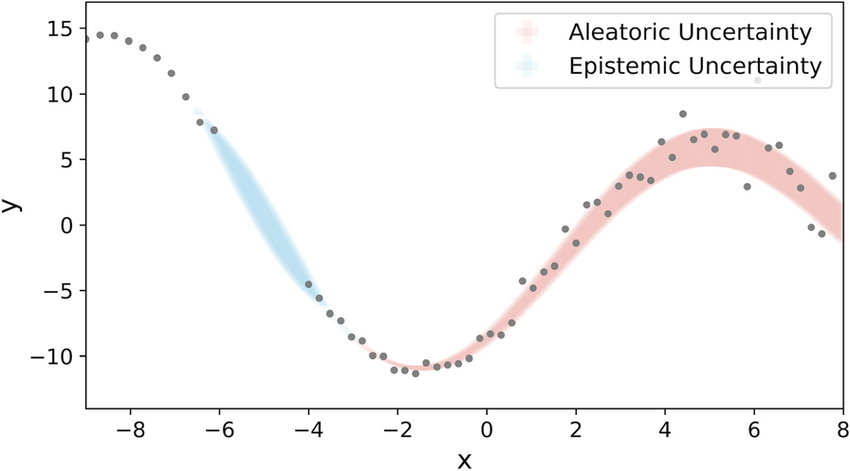
Confidence scores quantify uncertainty. When a model produces a prediction, it is essentially navigating a high-dimensional space of probabilities. If the input data is noisy, sparse, or falls outside the training distribution, the model’s internal uncertainty increases. Providing this score acts as a safety valve. It empowers the human end-user to say, “I see the reason, but the system is unsure, so I will escalate this to a manual review.”
Integrating confidence scores isn’t just about outputting a raw probability. It requires a systematic approach to ensure the metric is actually meaningful.
Select an Uncertainty Quantification Method: Depending on your model architecture, use techniques like Softmax probability (for classification), Monte Carlo Dropout (for neural networks), or Conformal Prediction (which provides a statistical guarantee that the true value falls within a predicted set).
Calibrate Your Scores: Raw model probabilities are notoriously overconfident. Use calibration techniques such as Platt Scaling or Isotonic Regression to ensure that a “90% confidence” score actually corresponds to a 90% accuracy rate on holdout data.
Design the Interpretability UI: Do not hide the score in a sub-menu. Present it alongside the explanation using visual cues like “Confidence Meters” or color-coded labels (e.g., Green/Yellow/Red).
Define Thresholds for Human Intervention: Establish clear operational protocols. For example, if a model’s confidence falls below 70%, the system should trigger a mandatory human oversight flag regardless of how compelling the explanation seems.
Continuous Feedback Loops: Monitor instances where the confidence score was high but the prediction was wrong. This identifies “blind spots” in your training data, allowing for model retraining.
Real-World Applications
The marriage of interpretability and confidence is transformative across several sectors:
Healthcare Diagnostics
An AI model analyzing medical imagery might identify a potential tumor. An explanation highlights the pixel regions involved. However, if the confidence score is only 60%, the radiologist knows this may be an artifact or a rare edge case. Without the score, the radiologist might trust the explanation blindly, leading to potential diagnostic error.
Financial Credit Scoring
When an automated system denies a loan, it provides the applicant with the “adverse action codes” (the explanation). If the bank also displays a confidence score, it manages expectations. A low-confidence denial might signal that the model lacks sufficient data on the applicant, prompting the bank to request additional documentation rather than issuing an outright rejection.
Legal and Compliance
In automated contract review, AI can identify potential risks. When the confidence score is high, the legal team can expedite the review. When it is low, the AI serves as a “first pass” filter, flagging the document for human review only where the system is ambiguous, significantly increasing productivity without sacrificing accuracy.
Common Mistakes
Confusing Probability with Confidence: A model might predict “Cat” with 90% probability, but if it has never seen a cat before, that 90% is meaningless. Ensure your confidence metric measures epistemic uncertainty (model ignorance) rather than just class probabilities.
Ignoring “Out-of-Distribution” Data: If a model is trained on data from Region A and applied to Region B, it will often produce confident, incorrect answers. You must implement mechanisms to detect when inputs are significantly different from the training data.
Over-Engineering the UI: Users do not need a deep dive into the math. Presenting complex uncertainty intervals can overwhelm non-technical users. Stick to simple percentage scores or high/medium/low buckets.
Assuming “Explanation = Accuracy”: A common bias is the “Explanation Fallacy,” where users assume that a model that provides a clear, logical-sounding explanation must be accurate. Always prioritize the confidence metric as the primary gateway for trust.
Advanced Tips
For those looking to move beyond basic implementations, consider the role of Conformal Prediction. Traditional confidence scores are often arbitrary. Conformal prediction, by contrast, provides a formal statistical framework. It allows you to output a “prediction set”—for example, “The system is 95% confident that the classification is in the set {Option A, Option B}.” This provides a rigorous bound on the error rate that traditional probability scores lack.
Additionally, consider Human-Centric Calibration. Different users have different tolerances for risk. In a high-stakes environment like emergency response, you might calibrate your model to be “cautious,” ensuring it reports low confidence more frequently when even the slightest doubt exists. Tailoring the confidence threshold to the specific business use case ensures that the human-AI team is optimized for the right level of caution.
Conclusion
Providing confidence scores is not just a feature; it is an ethical and functional necessity. As AI systems become more prevalent in our daily lives, we can no longer afford to treat them as black boxes that offer binary answers. By requiring explanations, we understand why a decision is made. By requiring confidence scores, we understand whether we should trust that decision.
The goal of AI development should not be to build models that are always right, but to build models that know when they might be wrong.
By implementing these practices, organizations can foster a culture of transparency and accountability. We move from an era of “blind trust” in AI toward a mature, professional collaboration where humans act as the ultimate arbiters of quality, guided by systems that have the integrity to acknowledge their own limitations.






Leave a Reply