Contents1. Introduction: The premise of a post-monetary society and the theoretical shift in power dynamics.2. Key Concepts: Understanding the symbiosis between capital and political leverage; defining “influence” in a non-market economy.3. Step-by-Step Guide: How a society might transition from financial lobbying to reputation-based or contribution-based governance.4. Examples & Case Studies: Comparing historical gift economies with modern open-source collaboration models.5. Common Mistakes: Misconceptions about human nature, status seeking, and the transition phase.6. Advanced Tips: Resource-based economy modeling and algorithmic transparency as a replacement for money.7. Conclusion: The trade-offs between financial efficiency and equitable governance.***
The Post-Monetary Shift: Reimagining Governance Without Financial Leverage
Introduction
For centuries, the trajectory of human civilization has been inextricably linked to the accumulation and deployment of currency. We view money not just as a medium of exchange, but as the primary lever of influence. Whether through direct campaign contributions, the funding of think tanks, or the lobbying of regulatory bodies, financial capital dictates the priorities of governance. But what happens when you remove the currency? If the ability to “buy” influence vanishes, does the political landscape collapse, or does it evolve into something more egalitarian?
The removal of currency represents the ultimate disruption to the current political order. By decoupling governance from financial contribution, we force a transition from a system of purchased power to one of participatory merit. This shift is not merely a radical economic thought experiment; it is an examination of how we define value, influence, and societal direction in the absence of a balance sheet.
Key Concepts
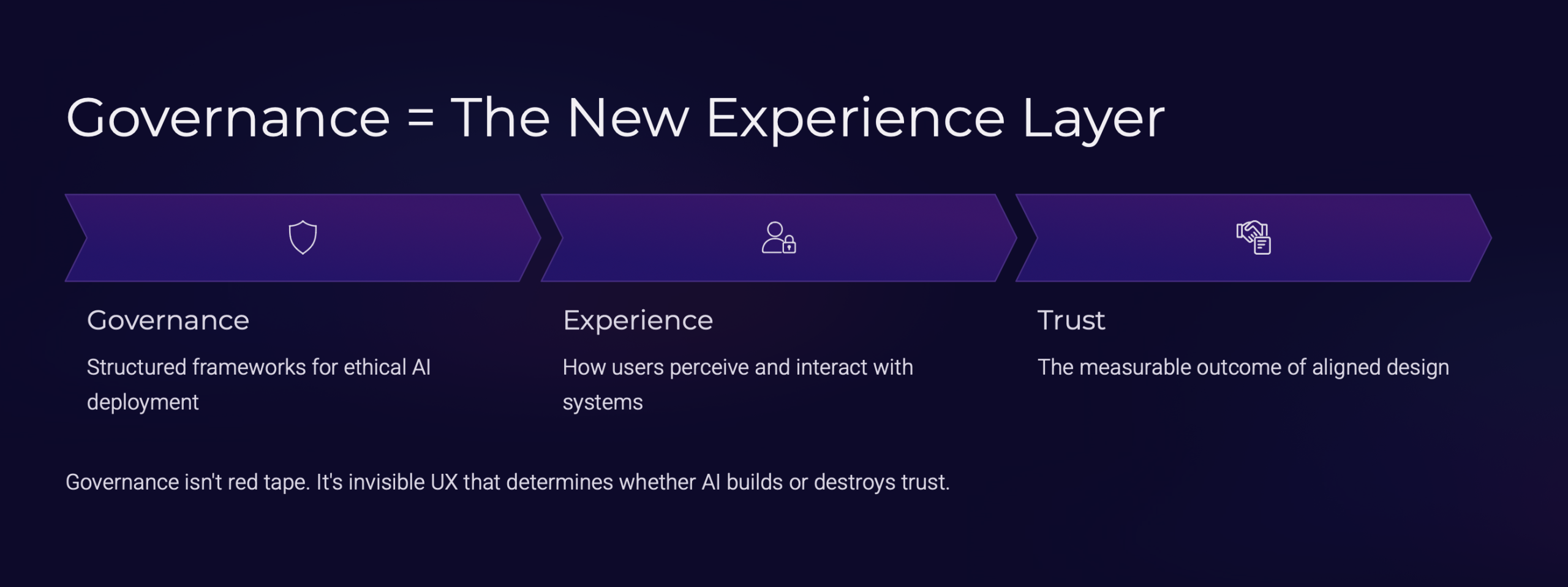
To understand a world without financial lobbying, we must first dissect the current “Pay-to-Play” architecture. Modern governance relies on the mobilization of capital to amplify specific voices. When money is removed, the mechanism of influence must shift from extrinsic incentives (cash) to intrinsic incentives (reputation, contribution, and utility).
In a post-monetary society, influence is no longer a commodity that can be hoarded. Instead, it becomes a flow. If you cannot lobby a politician with a donation, you must influence them through the objective quality of your ideas or your demonstrated commitment to a community goal. This creates a “Proof of Contribution” model, where an individual’s ability to affect policy is tied to their verifiable impact on the collective welfare rather than their bank account.
Step-by-Step Guide: Transitioning to Non-Monetary Governance
Transitioning from a currency-based lobby to a contribution-based system requires a complete overhaul of how we track and weigh public input. The following steps outline the theoretical transition:
Digitize Resource Allocation: Replace monetary budgets with resource-tracking systems. Governance becomes about the allocation of physical assets (energy, raw materials, labor hours) rather than abstract currency.
Implement Transparent Reputation Metrics: Since money no longer acts as a signal of success, society must adopt transparent, decentralized reputation systems. An individual’s influence on a specific issue is weighted by their past expertise and consistent, verified success in similar domains.
Adopt Quadratic Voting: To prevent “tyranny of the majority” without using money to buy votes, utilize quadratic voting. This allows individuals to express the intensity of their preference for a policy without needing to spend currency, ensuring that passionate minorities can still be heard.
Institutionalize Open-Source Policy Making: Governance should function like open-source software. Proposals are submitted, peer-reviewed, and tested in simulations before being adopted, removing the need for lobbying behind closed doors.
Examples and Case Studies
While a global post-monetary society remains theoretical, we see precursors in the Open Source Software (OSS) movement. In projects like the Linux Kernel, influence is not bought; it is earned through code contribution and peer review. A developer’s power to change the project’s direction is directly proportional to their technical expertise and the value they have already provided to the community.
The Linux project demonstrates that complex, global systems can be governed effectively without a price tag. Influence is earned through “meritocratic gravity,” where the most useful contributors naturally attract the most support.
Another example is the Gift Economy found in certain indigenous cultures and modern collaborative networks. In these systems, status is often determined by what one gives away rather than what one hoards. Governance in these systems is consensus-based, and influence is distributed among those who have demonstrated the greatest foresight and commitment to the survival and prosperity of the group.
Common Mistakes
When discussing the removal of money from politics, many observers fall into several traps that oversimplify the challenge:
Assuming an Absence of Status-Seeking: A common error is believing that humans will stop competing for influence once money is gone. Humans are status-seeking creatures. Without money, competition will simply migrate to other domains, such as social clout or intellectual prestige.
Underestimating Bureaucratic Inertia: The belief that a system can be “reset” overnight ignores the deep-seated power structures that will resist the loss of their financial leverage.
Confusing “Free” with “Equitable”: Removing money does not automatically guarantee fairness. Without checks and balances, a non-monetary system could easily succumb to nepotism, cronyism, or the rise of charismatic demagogues who manipulate reputation metrics.
Advanced Tips
To truly replace the influence of financial lobbying, we must look toward Algorithmic Governance. By utilizing blockchain-based ledgers, we can ensure that every proposal, every vote, and every resource allocation is immutable and public. This removes the “black box” of lobbying by making the entire decision-making process observable in real-time.
Furthermore, we must decouple essential survival needs from political influence. If an individual’s access to food and shelter is guaranteed as a human right, the incentive to participate in corrupt lobbying for personal gain is significantly diminished. Governance then becomes a pursuit of self-actualization and social improvement, rather than a defense mechanism for one’s private wealth.
Conclusion
The removal of currency as a tool for political influence would be the most significant shift in human history since the invention of the state. It forces us to confront a difficult question: if we cannot buy our way into power, how do we demonstrate that our ideas are worth following? By moving toward a model of contribution, reputation, and transparent resource allocation, we can build a society where governance is a function of collective intelligence rather than individual capital.
While the transition is fraught with challenges—most notably the redirection of human status-seeking behaviors—it offers a pathway to a more equitable future. When influence is earned through contribution, the incentives of the individual align with the needs of the collective, effectively ending the era of the lobbyist and ushering in the era of the participant.