The Orbital Security Paradox: Why Space Non-Proliferation is the Ultimate Strategic Constraint
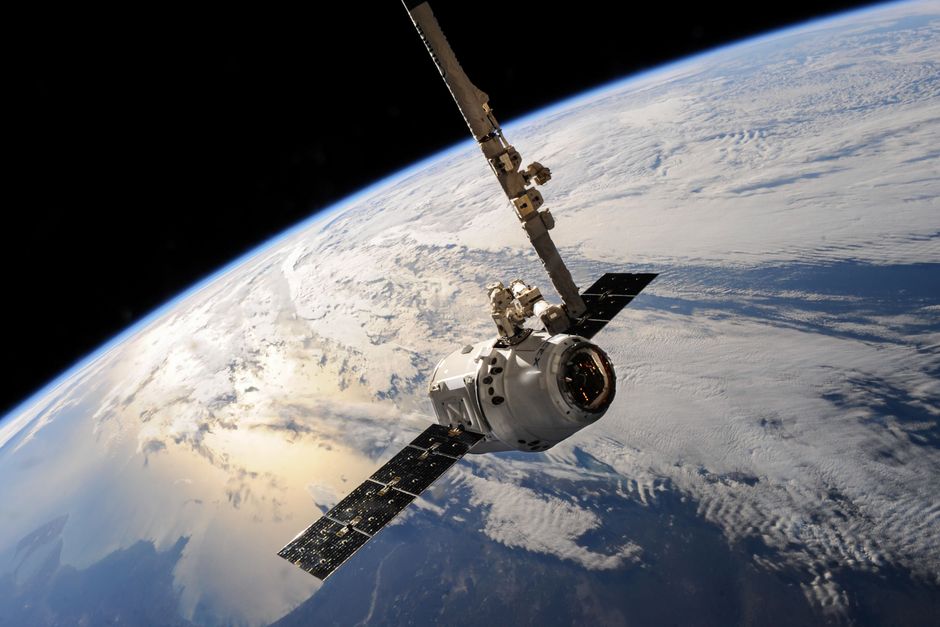
The history of statecraft is defined by the containment of destructive potential. For seven decades, the nuclear non-proliferation regime has functioned as a fragile but effective architecture of deterrence. Today, that framework faces an existential challenge that has migrated from the terrestrial to the orbital. Space is no longer merely a frontier for scientific inquiry; it is the high ground of modern economic and military infrastructure. As the barrier to entry for orbital access drops, the risk of a chaotic, weaponized environment threatens the very foundation of global operational excellence.
True leadership in the 21st century requires recognizing that space is not an infinite void, but a finite, fragile commons. When we treat orbit as a limitless dumping ground for debris or a theater for kinetic anti-satellite (ASAT) testing, we are not just engaging in geopolitical posturing—we are actively dismantling the logistical backbone of the global economy.
The Operational Cost of Orbital Fragmentation
Strategic decision-making in the space domain is currently plagued by a fundamental misalignment between short-term tactical advantages and long-term systemic stability. The Kessler Syndrome—a cascading chain reaction of orbital collisions—is the ultimate example of a negative externality. A single kinetic event creates a field of debris that renders specific orbits unusable for generations.
For organizations that depend on GPS, telecommunications, and real-time data synchronization, the weaponization of space represents a catastrophic risk to execution. When an adversary or a rogue actor compromises a segment of Low Earth Orbit (LEO), they do not just neutralize a satellite; they degrade the precision-timing capabilities that underpin everything from high-frequency trading to global supply chain logistics.
Effective strategy demands that we view space non-proliferation not as a diplomatic abstraction, but as a critical requirement for infrastructure resilience. If the orbital domain becomes a contested, high-friction environment, the cost of space-based assets will skyrocket, and the ability to maintain a competitive advantage will be tethered to one’s ability to survive in a degraded environment.
Beyond Treaties: The Mechanics of Normative Constraint
The 1967 Outer Space Treaty was designed for a world where space was the exclusive domain of superpowers. We now live in an era of commercial spaceflight and multi-polar competition. Traditional arms control models, which rely on verifiable counts of static assets, struggle to address the dual-use nature of modern space technology. A satellite designed for refueling or debris removal can, with a software update, become a kinetic weapon.
This necessitates a shift in how we approach decision-making regarding orbital safety. We must move toward a model of “behavioral transparency.”
Standardized Proximity Protocols: Establishing clear, non-negotiable distances for rendezvous and proximity operations to prevent accidental collisions.
Attribution Infrastructure: Investing in robust, independent space situational awareness (SSA) that makes clandestine maneuvers visible to the global community, thereby increasing the political cost of aggressive behavior.
Economic Disincentives: Integrating space sustainability metrics into the insurance and financing models for commercial space ventures.
The AI Factor: Automating Escalation
The integration of artificial intelligence into satellite management adds a layer of complexity that previous generations of strategists did not have to consider. AI-driven satellite constellations allow for rapid maneuvering and autonomous response to threats. While this enhances operational efficiency, it also risks “flash wars”—scenarios where autonomous systems react to ambiguous sensor data with kinetic responses before human operators can intervene.
High-performance thinking dictates that we avoid delegating the final decision of engagement to algorithms in a domain where the speed of light—and the speed of debris—makes time a luxury we do not possess. Maintaining a “human-in-the-loop” requirement for any maneuver that could be construed as hostile is not a hindrance to AI deployment; it is a necessary safety valve to prevent systemic collapse.
The Future of Orbital Stewardship
The goal of non-proliferation in space is not the stagnation of technological progress, but the preservation of the medium through which that progress occurs. Leaders who ignore the volatility of the orbital commons are betting against the long-term viability of their own organizations.
True success lies in securing the infrastructure of the future by establishing the norms of the present. We must prioritize orbital sustainability as a core component of global security. Anything less is a failure to protect the very environment that makes our modern, interconnected capabilities possible.