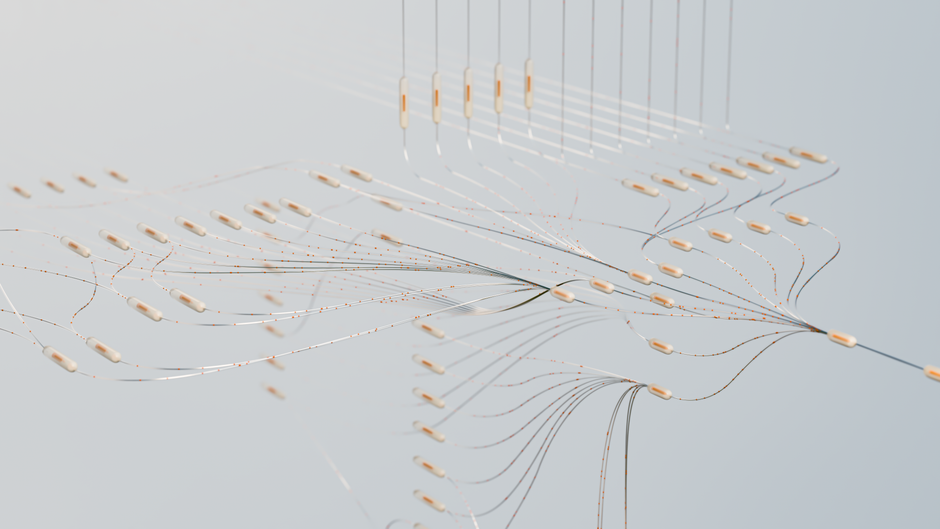
The human brain operates on an electrochemical architecture that defies binary reductionism. When we discuss analog-to-digital neural mapping, we aren’t merely talking about recording brain waves; we are attempting to bridge the gap between continuous, fluid neuro-biological signals and the discrete, quantized logic of silicon-based processing.
For the high-performance leader, this is not a niche neuroscience topic. It is the ultimate frontier of cognitive extension. As we move toward tighter integration between human decision-making and AI-driven predictive modeling, the ability to map the “analog” flow of intuition—those rapid, non-linear insights—into “digital” frameworks for execution becomes a competitive imperative.
The Signal Fidelity Problem
At the core of neural mapping lies the problem of signal fidelity. Analog signals in the brain—synaptic potentials, neurotransmitter fluctuations, and oscillatory patterns—are characterized by noise, redundancy, and high dimensionality. Digital systems, conversely, require clean, structured data inputs to perform logical operations.
When we attempt to translate these signals, we face a loss of context. A leader’s “gut feeling” is often an analog synthesis of thousands of data points processed subconsciously. If we force this into a rigid digital schema, we strip away the nuance. High-performance thinking requires that we preserve the integrity of the signal. The goal of mapping is not to simplify the thought process but to encode its complexity into a format that a [strategic framework](https://thebossmind.com/strategic-framework) can actually utilize.
Operationalizing Intuition
The transition from analog neural activity to digital output is essentially an exercise in translation. In operational excellence, this manifests as the move from tacit knowledge—what you know but cannot easily explain—to explicit protocol.
If you are building an AI-assisted decision-making engine, you are performing a form of neural mapping. You are taking the analog patterns of successful outcomes and attempting to digitize them into repeatable workflows. The risk is “over-quantization.” If you map too aggressively, you lose the adaptability that defines elite leadership. You end up with a system that is efficient but brittle.
To maintain [high-performance thinking](https://thebossmind.com/high-performance-thinking), you must map the parameters, not just the data points. Map the constraints, the environmental variables, and the decision thresholds. By digitizing the architecture of your decision-making rather than just the history of your choices, you create a system that evolves in tandem with your own cognitive growth.
The Architecture of Cognitive Leverage
True leverage in the modern era comes from the intersection of biology and computation. We are no longer limited to individual output; we are now capable of externalizing our cognitive processes.
When you map your internal analog processes into external digital tools, you are effectively creating a secondary neural network. This is the essence of [operational excellence](https://thebossmind.com/operational-excellence). You are offloading the maintenance of complex logical chains to digital systems, freeing your biological brain to focus on the high-entropy problems that require deep, analog-style synthesis.
This is not about replacing human judgment with AI. It is about enhancing the bandwidth of your leadership. By refining your neural mapping techniques—specifically, how you document, categorize, and feed your intuition into your [decision-making](https://thebossmind.com/decision-making) stack—you turn your experience into a scalable asset.
The Future of Integrated Execution
As neural interface technology advances, the mapping process will become more direct. We are moving toward a future where the latency between a thought and its digital execution is minimized. However, the bottleneck will remain the same: the quality of the mapping.
If you don’t understand the underlying analog structure of your own brilliance, no amount of digital processing power will help you scale it. You must first master the art of self-observation—the ability to identify the patterns of your own success—before you can bridge them into the digital domain. This is the work of a [leader](https://thebossmind.com/leader) who understands that the most powerful technology in the room is still the one sitting behind their eyes.