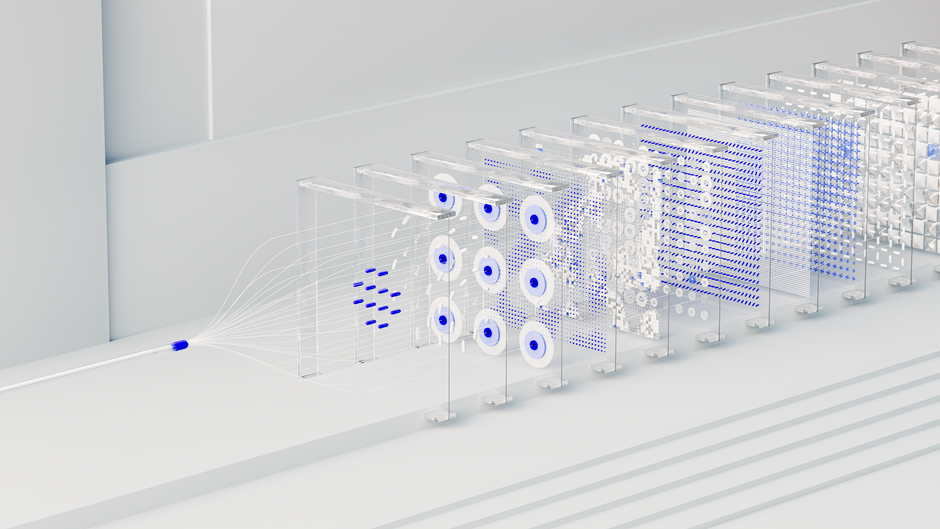
Most organizations treat their neural networks as proprietary assets, yet they ignore the structural fragility inherent in their design. Neural architecture security is no longer a niche concern for academic researchers; it is a fundamental pillar of operational excellence. If your decision-making infrastructure relies on weights, layers, and activation functions that are susceptible to adversarial perturbation, your strategic foundation is built on sand.
The security of a neural architecture is not merely about data privacy or preventing unauthorized access to datasets. It concerns the integrity of the model’s internal logic. When an adversary introduces subtle, imperceptible noise into input data—an adversarial attack—they can force a model to arrive at a high-confidence, yet entirely incorrect, conclusion. For a leader, this represents the ultimate failure of decision-making systems: the appearance of rigor without the substance of accuracy.
Beyond Perimeter Defense: Securing the Internal Logic
Traditional cybersecurity focuses on the perimeter. Neural architecture security demands a shift toward internal verification. We must move away from the assumption that a model is infallible simply because it demonstrates high accuracy on training sets. High-performance thinking requires us to interrogate the architecture itself.
Adversarial Robustness as a Strategic KPI
Robustness should be a primary Key Performance Indicator for any AI deployment. If an architecture cannot withstand small, targeted perturbations, it is not production-ready. Leaders must demand that engineering teams implement adversarial training—a process where the model is exposed to adversarial examples during its development phase. This creates a more resilient internal structure, forcing the model to learn features that are invariant to noise, rather than relying on statistical shortcuts.
The Trade-off Between Complexity and Control
There is a dangerous correlation between model complexity and vulnerability. As architectures grow deeper and more abstract, they become harder to interpret and easier to manipulate. This is a classic strategy problem: the desire for marginal gains in prediction accuracy often introduces exponential increases in surface area for attack. A lean, interpretable architecture is often more secure than a bloated, black-box model. When designing your AI stack, prioritize architectural simplicity where the business impact allows for it.
Operationalizing Neural Integrity
Securing neural architectures requires a disciplined approach to the model lifecycle. You cannot treat a neural network as a “set and forget” asset. It requires continuous monitoring and validation.
Input Validation Layers: Implement secondary architectures specifically designed to detect and filter out adversarial patterns before they reach the primary decision engine.
Weight Regularization: Use techniques that penalize extreme weights. Smaller, more balanced weights often result in smoother decision boundaries, making it significantly harder for an attacker to find the specific “path” to an incorrect output.
Red Teaming Models: Just as you would conduct a penetration test on your IT infrastructure, you must subject your neural architectures to red-team exercises. Hire specialists to find the “blind spots” in your model’s decision logic.
The Leadership Mandate
The failure to secure neural architectures is a failure of governance. When an AI model makes a catastrophic error due to an adversarial input, the fault lies with the decision-makers who prioritized speed-to-market over structural integrity. Your execution strategy must account for the reality that AI systems are active targets.
Treat your models as high-value intellectual property. If the architecture is compromised, the competitive advantage it provides disappears. By integrating security into the architecture design phase, you ensure that your AI initiatives are not just innovative, but durable. In the era of AI-driven competition, the winner will not necessarily be the one with the most data, but the one whose high-performance thinking and underlying systems are the most difficult to subvert.