Contents1. Introduction: Define the “Maslowian Pivot”—the shift from deficit-based motivation to a permanent state of self-actualization.2. Key Concepts: Deconstructing Maslow’s original hierarchy vs. the modern “Pivot.” The role of cognitive surplus and post-scarcity psychology.3. Step-by-Step Guide: How to transition your personal and professional life to sustain a focus on self-actualization.4. Examples/Case Studies: Analyzing creators, entrepreneurs, and organizations that operate exclusively from a place of transcendence.5. Common Mistakes: The “Self-Actualization Trap” (ignoring foundational needs) and how to avoid it.6. Advanced Tips: Integrating “Flow” states and value-aligned decision-making.7. Conclusion: The long-term implications of living in a state of permanent growth.***
The Maslowian Pivot: Shifting to a Permanent State of Self-Actualization
Introduction
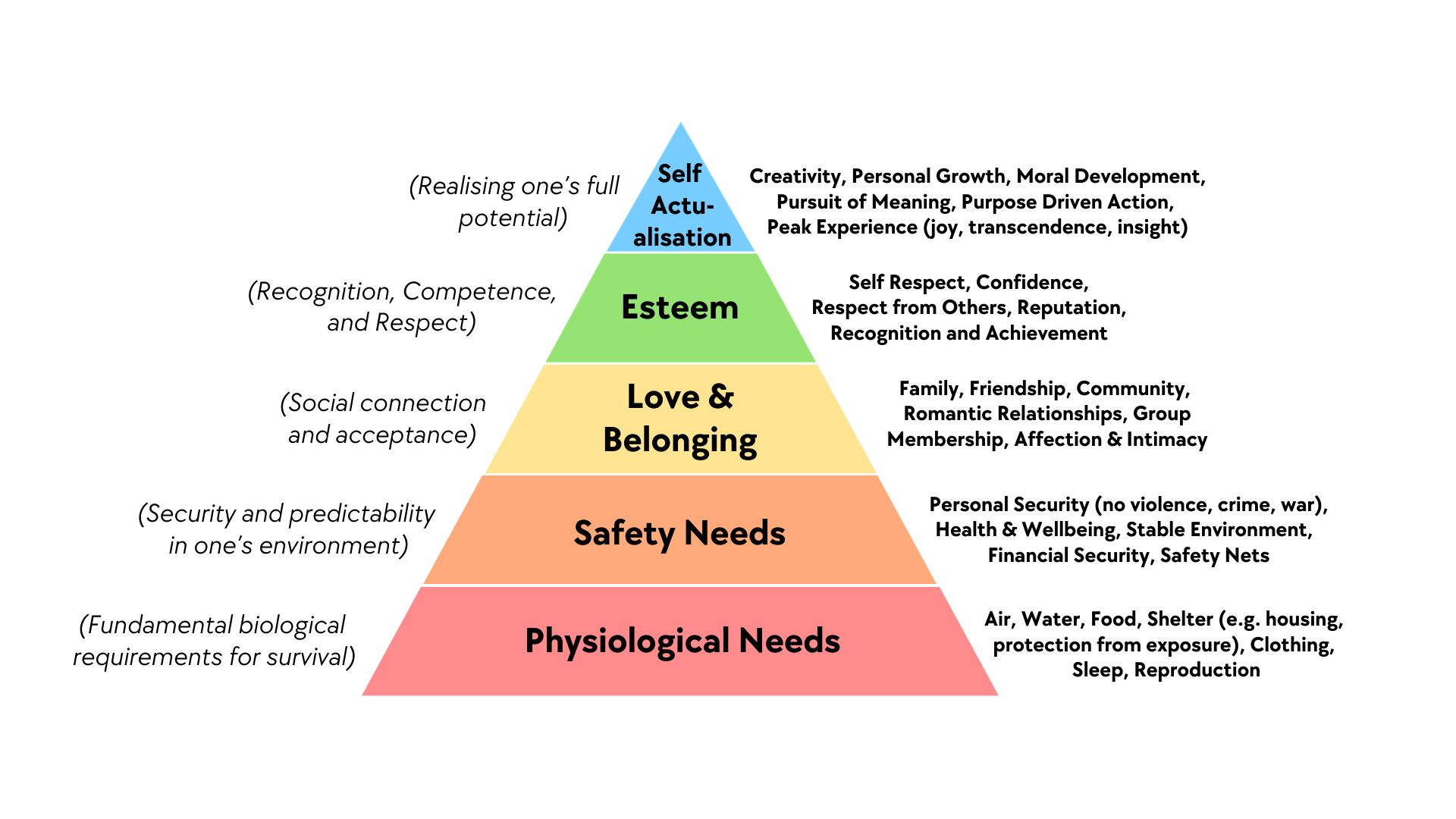
For decades, traditional psychology taught us that human motivation is a ladder. We start at the bottom, clawing our way through physiological needs and safety concerns, hoping that if we survive long enough and earn enough, we might eventually earn the right to pursue “self-actualization.” This is the classic Maslow’s Hierarchy of Needs: a rigid, step-by-step ascent.
However, we are currently witnessing a profound shift in the human experience—a “Maslowian Pivot.” In the modern era, particularly for those in knowledge-based economies, the focus of motivation is shifting from a temporary “reward” at the end of a long climb to a permanent, baseline operating system. We are no longer waiting to reach the top to find meaning; we are beginning our lives from the top down. Understanding this pivot is essential for anyone looking to optimize their performance, mental health, and long-term fulfillment in a world that no longer rewards the traditional “grind-first, live-later” mentality.
Key Concepts
The Maslowian Pivot represents a fundamental change in how we view internal drives. In the original model, Maslow suggested that lower-level needs must be satisfied before higher-level needs emerge. The Pivot suggests that transcendence—the desire to contribute to something greater than oneself—is becoming a primary, rather than tertiary, driver of human behavior.
Cognitive Surplus: As basic survival needs become more automated or accessible, the human brain is left with a “surplus” of cognitive energy. Instead of using this energy to fret over survival, it is increasingly being directed toward identity-building, skill mastery, and existential contribution.
The Transcendence Baseline: Historically, self-actualization was seen as a luxury. Today, it is increasingly viewed as a necessity for psychological stability. When people lack a purpose that transcends their immediate circumstances, they experience a specific kind of modern malaise—a sense of emptiness despite having all basic needs met. The Pivot argues that we must design our lives to prioritize self-actualization as the default state, rather than the end goal.
Step-by-Step Guide
Transitioning to a permanent state of self-actualization requires a deliberate re-engineering of your daily habits and cognitive frameworks. Follow these steps to initiate your own Maslowian Pivot.
- Audit Your “Deficit” Dependencies: Identify where you are still operating from a place of fear or deficiency. Are you working a job solely for survival, or are you building a role that serves your growth? Map out your dependencies and find ways to build a “safety net of one” that allows you to take risks.
- Define Your “Transcendence Metric”: What is the impact you wish to leave on your community or industry? Self-actualization is not merely about “being your best self”; it is about the intersection of your unique talents and a problem that needs solving. Define this clearly.
- Automate the Foundation: Use systems to handle your physiological and safety needs. Automate your finances, streamline your health routines, and simplify your living environment. The less time you spend thinking about your basic needs, the more cognitive real estate you have for growth.
- Adopt an “Identity-First” Workflow: When faced with a decision, ask: “Which choice aligns with the person I am becoming?” rather than “Which choice is the safest?” This shifts your decision-making from fear-based to growth-based.
- Engage in Consistent “Deep Work”: Dedicate non-negotiable blocks of time to tasks that require high-level cognitive engagement. Mastery is the primary vehicle for self-actualization.
Examples or Case Studies
Consider the rise of the “Creator Economy.” Many digital entrepreneurs have effectively performed a Maslowian Pivot. By leveraging internet-based leverage, they bypass traditional corporate hierarchies—which often keep employees stuck at the “Safety” and “Belonging” levels—and move directly into building a platform that expresses their personal values and expertise. They aren’t working to survive; they are working to actualize their unique worldview, and their survival is a byproduct of that expression.
The most successful individuals in the modern economy do not work to live; they work to realize a vision that exists outside of their own ego.
Another example is found in organizations that adopt “Holacracy” or self-management structures. By removing traditional middle-management layers that focus on compliance, these companies force employees to operate at the level of self-actualization. When individuals are given the autonomy to solve problems, they stop worrying about “pleasing the boss” (belonging) and start focusing on “solving the problem” (actualization), leading to higher productivity and personal satisfaction.
Common Mistakes
- The “Self-Actualization Trap”: Many people attempt to pursue high-level growth while neglecting their physical health or financial stability. You cannot build a house on sand. If your physiological needs are in total disarray, your pursuit of self-actualization will be erratic and unsustainable.
- Ignoring the “Belonging” Requirement: Even the most self-actualized individual requires a tribe. A common mistake is thinking that transcendence is a solitary pursuit. In reality, self-actualization is most effective when it is tethered to a community that shares your values.
- Comparing Progress: Maslowian growth is deeply personal. Comparing your “pivot” to someone else’s trajectory is a guaranteed way to fall back into a deficit mindset, characterized by envy and insecurity.
Advanced Tips
To truly cement the Maslowian Pivot, you must move beyond goal-setting and into the realm of value-alignment. Goals are temporary; values are permanent.
Optimize for Flow: Aim to spend at least 20% of your time in a “flow state”—where the challenge of the task perfectly matches your skill level. Flow is the neurological signature of self-actualization. If you aren’t experiencing flow, you are likely operating in a state of boredom (too easy) or anxiety (too hard).
Practice “Radical Ownership”: The Pivot requires you to stop blaming external circumstances for your lack of fulfillment. If you are not growing, it is because you have prioritized comfort over potential. Radical ownership means acknowledging that you have the agency to change your environment to suit your growth needs.
The 10-Year Horizon: Stop planning in quarters and start planning in decades. When you look at your life through a 10-year lens, the immediate “safety” concerns of today become insignificant, making it easier to prioritize the long-term work of self-actualization.
Conclusion
The Maslowian Pivot is not just a psychological theory; it is a survival strategy for the 21st century. By shifting our focus from the struggle for basic security to the active pursuit of self-actualization and transcendence, we unlock a level of human potential that was previously reserved for the lucky few.
Start by auditing your life today. Identify the areas where you are still living in the “basement” of your needs and move them into the “penthouse” of your potential. When you stop waiting for permission to be your best self, you will find that the world eventually aligns to support your growth. Remember: you are not meant to climb the ladder forever; you are meant to build a life that exists at the top.